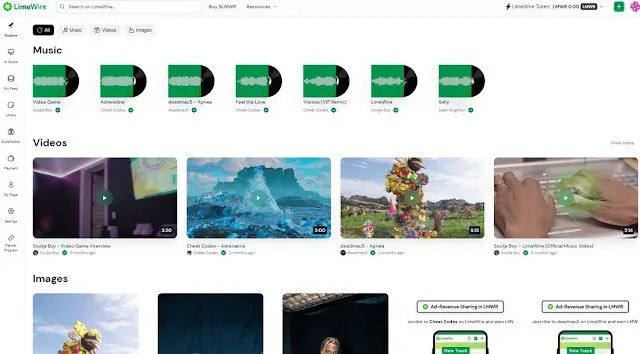
One of the platform’s most compelling features is its versatility in artistic style. Rather than being confined to a single "AI look," creators can choose from an array of pre-set design styles. These include cinematic, digital art, pixel art, anime, and analog film, among others. This flexibility ensures that the AI serves the creator’s vision, rather than dictating it. Furthermore, the company has signaled its intention to push the boundaries of the technology even further by developing its own proprietary AI model, which is expected to offer unique capabilities tailored specifically to the LimeWire community.
While image generation is the current focus, the roadmap for the LimeWire AI Studio is ambitious. The company has announced plans to introduce AI-powered music and video generation tools in the near future. This expansion would transform the platform into a multi-modal creative suite, allowing users to produce entire multimedia projects—such as a music video with an AI-generated soundtrack and visuals—all within the same ecosystem.
Automating Digital Ownership through Blockchain
A recurring challenge for digital creators is the protection of their intellectual property and the ability to prove authenticity. LimeWire addresses this by integrating blockchain technology directly into the publishing process. When a creator completes a piece of content and chooses to publish it, the platform offers the option to automatically "mint" the creation as a Non-Fungible Token (NFT).
These digital assets are minted on either the Polygon or Algorand blockchains, both of which are known for their efficiency and low environmental impact compared to older blockchain networks. By turning a digital image or audio file into an NFT, LimeWire provides the creator with a permanent, decentralized record of ownership. This process effectively turns every piece of content into a unique, tradable asset.
The platform offers creators granular control over how this content is shared. They can opt for a "public" release, which makes the content discoverable by the entire LimeWire community and the broader web. In this scenario, any user can view the work, and collectors can trade the associated NFTs on the open market. Alternatively, creators can implement a "subscriber-only" model. This creates a gated experience where only premium subscribers can access specific posts, fostering a sense of exclusivity and allowing creators to build a dedicated, paying fan base.
Crucially, the economic benefits for the creator extend beyond the initial sale or subscription. LimeWire has implemented a royalty system where creators earn a 2.5% royalty on all secondary trades of their NFTs. This ensures that as an artist’s reputation grows and their work increases in value, they continue to benefit from the appreciation of their earlier creations.
Redefining Monetization in the AI Era
Beyond the sale of NFTs and subscriptions, LimeWire has introduced a novel revenue-sharing model based on advertising. In many traditional social media landscapes, the lion’s share of ad revenue is retained by the platform. LimeWire has inverted this dynamic by offering creators up to 70% of the ad revenue generated from the views their content receives.
 Tech News & Digital Trends
The Rise of AI Optimization: How Digital Discovery is Shifting from Search Engines to Generative Models
A significant transformation is currently unfolding in the landscape of organic digital...
 Tech News & Digital Trends
The Evolution of Digital Marketing: Top AI Content Generators Transforming the Industry in 2022
The landscape of digital marketing and content creation is undergoing a seismic...
 Tech News & Digital Trends
The Digital Content Revolution: Navigating the Top AI Generation Tools of 2022
The landscape of digital marketing and content creation is currently undergoing a...