
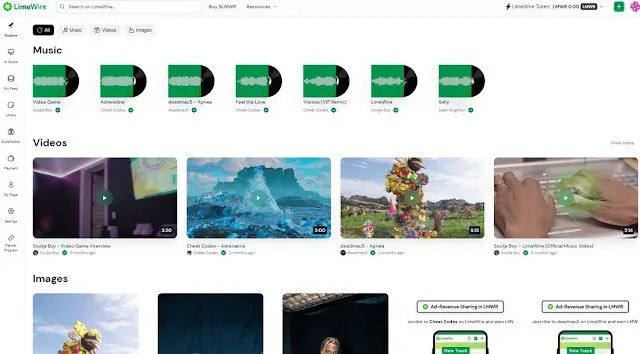
In the early 2000s, the name LimeWire was synonymous with the frontier of the digital revolution, serving as a primary gateway for millions of users to explore the burgeoning world of file sharing. After a decade of dormancy following a high-profile legal closure, the brand has undergone one of the most significant pivots in the history of the technology sector. Today, LimeWire has re-emerged not as a tool for peer-to-peer distribution, but as a sophisticated, AI-driven content publishing platform designed to bridge the gap between generative technology and the creator economy.
As the landscape of artificial intelligence continues to expand, LimeWire is positioning itself as a comprehensive ecosystem where creators can generate, share, and monetize digital assets. The platform represents a departure from the crowded field of standalone AI tools by integrating creative software with a blockchain-backed monetization framework. This evolution aims to provide a streamlined path for artists, musicians, and designers to move from initial concept to revenue generation within a single interface.
The Transformation of a Digital Icon
The modern iteration of LimeWire is a far cry from the Gnutella-based client that dominated desktops twenty years ago. The brand’s return is marked by a fundamental shift in philosophy, moving from unauthorized sharing to a model rooted in digital ownership and creator rights. By launching the LimeWire Studio, the company has created a hub where original AI-generated content is the primary focus.
The platform has already attracted significant attention from the mainstream creative industry. High-profile artists such as Deadmau5, Soulja Boy, and Sean Kingston have utilized the platform to engage with fans and publish exclusive content, including NFT-based music, videos, and visual art. This early adoption by established industry figures suggests a growing confidence in LimeWire’s ability to provide a legitimate and profitable space for digital expression.
Central to this new identity is the democratization of high-end creative tools. While professional-grade AI generation often requires technical expertise or significant computing power, LimeWire has built a user-friendly gateway that allows anyone to experiment with generative models. This accessibility is a cornerstone of their strategy to foster a new generation of "AI-native" creators who can build followings and businesses around their digital output.
The LimeWire AI Studio: A Hub for Visual Innovation
Currently, the centerpiece of the platform is the LimeWire AI Studio, which focuses heavily on image generation. Recognizing the diverse needs of modern creators, LimeWire has integrated several of the industry’s most powerful generative models into its workflow. Users can toggle between Stable Diffusion 2.1, Stable Diffusion XL, and OpenAI’s DALL-E 2, allowing for a vast range of aesthetic outcomes.
The studio interface is designed to accommodate both novices and experienced prompt engineers. For those just beginning their journey into generative art, simple text prompts can yield striking results. For more advanced users, the platform offers a suite of fine-tuning options, including various samplers and quality settings that allow for precise control over the final image.
One of the platform’s most compelling features is its versatility in artistic style. Rather than being confined to a single "AI look," creators can choose from an array of pre-set design styles. These include cinematic, digital art, pixel art, anime, and analog film, among others. This flexibility ensures that the AI serves the creator’s vision, rather than dictating it. Furthermore, the company has signaled its intention to push the boundaries of the technology even further by developing its own proprietary AI model, which is expected to offer unique capabilities tailored specifically to the LimeWire community.
While image generation is the current focus, the roadmap for the LimeWire AI Studio is ambitious. The company has announced plans to introduce AI-powered music and video generation tools in the near future. This expansion would transform the platform into a multi-modal creative suite, allowing users to produce entire multimedia projects—such as a music video with an AI-generated soundtrack and visuals—all within the same ecosystem.
Automating Digital Ownership through Blockchain
A recurring challenge for digital creators is the protection of their intellectual property and the ability to prove authenticity. LimeWire addresses this by integrating blockchain technology directly into the publishing process. When a creator completes a piece of content and chooses to publish it, the platform offers the option to automatically "mint" the creation as a Non-Fungible Token (NFT).
These digital assets are minted on either the Polygon or Algorand blockchains, both of which are known for their efficiency and low environmental impact compared to older blockchain networks. By turning a digital image or audio file into an NFT, LimeWire provides the creator with a permanent, decentralized record of ownership. This process effectively turns every piece of content into a unique, tradable asset.
The platform offers creators granular control over how this content is shared. They can opt for a "public" release, which makes the content discoverable by the entire LimeWire community and the broader web. In this scenario, any user can view the work, and collectors can trade the associated NFTs on the open market. Alternatively, creators can implement a "subscriber-only" model. This creates a gated experience where only premium subscribers can access specific posts, fostering a sense of exclusivity and allowing creators to build a dedicated, paying fan base.
Crucially, the economic benefits for the creator extend beyond the initial sale or subscription. LimeWire has implemented a royalty system where creators earn a 2.5% royalty on all secondary trades of their NFTs. This ensures that as an artist’s reputation grows and their work increases in value, they continue to benefit from the appreciation of their earlier creations.
Redefining Monetization in the AI Era
Beyond the sale of NFTs and subscriptions, LimeWire has introduced a novel revenue-sharing model based on advertising. In many traditional social media landscapes, the lion’s share of ad revenue is retained by the platform. LimeWire has inverted this dynamic by offering creators up to 70% of the ad revenue generated from the views their content receives.
This model is particularly advantageous for designers and digital artists who may be experimenting with the tools. By sharing their work on the platform, they can earn a passive income stream based on the engagement their images, music, or videos attract. This creates a "create-to-earn" environment that incentivizes consistent quality and community interaction.
The financial engine of this ecosystem is the LMWR token, LimeWire’s proprietary cryptocurrency. All earnings from ad revenue and royalties are paid out monthly in LMWR. This token serves a dual purpose: it is a tradable asset that can be exchanged for other currencies on major platforms like Kraken, ByBit, and UniSwap, and it is also a utility token within the LimeWire environment. Users can spend their LMWR tokens to purchase additional credits for the generative AI tools, creating a circular economy where successful creators can reinvest their earnings back into their craft.
Accessibility and Subscription Tiers
To ensure that the platform remains accessible while still providing high-level resources for professional creators, LimeWire has established a tiered pricing structure. New users can sign up for free, receiving 10 credits per day which allows for the generation of up to 20 AI images. Even at the free tier, users are eligible for a 50% share of ad revenue, providing a risk-free entry point into the ecosystem.
For those requiring higher volume and more advanced features, the platform offers several premium tiers:
- Basic Plan ($9.99/month): Provides 1,000 credits, allowing for approximately 2,000 image generations. It includes early access to new AI models and a 50% ad revenue share.
- Advanced Plan ($29/month): Increases the monthly credit limit to 3,750 (up to 7,500 images) and raises the ad revenue share to 60%.
- Pro Plan ($49/month): Offers 5,000 credits (up to 10,000 images) and a 70% ad revenue share.
- Pro Plus Plan ($99/month): The highest tier, providing 11,250 credits for up to 22,500 image generations and the maximum 70% revenue share.
All premium subscribers benefit from a "Pro" profile badge, a full history of their creations, faster processing times for image generation, and a completely ad-free browsing experience.
A New Chapter for Digital Creativity
The re-emergence of LimeWire as an AI content publishing platform marks a significant moment in the evolution of the creator economy. By combining generative AI, blockchain-based ownership, and a generous revenue-sharing model, the platform is attempting to solve several of the most pressing issues facing digital artists today: accessibility, monetization, and rights management.
As LimeWire continues to iterate on its technology and prepares to launch its music and video generation suites, it stands as a testament to the power of brand reinvention. The platform is no longer a shadow of its past, but a forward-looking entity that empowers a new generation of creators to harness the power of artificial intelligence. For those looking to explore the intersection of technology and art, LimeWire offers a comprehensive and rewarding path forward in the digital age.
 Tech News & Digital Trends
Demystifying the Digital Referral Economy: An In-Depth Analysis of Modern Affiliate Marketing Mechanics
In the rapidly evolving landscape of digital commerce, few sectors have generated...
 Tech News & Digital Trends
The Rise of AI Content Generators: A Comprehensive Analysis of the Leading Tools Reshaping Digital Marketing in 2022
As the digital landscape continues to evolve at a rapid pace, the...
 Tech News & Digital Trends
The 2025 AI Revolution: How Artificial Intelligence is Redefining the Content Creation Landscape
As the digital landscape enters 2025, the barrier between professional-grade production and...







