
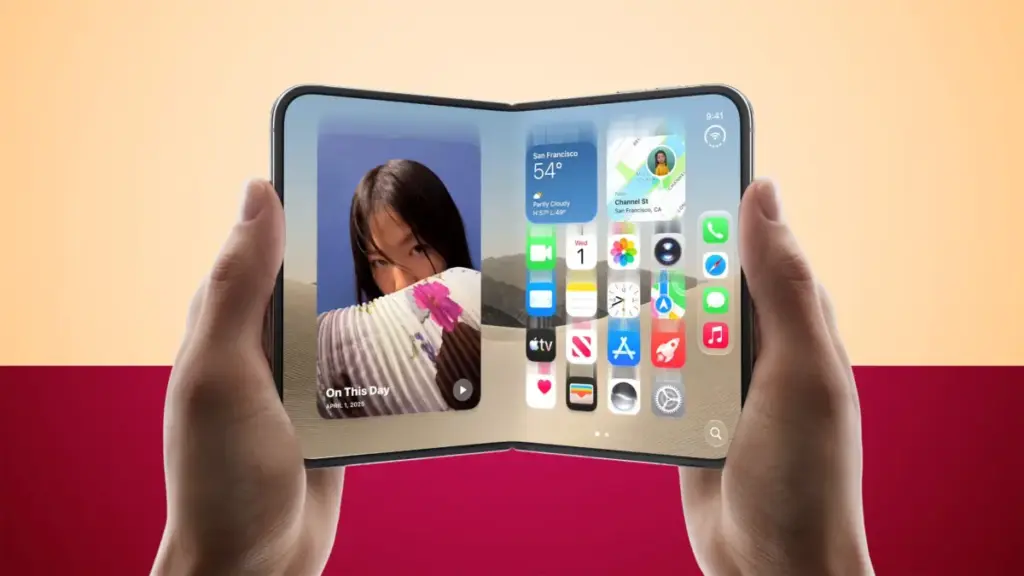
Two weeks after Apple officially launched its dual-screen iPhone Duo, software developers are rapidly building out an ecosystem of software designed specifically to exploit the device’s dual-display form factor. Following an initial wave of software highlights shared immediately after the hardware debuted on Friday, October 23, 2026, third-party creators have continued to introduce creative, practical, and novel applications tailored to the folding smartphone.
The ongoing surge in app releases comes at a critical moment for the platform. As early adopters explore the unique hardware capabilities of the dual-screen design, developers are testing the boundaries of how split-screen user interfaces, dual-pane productivity tools, ambient displays, and mobile games operate across two connected panels.
From Retail Fervor to Early Hardware Challenges
The release of the iPhone Duo marked one of Apple’s most anticipated hardware rollouts of the year, accompanied by significant consumer interest and tight initial supply. In the days leading up to the official launch, Apple retail staff were instructed to advise prospective buyers against showing up for walk-in purchases without a pre-order. Apple Store employees were informed that launch-day retail inventory would be extremely limited or entirely unavailable for walk-in walk-ups, prompting store management to discourage unreserved crowds from lining up outside retail locations on October 23.
Alongside the retail preparation, Apple laid the groundwork for the new interface by updating its own software listings. On Tuesday, October 20, just three days before the hardware reached customers, the App Store was updated with screenshots of Apple’s built-in native applications optimized for the Duo. These preview images provided the first clear look at how core iOS applications look and behave on the hardware, highlighting broad landscape multi-window layouts and adapted interface elements designed to accommodate the central screen partition.
However, the hardware launch has also faced initial hurdles. Shortly after the iPhone Duo reached customers on October 23, reports began surfacing across online communities—including Reddit and the MacRumors forums—detailing display failures along the folding line. Dubbed "Crackgate" by early users, a series of photos revealed structural screen fractures centered directly over the internal hinge mechanism.
In most reported cases, the physical damage manifested as a distinct vertical line of bright or malfunctioning pixels running down one side of the dual display. One buyer in Australia reported that their device’s screen cracked along the hinge line after being opened fewer than 20 times under normal usage conditions, without suffering any external impact or drops. While hardware durability concerns remain a topic of discussion among early owners, developer enthusiasm for the new device form factor has continued unabated.
The Growing Dual-Screen Software Library
Following an initial showcase of launch-day applications published when the device first arrived, software creators have spent the past fourteen days releasing increasingly sophisticated tools for the hardware. The latest wave of app suggestions highlights how the developer community is moving beyond basic application mirroring to create experiences built ground-up for dual displays.
Games
Mobile game developers have quickly identified the physical advantages offered by two distinct displays. Rather than crowding single-screen setups with virtual thumbsticks, action buttons, inventory windows, and status indicators, developers are re-architecting gaming interfaces specifically for the Duo.
In many of the newest gaming implementations, one display panel is dedicated entirely to tactile virtual controls, mini-maps, or inventory management menus, while the adjacent screen provides an unobstructed, full-screen view of the game world. Other game creators are experimenting with dual-perspective layouts that utilize the central fold to split local multiplayer matches or render extended vertical playfields, offering handheld gaming experiences that were previously unachievable on traditional single-screen smartphones.
Simple But Clever
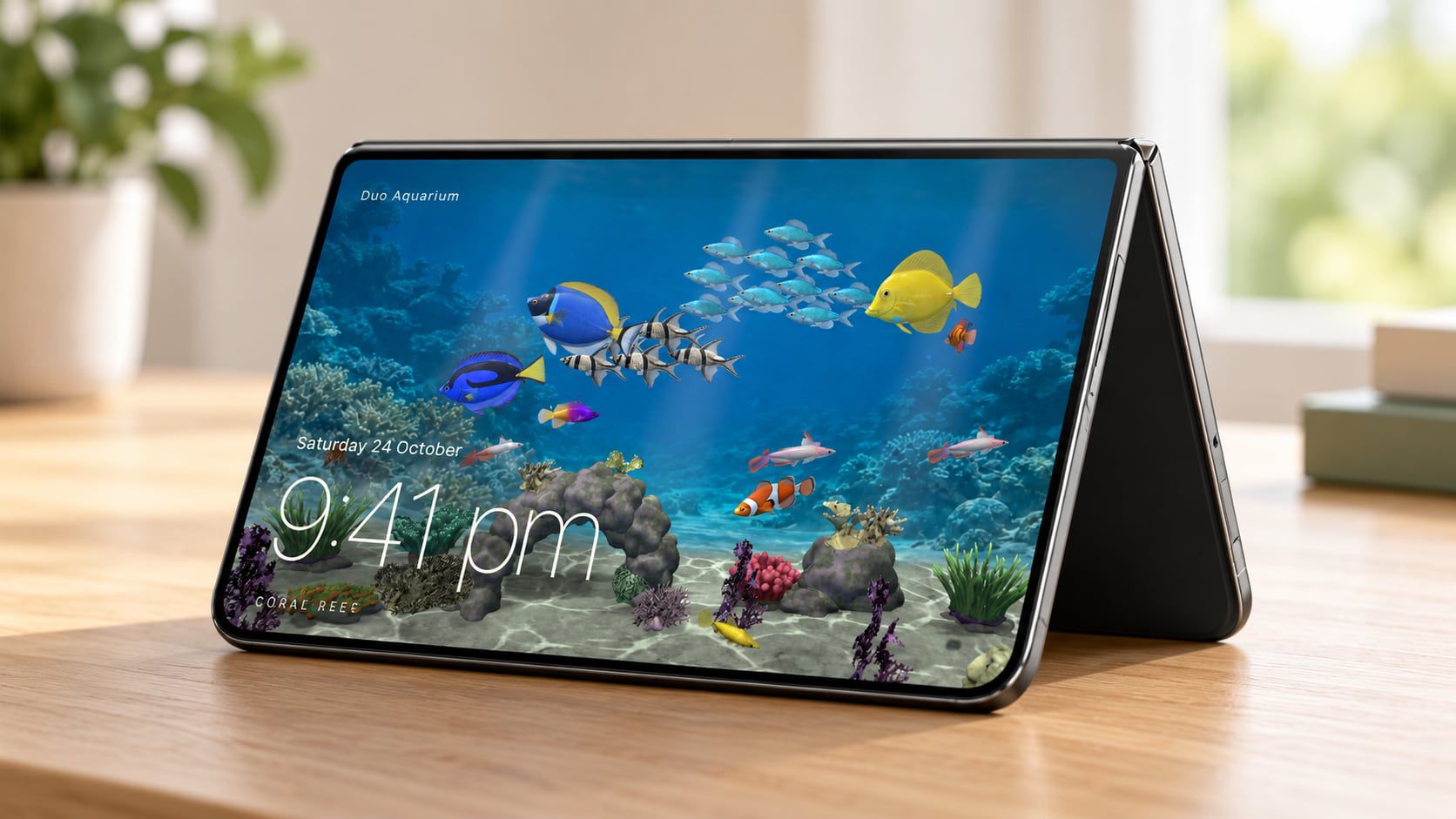
Beyond complex interactive software, a growing category of lightweight, clever visual applications is taking advantage of the Duo’s unique mechanical footprint. Among the most popular novelties emerging two weeks post-launch are ambient display utilities, such as dedicated split-screen aquarium applications.
These visualizer apps render continuous aquatic environments across both screen segments, allowing digital sealife to swim back and forth across the central display partition. When the iPhone Duo is adjusted into a partially folded posture and set on a flat surface, these applications turn the device into an ambient desktop aquarium or tabletop clock display. By leaning into the physical mechanics of the folding hinge, these simple tools turn idle hardware into decorative, functional desk accessories.
Special Duo Features
Applications designed to capitalize on the physical versatility of the hardware are demonstrating some of the most practical everyday uses for the dual-screen configuration. Health, fitness, and lifestyle software have been particularly quick to adopt specialized features built directly around the device’s variable folding angles.
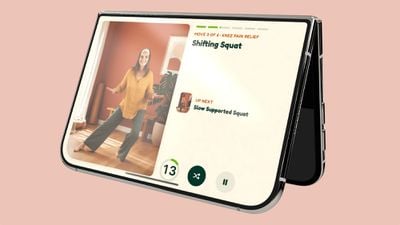
For example, fitness platforms like Wakeout have introduced updates tailored specifically to the Duo’s hardware profile. When users fold the device partially to stand upright on a desk or table, the application automatically adjusts its interface. The top vertical panel displays video demonstrations of exercises, routine timers, and motion prompts, while the bottom horizontal panel houses touch-based navigation, workout logs, and controls. This split presentation allows users to follow along with guided workouts hands-free, eliminating the need for phone stands, prop accessories, or third-party mounting cases.
Camera Apps
Mobile photography software represents another category undergoing a major redesign on the iPhone Duo. Third-party camera developers are leveraging the dual screens to separate the photographic viewfinder completely from the camera’s control suite.
Under these new camera layouts, one display screen acts as an uninterrupted, edge-to-edge live viewfinder, freeing the primary framing screen from menu overlays, grid toggles, or touch buttons. The second screen is utilized entirely as a control dashboard, housing live histogram readouts, manual exposure and focus sliders, white balance settings, and film previews. Additionally, camera apps are using the secondary display to show a continuous thumbnail reel of recently captured shots, enabling photographers to review photos instantly without covering or exiting the live camera feed.
Less Fun, More Serious
While games and novelties highlight the playful side of the new form factor, productivity-focused developers are concentrating on tools designed for heavy daily workflows, document management, and professional multitasking.
Applications like Widen demonstrate how dual displays can improve document navigation and application management. Workspace utilities designed for the Duo allow users to stretch expansive document windows seamlessly across both panels or pin two separate documents side-by-side for comparison. By facilitating clear split-screen reference material, code review tools, and spreadsheet viewing without constant application switching, these serious utility applications aim to transform the dual-screen hardware into a portable workstation.
Looking Ahead
Two weeks after the launch of the iPhone Duo, the continuous stream of third-party software updates indicates that developers view Apple’s new form factor as a compelling foundation for app design. From specialized fitness routines and professional camera controls to ambient desk displays and expanded games, the software landscape is evolving rapidly to match the physical possibilities of dual-screen hardware. As more users receive their devices and the install base expands, the developer ecosystem is expected to push dual-display iOS capabilities even further.
 macOS & Apple IT Support
Amazon Drops 13-Inch MacBook Air to $1,349 with New $250 Discount Ahead of Black Friday
Amazon has introduced a significant price reduction on the 13-inch MacBook Air...
 macOS & Apple IT Support
Apple TV and HomePod Mini Face Extended Shipping Delays as Code Leaks and Software Betas Signal Incoming 2026 Models
Customers looking to purchase an Apple TV or a HomePod mini through...
 macOS & Apple IT Support
Apple Mandates Developer Disclosures for Location Sharing and Dating Features to Update App Store Age Ratings
Apple has announced a new set of developer requirements designed to refine...







