
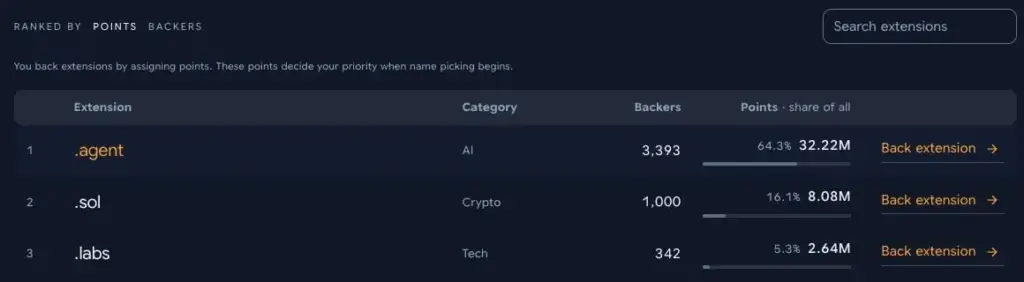
Furthermore, the leaderboard is heavily populated by crypto-centric extensions. Top-ten contenders such as .sol (associated with the Solana ecosystem), .mask, and .sui demonstrate the strong demand for TLDs that can serve as both traditional web addresses and blockchain identifiers. The popularity of these extensions on Frontier suggests that the platform is successfully attracting the "power users" of the next-generation internet.
Navigating the Road to Official Registry Partnerships
While the launch of Frontier represents a significant technological and organizational milestone for D3, it is important to note the current status of the TLDs featured on the platform. D3 has been transparent in stating that the registries that will eventually operate these TLDs have not necessarily entered into formal agreements with the Frontier platform at this stage.
In its current iteration, Frontier serves primarily as a sophisticated market research and demand-generation engine. By aggregating user interest and point pledges, D3 is creating a data-driven "proof of concept" for each TLD. When D3 eventually approaches registries or participates in the ICANN application process, it will do so with a pre-existing list of interested registrants and a clear map of name-level demand.
For registries, the value proposition of Frontier lies in risk mitigation. Launching a new TLD is an expensive and complex undertaking. By utilizing the data generated by Frontier, registries can better understand the potential ROI of specific extensions and identify "premium" names that have high demand before the first registration is even processed.
For registrants, the platform offers a way to cut through the noise of a standard general availability launch. In many previous TLD rollouts, the most desirable "dictionary words" and short-character domains were snapped up in milliseconds by automated scripts. Frontier’s point-based priority system and its positioning as a Limited Registration Period offer a more deliberate and potentially more accessible path for human registrants to secure the names they value most.
As the domain industry moves closer to the next ICANN round, platforms like Frontier are likely to play an increasingly central role in how digital identities are distributed. By combining market signaling, crypto-incentives, and a structured allocation process, D3 is attempting to bring a new level of order and transparency to the often-chaotic world of new TLD launches. Whether the registries fully embrace this model remains to be seen, but the early data from the Frontier leaderboard suggests that the demand for such a system is already significant.
 Web Hosting & Domain Management
ICANN Confirms 1,616 Applications for 2026 New gTLD Round as Fees Top $350 Million
The Internet Corporation for Assigned Names and Numbers (ICANN) has officially confirmed...
 Web Hosting & Domain Management
The Long Road to .web: Chris Ambler Reflects on Decades of Domain History and a New Path Forward with .epic
The landscape of the internet is on the verge of a significant...
 Web Hosting & Domain Management
Public Interest Registry Recognizes Global Excellence as TECHO Claims Top Honors at Annual .Org Impact Awards
The Public Interest Registry, the mission-based nonprofit organization responsible for managing the...






