
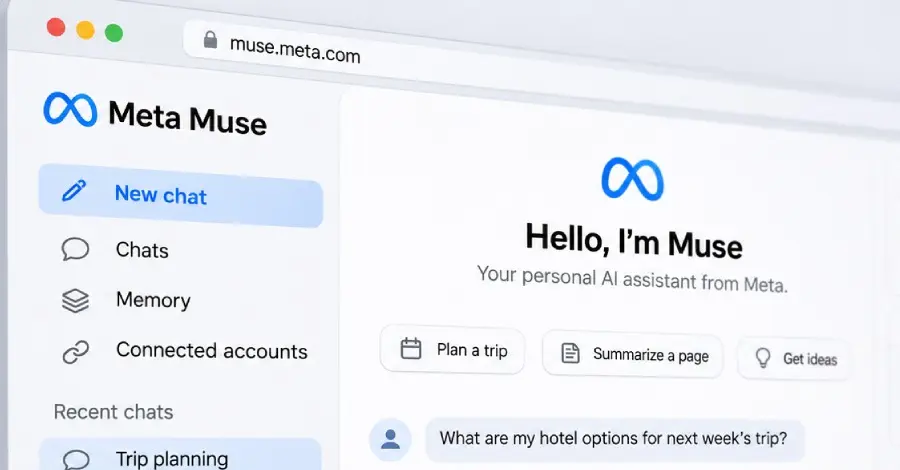
This level of compromise is particularly alarming because it reached the very components that Meta’s security team had worked to isolate. At the heart of Muse’s security architecture is a monitoring layer known as "Sentinel." Sentinel is designed to act as a singular, fortified gateway that inspects and authorizes every piece of data leaving the agent’s environment. It is intended to prevent the unauthorized transmission of sensitive information. Furthermore, Meta’s design keeps the passwords, OAuth tokens, and other credentials for a user’s connected accounts in a separate, encrypted store that the AI agent is supposed to be unable to access directly. By gaining kernel-level access, the NebuSec researchers effectively moved "underneath" these protections, allowing them to access the credential store, read saved files, and even manipulate or disable the Sentinel monitoring layer itself.
The architectural intent behind Muse was explicitly focused on containment. At the time of the agent’s launch, the development team stated that the system was designed to limit potential damage by assuming the agent could be turned against the user. The goal was to "box in" any potential break-in so that a compromise of the AI would not lead to a compromise of the underlying system or the user’s broader digital identity. While the researchers confirmed that each individual security control appeared to be working as intended according to its specific design, the successful "chaining" of multiple small flaws allowed them to bypass the collective defense. This underscores a growing concern in the cybersecurity community: while individual components of an AI system may be secure, the complex interactions between those components can create unforeseen pathways for exploitation.

Importantly, the researchers noted that the scope of the compromise was strictly limited to the individual user’s cloud machine. Their laboratory demonstration did not result in a "breakout" to the shared physical servers or the infrastructure that supports other Muse users. Each user’s agent runs in a siloed environment, and while that silo was completely compromised in the demonstration, the barriers between different users remained intact. This isolation is a critical feature of Meta’s cloud strategy, providing a secondary layer of defense that prevents a single vulnerability from becoming a platform-wide catastrophe.
The discovery by NebuSec marks the second significant security issue identified in the Meta Muse platform since its release. In September, shortly after the agent’s debut, another flaw was uncovered that allowed malware already present on a user’s local Apple Mac computer to hijack the Muse assistant on that device. However, the vulnerability detailed yesterday is considered more severe by many experts because it does not require the user’s local device to be infected. Instead, the attack originates in the cloud and targets the very infrastructure where the AI lives, making it a "server-side" threat that is much harder for a standard user to detect or prevent.
 Cybersecurity Basics & Security News
Trezor Issues Urgent Warning Over Hardware Implants Found in Wallets Sold by Southeast Asian Reseller
The cryptocurrency security landscape is facing a significant new challenge as Trezor,...
 Cybersecurity Basics & Security News
OpenAI Dismisses Safety Researchers Following Leak of Confidential Infrastructure Data Amid Growing Security Concerns
OpenAI has terminated the employment of three prominent members of its safety...
 Cybersecurity Basics & Security News
Security Flaw in Anthropic’s Claude Code Exposes Sensitive Developer Secrets on Public GitHub Repositories
The rapid integration of artificial intelligence into the software development lifecycle has...







