

However, in the context of the AI boom, these chips remain highly functional workhorses for many types of model training and the vast majority of inference tasks. From a financial standpoint, this is a windfall for CoreWeave. By most estimates, the A100 fleet has been completely written down on the company’s balance sheet, and the H100 fleet is likely to be fully depreciated by next year. When a piece of hardware is fully written down, the revenue it generates—minus the cost of power, cooling, and maintenance—becomes almost pure profit. This allows CoreWeave to generate exceptional margins on its "vintage" fleet even as it takes on massive debt to acquire the next generation of silicon.
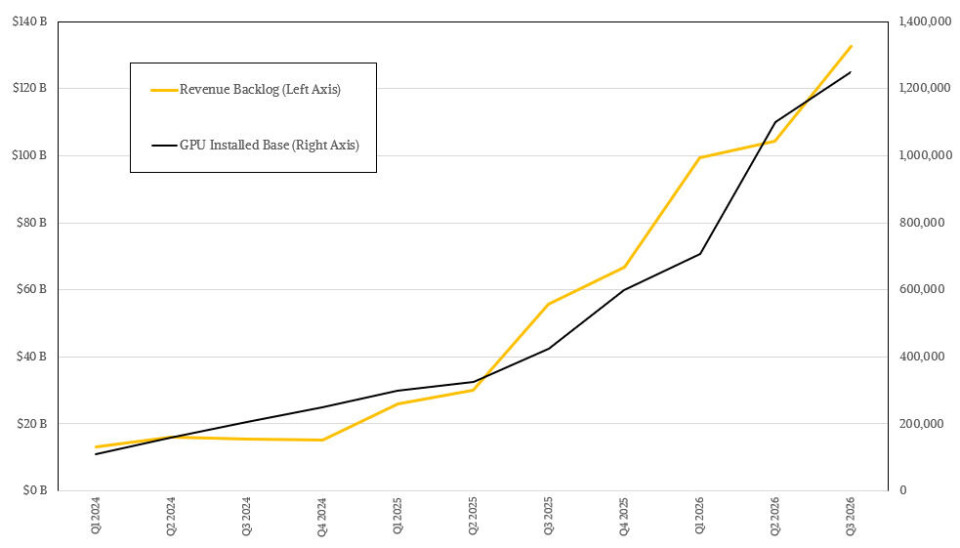
The scale of CoreWeave’s operation is becoming difficult to overstate. Based on active power consumption, it is estimated that the company currently has approximately 1.25 million GPUs installed and operational. While this is a massive footprint, a significant portion of this fleet is currently locked into older, lower-priced contracts. As these contracts expire, CoreWeave is poised to realize a massive jump in revenue. Intrator noted that approximately 130,000 GPUs are scheduled to come off contract in 2027, with another 170,000 up for renewal in 2028.
The math behind these renewals is staggering. Intrator projected that the 2027 renewals alone would generate an incremental $4 billion in annualized revenue based on current market rates. When the 2028 renewals are factored in, that figure is expected to grow by an additional $10 billion in incremental annualized revenue. This creates a "built-in" growth engine for the company that is somewhat independent of new hardware acquisitions, provided that demand for GPU compute remains high.
The CEO also addressed the potential risks of a slowdown in datacenter construction across the broader industry. Paradoxically, such a slowdown might actually benefit CoreWeave in the short to medium term. If the build-out of new physical datacenter space stalls, existing compute capacity becomes even scarcer, potentially keeping GPU rental prices higher for a longer duration. Because CoreWeave was early to the market and has a massive installed base that is already paid for, it stands to benefit from a "first-mover" advantage in a supply-constrained environment.
However, the company’s financial health is not without its stressors. The aggressive expansion has required an unprecedented amount of capital. CoreWeave’s debt load is now estimated to be approximately $48 billion. This debt is the engine that funds the expansion of the company’s datacenter footprint and the acquisition of new server fleets, but it comes with a high cost of service. In the third quarter of 2026, CoreWeave reported $3.66 billion in revenue, representing a 2.7-fold increase year-over-year and a 42.2 percent increase from the second quarter. Operating income also trended positively, reaching $207 million compared to $52 million in the same quarter a year ago.
The "bottom line," however, tells a different story. Due to the massive interest payments required to service its $48 billion debt, CoreWeave’s net loss expanded significantly, reaching $709 million for the quarter—a 6.4-fold increase compared to previous periods. This means that, for the moment, net losses are outpacing revenue growth. The company’s strategy for rectifying this imbalance relies on its ability to transition from debt-funded expansion to "success-based capex," where the proceeds from price increases and prepayments from major customers are used to fund further growth.
 Enterprise Tech & Infrastructure
The Architecture of RAID 10: Balancing Performance, Redundancy, and the High Cost of Capacity
In the complex landscape of data storage, few configurations are as frequently...
 Enterprise Tech & Infrastructure
The Security Landscape of Enterprise Storage: Analyzing the Vulnerabilities and Protections of DAS and NAS Systems
In an era defined by the exponential growth of digital information, the...
 Enterprise Tech & Infrastructure
Securing the Data Perimeter: A Comprehensive Analysis of DAS and NAS Vulnerabilities and Protections
In the modern enterprise landscape, data has become the most valuable asset,...







