
Another example provided by the development team is a "Movie night" command, which instructs the system to "dim the living room lights to 20% and close the curtains." This is a classic example of a scene creation, where the AI identifies the relevant devices and assigns them the specified values based on the user’s descriptive language. Finally, the app demonstrates its ability to handle conditional logic with the prompt: "If someone comes home after midnight, turn only the hallway light to 15%." This specific use case requires the AI to understand "after midnight" as a time condition and "comes home" as a location or occupancy trigger, showing a sophisticated understanding of how smart home triggers operate.
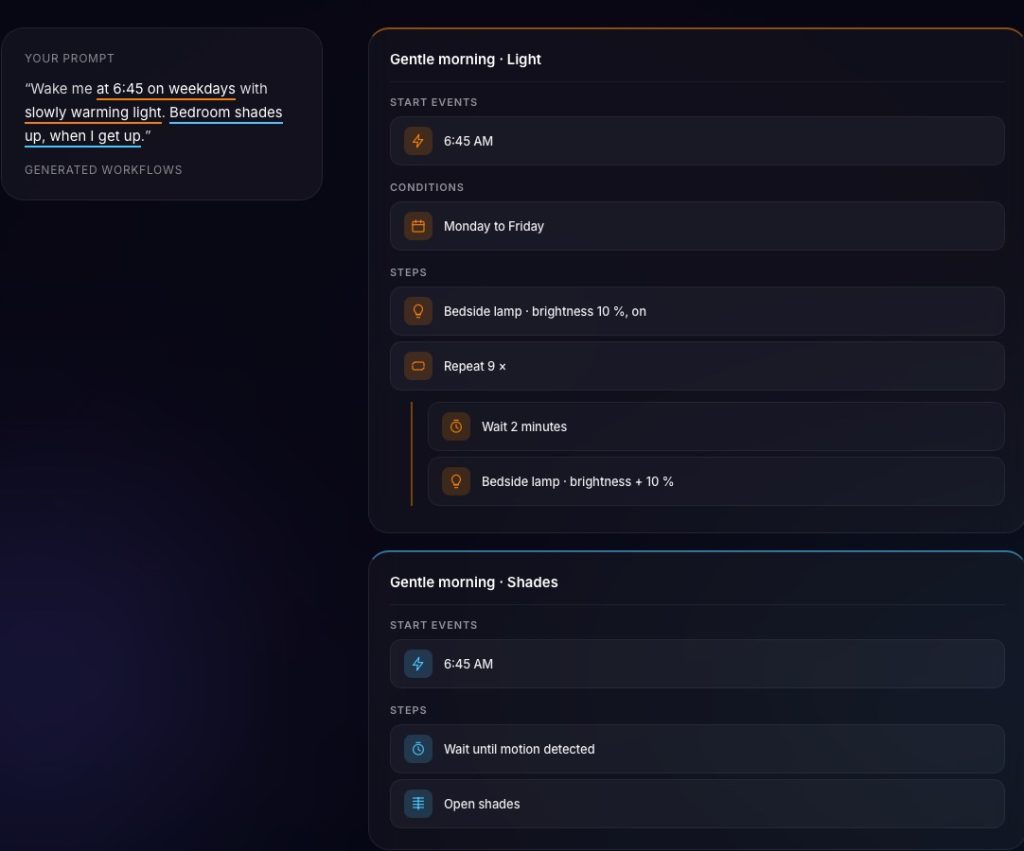
Initial testing of the feature suggests that the AI is remarkably capable of interpreting even simple, everyday requests. Despite the inherent complexity of mapping human language to specific hardware IDs and room assignments, the system appears to accurately identify the user’s intent. In one early test, a user asked the app to switch on a bedroom fan whenever the living room lights were turned off. The AI successfully parsed the relationship between the two devices and created a functional automation that linked the power state of the lights to the activation of the fan. This ability to create "if-this-then-that" logic through simple description represents a significant step forward in making smart home technology feel truly "smart."
The timing of this update is particularly noteworthy as the broader technology industry moves toward "agentic" AI—systems that can not only provide information but also perform actions on behalf of the user. While Apple has recently announced its own suite of AI tools under the "Apple Intelligence" banner, third-party developers like those behind Controller for HomeKit are often able to iterate faster and provide more specialized features for enthusiasts. By integrating AI directly into the automation creation process, Controller for HomeKit is positioning itself as an essential bridge for users who want the complexity of a professional setup without the manual labor typically associated with it.
However, the implementation of such features is not without its challenges. The success of natural language automation depends heavily on how well a user has named their devices and organized their rooms within the Home app. If a user has multiple "hallway lights" or ambiguously named "smart plugs," the AI must be intelligent enough to ask for clarification or make an educated guess based on the context of the home’s layout. Controller for HomeKit’s implementation appears to handle these nuances by presenting the generated automation to the user for review before it is finalized, ensuring that the AI’s interpretation matches the user’s actual needs.
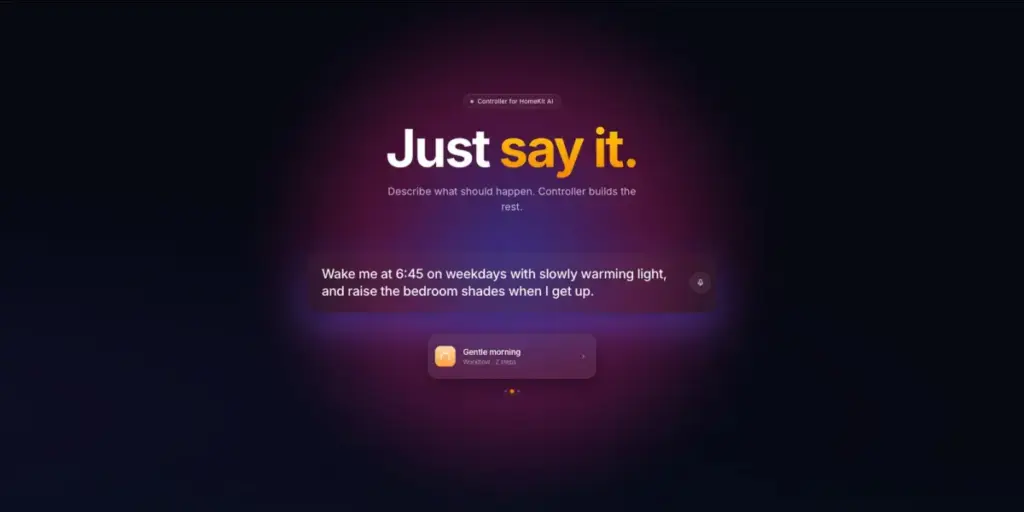
The transition to AI-assisted configuration also highlights the ongoing shift in the software industry’s business models. Controller for HomeKit is offered as a subscription-based service, which is becoming increasingly common for apps that rely on cloud-based AI processing and continuous development. The app is structured into two main tiers: Essentials and Plus. The Essentials tier is priced at $40 per year, providing access to the fundamental tools required for advanced HomeKit management. The Plus tier, which includes the most advanced features and presumably the full breadth of the new AI capabilities, is priced at $80 per year. To allow users to experience the "Just say it" feature firsthand before committing to a subscription, the developer offers a seven-day free trial.
 Smart Home & IoT Solutions
Philips Hue Enhances Smart Home Ecosystem with Launch of SpatialAware and New Video Doorbell Features
The landscape of smart home lighting has undergone a significant transformation today...
 Smart Home & IoT Solutions
Apple Poised to Enter Smart Home Display Market with Design Inspired by Iconic iMac G4
In a move that signals a significant shift in its hardware strategy,...
 Smart Home & IoT Solutions
Apple Intelligence and 4K Video: A Deep Dive into the iOS 27 Home App Overhaul
As Apple prepares for its highly anticipated "Welcome Home" special event on...






