

The decision by CISA to mandate the patching of the BroadWorks and Openwave Messaging flaws is rooted in Binding Operational Directive (BOD) 22-01. This directive requires Federal Civilian Executive Branch (FCEB) agencies to remediate vulnerabilities identified in the KEV catalog within specific timeframes. For these latest additions, agencies have been given a deadline of November 24, 2026, to apply the necessary security updates and mitigate the risk of compromise.
While the mandate technically applies only to federal agencies, CISA strongly urges private sector organizations and critical infrastructure providers to follow suit. The KEV catalog has evolved into a de facto prioritization guide for security teams globally. In an era where thousands of new vulnerabilities are discovered annually, the catalog serves as a filter, helping administrators focus on the "known-knowns"—the vulnerabilities that are actually being used by adversaries to gain unauthorized access.
The lack of public information regarding the threat actors involved in these latest exploits has led to significant speculation within the cybersecurity community. Historically, infrastructure-level vulnerabilities in platforms like BroadWorks are the domain of advanced persistent threat (APT) groups, often associated with state-sponsored espionage. These actors prioritize "living off the land" techniques and the exploitation of edge devices to maintain long-term persistence within a target network without being detected by traditional endpoint detection and response (EDR) tools.

The targeting of a media transcoder, such as the one in the Openwave Messaging suite, is particularly telling of the current threat landscape. Media transcoders are responsible for converting data formats for various devices and platforms. Because they sit at the intersection of different data streams, a compromise at this level can allow an attacker to intercept, modify, or inject malicious content into communications as they are processed. For an intelligence-gathering operation, this is an ideal vantage point.
Security experts note that the rapid succession of Cisco-related vulnerabilities being added to the KEV catalog highlights the increasing pressure on legacy infrastructure. As organizations migrate to more complex, software-defined environments, the attack surface expands. Platforms that were once considered "internal" or "backend" are now frequently exposed to the internet or are accessible through compromised VPNs and management interfaces.
The timeline for remediation—less than two weeks—reflects the urgency of the situation. For federal agencies, the process of patching enterprise-level communication platforms is rarely a simple task. It requires extensive testing to ensure that security fixes do not disrupt critical services. However, CISA’s stance remains clear: the risk of an active exploit outweighs the operational challenges of rapid deployment.
 Cybersecurity Basics & Security News
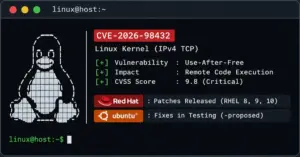
Critical Linux Kernel TCP Vulnerability Triggers Urgent Patching Cycle Across Enterprise Distributions
A severe security flaw residing within the Linux kernel’s networking stack has...
 Cybersecurity Basics & Security News
Cursor Identifies Stolen Fireworks AI Credentials as Root Cause of Malicious Extension Incident
In a detailed post-mortem that highlights the growing complexities of AI supply...
 Cybersecurity Basics & Security News
CERT-UA Issues Urgent Warning Over Massive Compromise of Dahua Video Surveillance Systems via P2P Vulnerabilities
The Computer Emergency Response Team of Ukraine (CERT-UA) has issued a critical...







