
For enthusiasts of self-hosted media, the Plex ecosystem has long been the gold standard for organizing and streaming personal collections of movies and television shows. However, for a significant portion of the user base, Plex is just as much about high-fidelity audio as it is about 4K video. The rise of Plexamp, a dedicated music player within the Plex family, transformed how audiophiles interact with their ripped CD collections and lossless FLAC libraries. Yet, despite its success on mobile devices and desktops, a glaring omission has persisted for years: the lack of a dedicated, music-first Plexamp client for television-based operating systems.
While users can technically access their music through the standard Plex app on smart TVs and streaming boxes like the Apple TV or Nvidia Shield, the experience has often felt like an afterthought. The interface is designed for browsing cinematic posters, not for the nuances of a deep musical discography. This gap in the ecosystem has finally been addressed not by Plex itself, but by one of its original architects. Caldera Music, a new independent project, aims to provide the high-end, visual-heavy listening experience that TV users have been demanding.
The Evolution of the Plex Music Experience
To understand the significance of Caldera Music, one must first look at the trajectory of Plex’s audio offerings. For years, the music functionality within Plex was functional but basic. That changed with the introduction of Plexamp, a project born out of the Plex Labs initiative. Plexamp focused on the fundamentals of a great music player—gapless playback, loudness leveling, and a sleek, minimalist interface that prioritized album art and discovery.
Plexamp eventually became available on iOS, Android, macOS, Windows, and even Linux (including headless versions for Raspberry Pi enthusiasts). It even made its way into the automotive world via CarPlay and Android Auto. However, the living room remained a blind spot. For those who have invested thousands of dollars into home theater systems, the inability to run a dedicated, high-fidelity music interface on their primary screen was a persistent frustration.
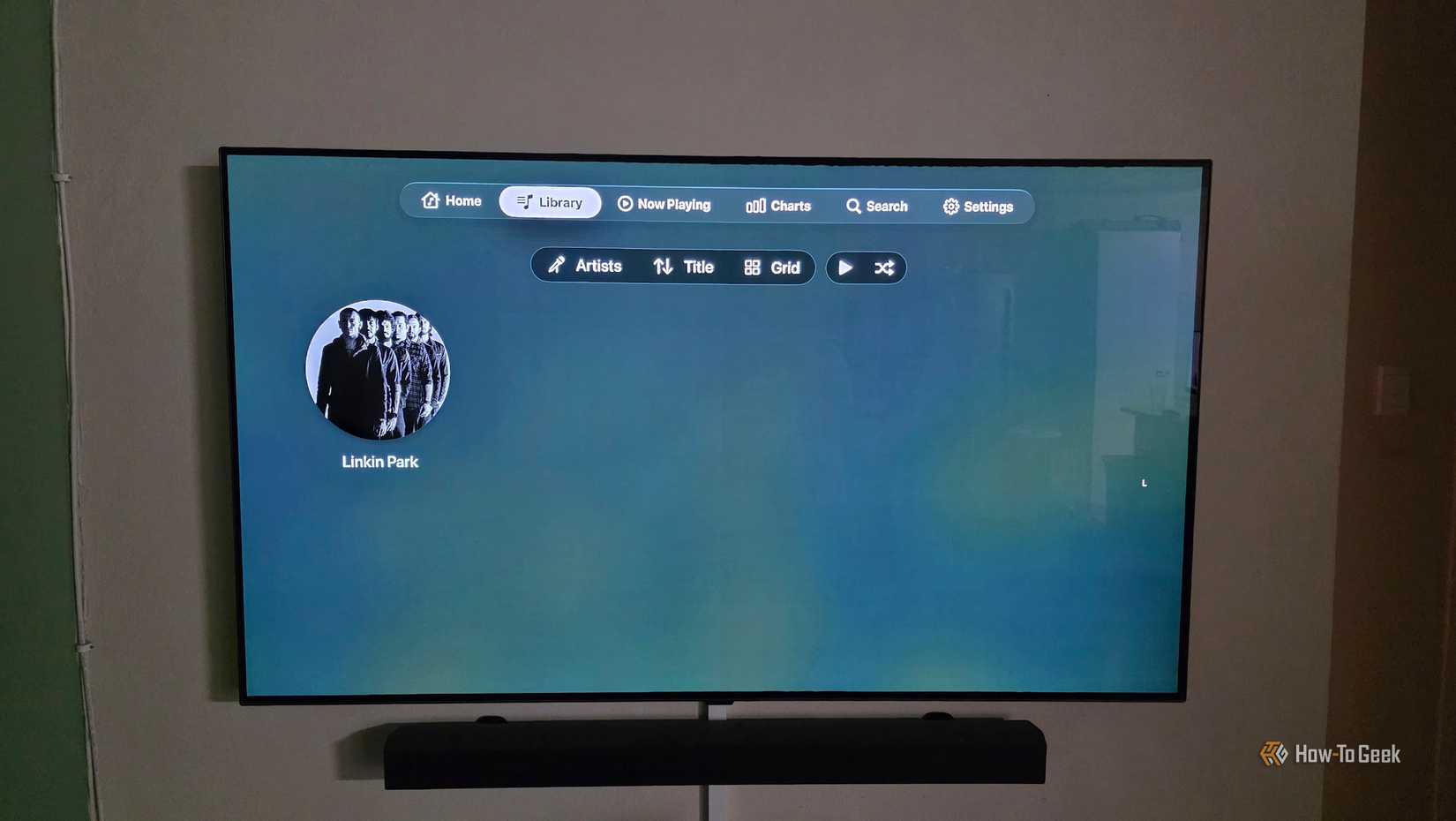
The standard Plex TV app, while capable of playing music, lacks the "soul" of a dedicated player. It doesn’t offer the same level of metadata detail, the specialized radio features, or the mesmerizing visualizers that define the Plexamp experience. Caldera Music enters the frame as a solution designed specifically to bridge this divide, offering a dedicated gateway for Plex music libraries on Apple TV and Google TV.
It Takes Seconds to Get Caldera Running
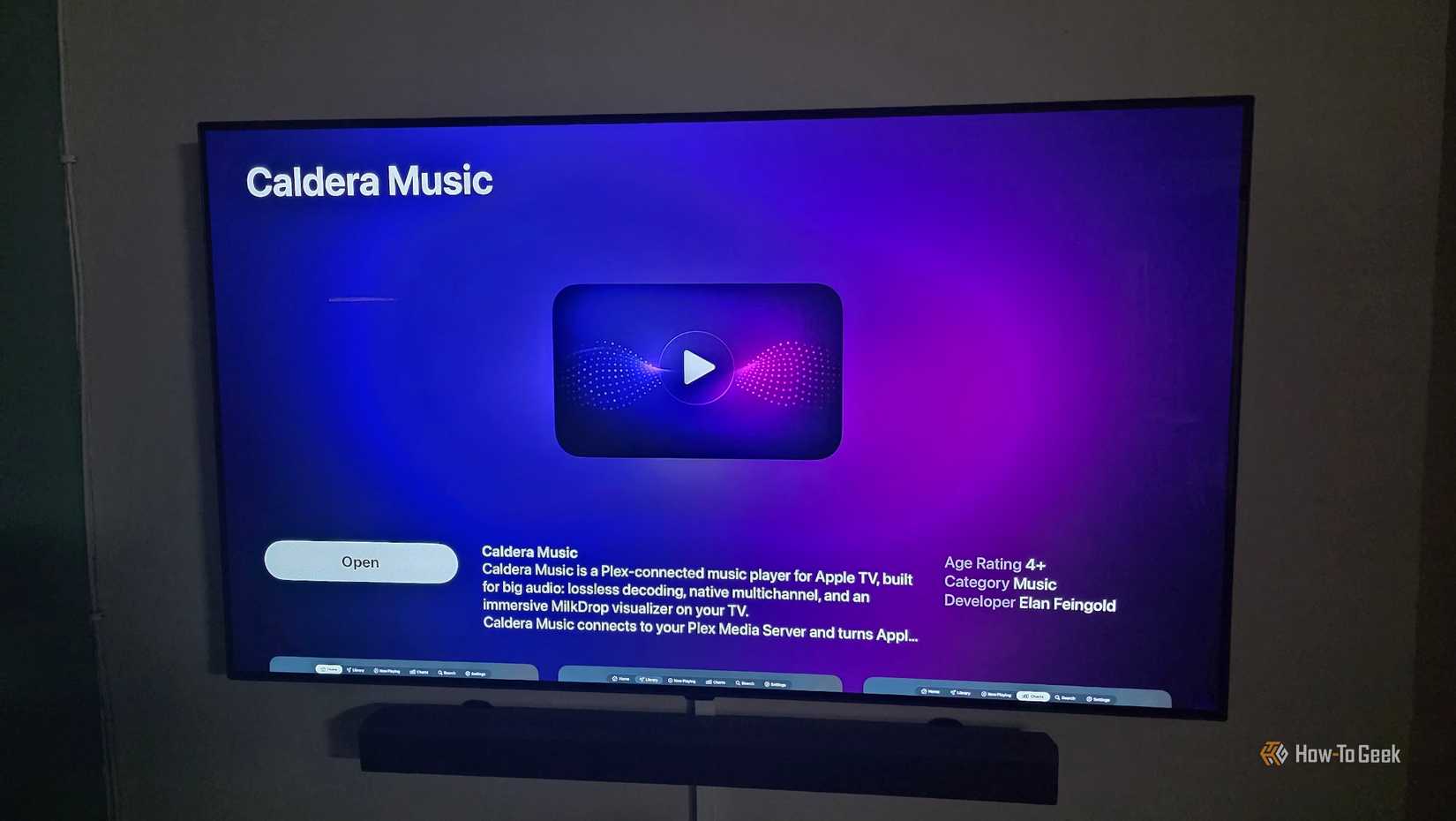
One of the most impressive aspects of Caldera Music is its pedigree. The app is an independent project developed by Elan Feingold, a co-founder of Plex who departed the company at the end of 2025. This lineage is evident in the app’s polished nature and its deep integration with existing Plex infrastructure. Despite being a third-party tool, it feels like a natural extension of the server software users already know and trust.
Setting up the application is designed to be as frictionless as possible. The prerequisite, of course, is a functioning Plex Media Server with a properly configured music library. For users who have already spent years meticulously tagging their files and organizing their folders, no additional work is required on the server side. Caldera simply hooks into the existing database.

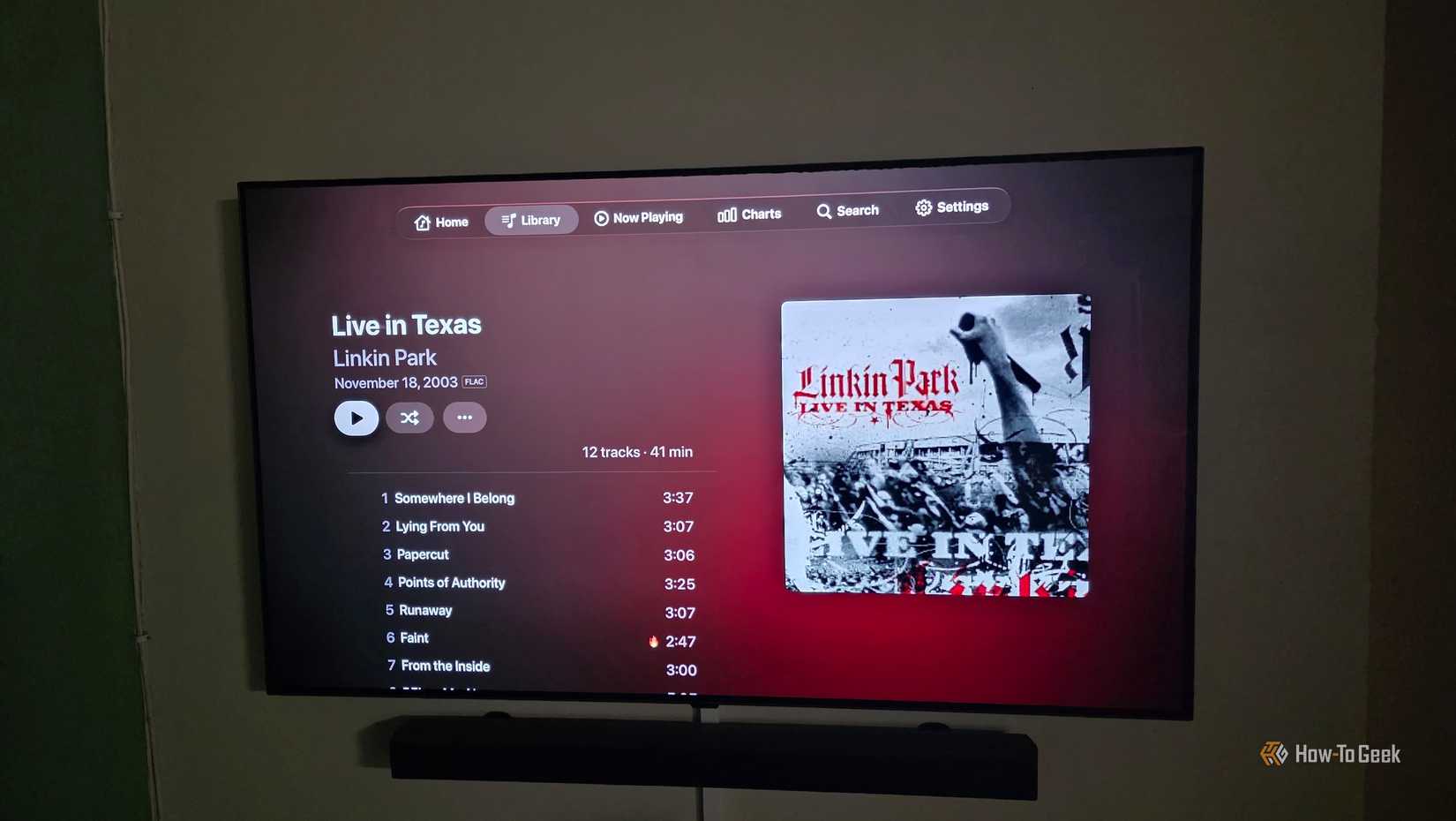
For those starting fresh, the process is identical to adding a video library: you point Plex to your music folder and specify "Music" as the content type. During testing, a fresh library populated with high-quality FLAC rips—such as Linkin Park’s Live in Texas—was recognized and indexed by the server almost instantly.
The installation of the Caldera client follows the standard procedure for any modern streaming device. It is available directly through the Apple App Store for Apple TV 4K users and the Google Play Store for those using Sony, TCL, or Hisense TVs running Google TV or Android TV. Once the app is launched for the first time, it utilizes a modern authentication flow. Rather than forcing users to peck out a complex password with a TV remote, the app displays a QR code and a short activation key. By scanning the code with a smartphone or visiting the activation website while logged into a Plex account, the link is established in seconds.
A Minimalist Design Built for High Fidelity
The design philosophy of Caldera Music is one of "frugal elegance." The interface is clean, uncluttered, and focuses heavily on the visual impact of album art. In an era where many media apps are cluttered with "Recommended" sections and unwanted social features, Caldera’s commitment to a minimalist aesthetic is refreshing. The navigation is intuitive, relying more on recognizable icons and high-quality imagery than on dense blocks of text.
However, beneath this minimalist exterior lies a feature-rich engine capable of satisfying the most demanding audiophiles. Caldera Music supports a vast array of audio formats, ensuring that high-resolution files are played back without unnecessary transcoding. Furthermore, it addresses a specific niche that many other players ignore: multichannel audio. For collectors who own 5.1 or 7.1 surround sound mixes of classic albums, Caldera provides a robust platform for playback through a home theater receiver.
Perhaps the most significant "feature" for privacy-conscious users is what the app does not do. Caldera Music is built with a strict "no-tracking" policy. There are no analytics, no third-party advertisements, and no data harvesting. It is a pure tool designed for the sole purpose of playing the user’s music, a rarity in the modern software landscape where most free and paid apps seek to monetize user behavior.
Plexamp is Still in Control
While Caldera Music works perfectly as a standalone application controlled by a standard TV remote, it also integrates into the broader Plex ecosystem through a feature known as "Remote Control" or casting. The official Plexamp app on a smartphone or tablet recognizes any device running Caldera as an active player on the network.
This creates a seamless workflow for the user. You can browse your library on the responsive touch screen of your phone, curate a queue, or select a "Sonic Adventure" playlist, and then simply "cast" the playback to the TV. The Caldera app on the big screen then takes over the heavy lifting of the audio stream, while displaying the album art and track information in a format optimized for the living room.
This interoperability does come with a few technical caveats typical of local network discovery. Both the controlling device (the phone) and the playback device (the TV) must be on the same local network. In modern home networking setups where users often isolate "smart" devices or IoT hardware on separate VLANs for security purposes, some manual configuration may be required to allow the devices to communicate. However, for the average home user, the discovery process is automatic and reliable. If your mobile Plexamp app can see your Plex server, Caldera should theoretically slot into the environment without any additional troubleshooting.
The Visualizer Takes Me Straight Back to Winamp
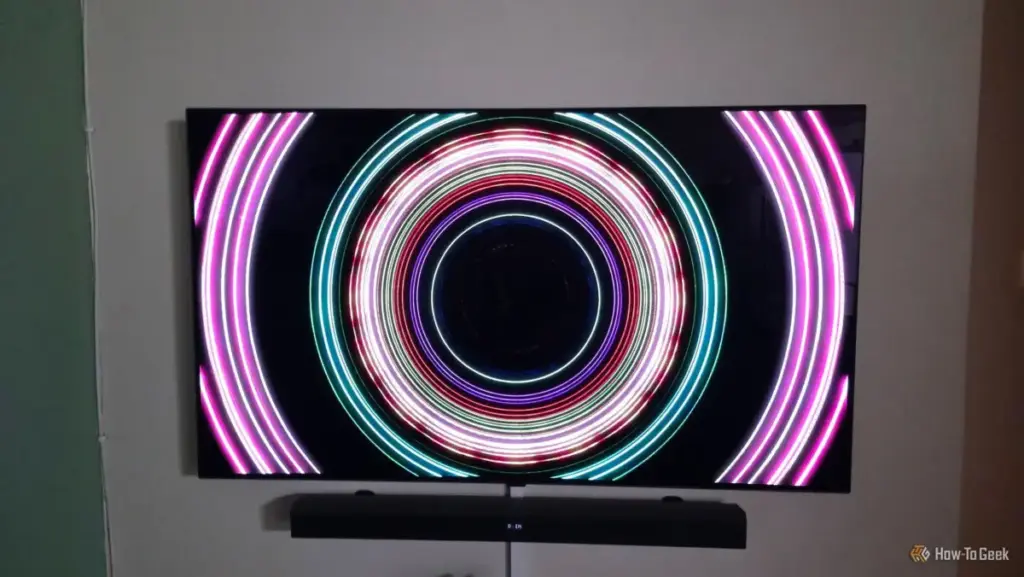
For many long-time PC users, the mention of digital music playback evokes a specific sense of nostalgia for the late 1990s and early 2000s. Before the era of streaming, Winamp was the undisputed king of MP3 playback. While its "skins" were legendary, it was the visualizers—specifically the MilkDrop plugin—that truly captivated users. These visualizers used complex algorithms to generate psychedelic, beat-synced patterns that turned a computer monitor into a piece of digital art.
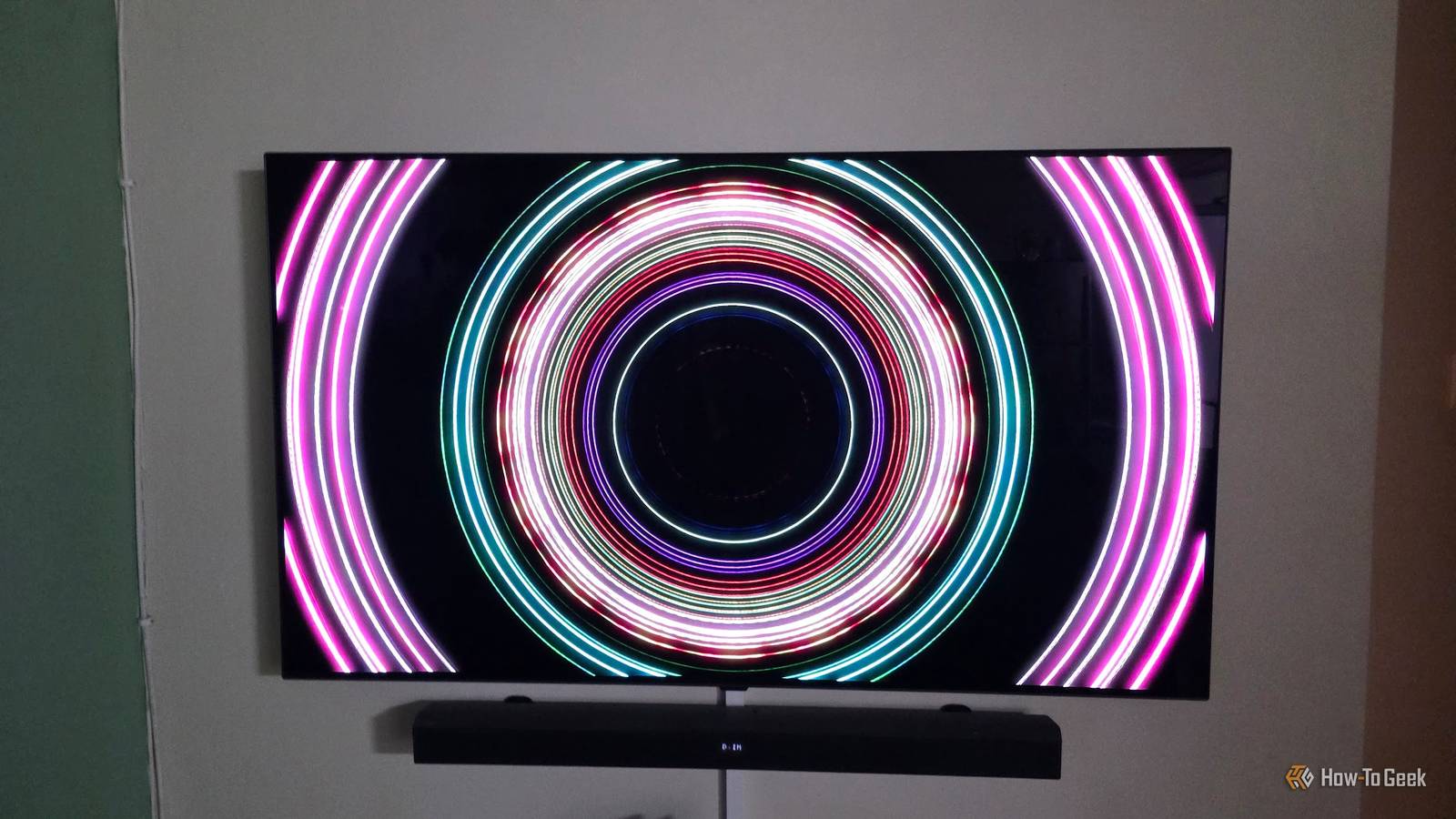
Caldera Music leans heavily into this nostalgia by including a built-in visualizer that captures that exact spirit. On a modern, large-format OLED television, these visualizers are transformative. The high contrast and deep blacks of OLED technology make the vibrant, shifting patterns of the Caldera visualizer pop in a way that was never possible on the beige CRT monitors of the past. It turns the television from a passive screen into an active, atmospheric centerpiece for a room.
The app includes hundreds of presets, allowing the visualizer to cycle through different styles and moods. Whether it’s a high-energy party or a quiet Saturday afternoon of focused listening, there is a visual profile to match. For many, this feature alone justifies the installation, as it provides a level of visual engagement that static album art simply cannot match.
Expanding the Ecosystem: Caldera Amp
The developer’s vision for a better music experience isn’t limited to the television. Alongside the TV client, there is a sister application known as Caldera Amp, designed for macOS and Windows. While the TV app is built for the "ten-foot interface" of the living room, Caldera Amp brings a similar philosophy to the desktop.
In testing, Caldera Amp proved to be equally versatile. When run on a PC connected to a vintage CRT monitor—a setup increasingly popular among retro-tech enthusiasts—the visualizer effect is even more pronounced. It effectively turns an old piece of hardware into a dedicated, high-end music station that looks and feels like it stepped out of a high-tech lab from 1998.
A New Ritual for Personal Music
In a world where music has become increasingly commodified and relegated to background noise by algorithmic streaming services, tools like Caldera Music encourage a return to a more intentional listening ritual. By centralizing a personal collection in Plex and using Caldera as the front end, users can reclaim the high-fidelity, ad-free experience that defined the golden age of digital music.
The combination of professional-grade audio support, a minimalist aesthetic, and the mesmerizing return of the classic visualizer makes Caldera Music an essential addition for any Plex user with a home theater. It effectively solves the "TV problem" that has lingered over the Plex community for years, providing a dedicated space for music that is as beautiful to look at as it is to hear. As the project continues to evolve under the guidance of a Plex co-founder, it stands as a testament to the enduring appeal of owning your own media and the importance of having the right tools to enjoy it.
 Tech Tutorials & How-To Guides
The Fragile Alliance: Why Windows Continues to Disrupt Dual-Boot Linux Environments
For many technology enthusiasts and professionals, the ideal computing environment involves a...
 Tech Tutorials & How-To Guides
Navigating the Modern Desktop: Why the ‘This PC’ Icon Remains a Staple for Windows Users
For nearly three decades, the "My Computer" icon served as the digital...
 Tech Tutorials & How-To Guides
Beyond the Brand: Why Even Premium Power Drills Fail Due to Common Operational Habits
In the modern landscape of home improvement and professional construction, the cordless...







