
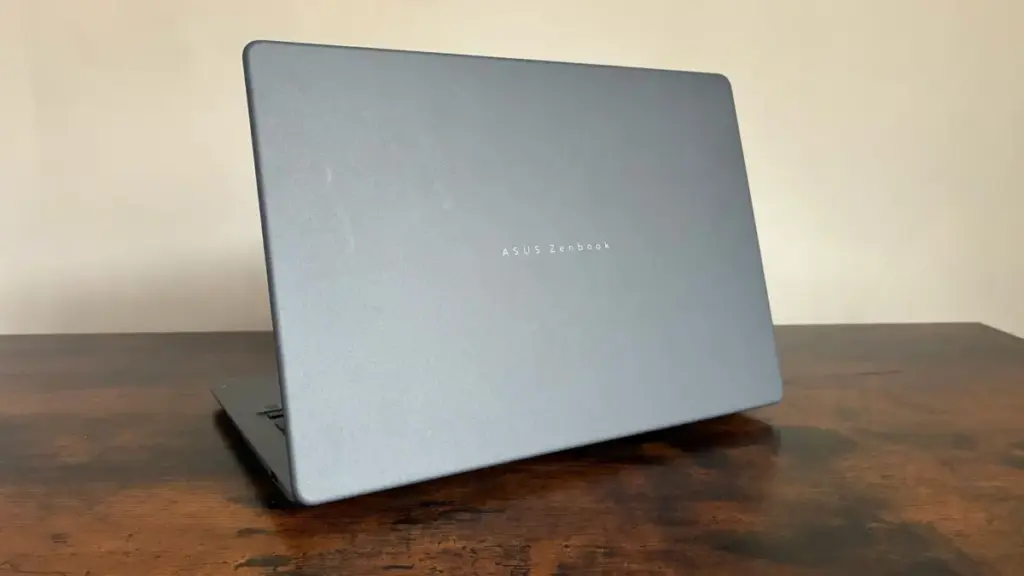
The OLED panel itself is a high performer, especially regarding color accuracy. Laboratory testing revealed a peak brightness of 302.96 cd/m², which allows the laptop to remain legible in various lighting conditions, from dimly lit cafes to bright office spaces. The adaptive brightness sensor works subtly in the background, adjusting to ambient light without the jarring transitions often found in budget displays. For creative professionals, the display is particularly impressive; it covers 100% of the sRGB color gamut and boasts a massive 169.4% volume. With a 92.6% Adobe RGB score, it outperforms several more expensive competitors, making it a viable tool for on-the-go photo editing and color-sensitive work.
The input experience is equally refined. The Zenbook 14 features a chiclet keyboard with large, excimer-coated keycaps designed for long-term durability. The keys offer a generous 1.7mm of travel, providing a tactile and satisfying typing experience that is often missing from ultra-thin laptops. The layout is standard and intuitive, though users may need a moment to adjust to the volume controls, which are positioned on the far left of the function row.
Complementing the keyboard is the ErgoSense touchpad. It supports a wide range of multi-touch gestures, including a seamless three-finger swipe for switching between active applications. While the trackpad is highly responsive and smooth to the touch, it is worth noting that the physical click mechanism is somewhat audible, which might be a consideration for those working in very quiet environments.
Performance, Specifications, and the Snapdragon X Shift
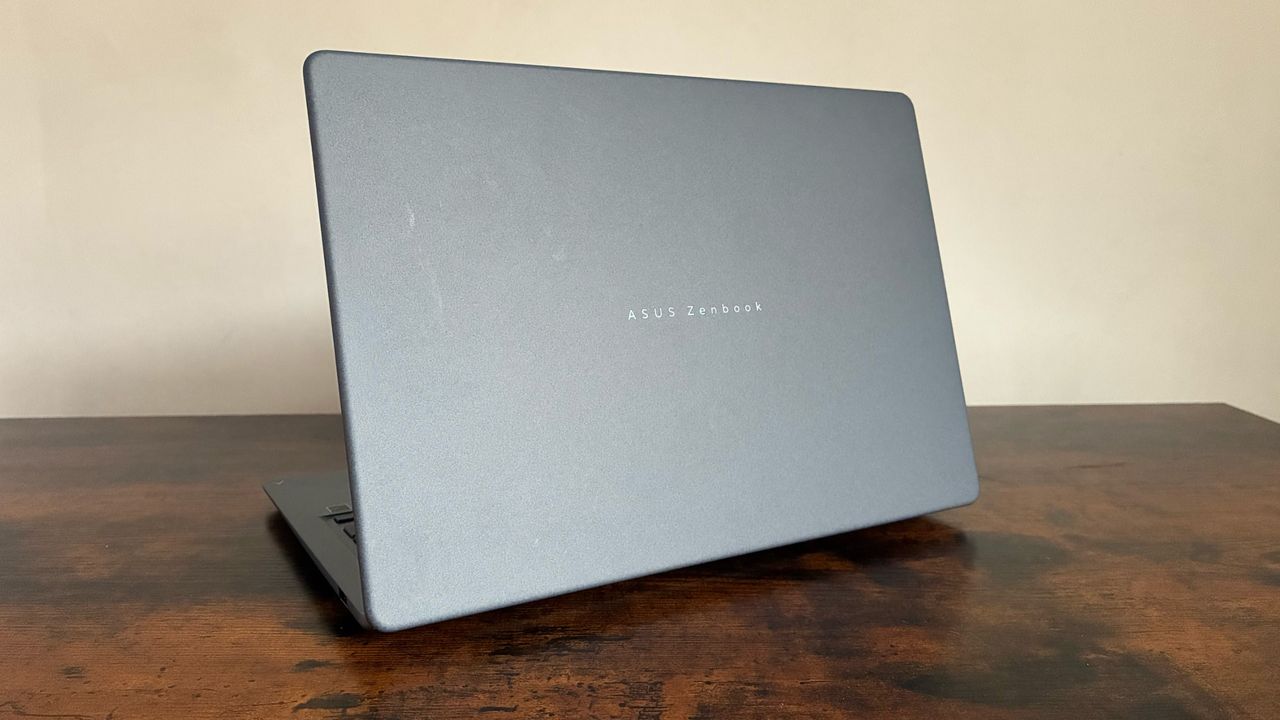
The most significant internal change in this model is the adoption of the Snapdragon X X1 26 100 processor. This 8-core, 8-thread chip is a step down from the Snapdragon X2 Elite found in the pricier A14, but it still brings the advantages of the ARM architecture to the Windows ecosystem. Paired with 16GB of LPDDR5X RAM and a 512GB M.2 NVMe PCIe 4.0 SSD, the machine is well-equipped for standard office multitasking, video conferencing, and productivity suites.
A key highlight of the chipset is the integrated Qualcomm Hexagon NPU (Neural Processing Unit), capable of delivering up to 45 TOPS (Trillions of Operations Per Second). This dedicated AI hardware is designed to handle modern Windows 11 features such as Copilot+ effects, live captions, and background noise removal without taxing the main CPU or GPU. In benchmark testing via Geekbench 7, the Zenbook 14 delivered a single-core score of 1,324 and a multi-threaded score of 10,547. While the single-core performance is modest compared to some high-end Intel or AMD counterparts, the multi-threaded score suggests the laptop is more than capable of handling complex, parallel workloads.
Battery life is another area where the Snapdragon X platform aims to excel. Asus claims up to 18 hours of web browsing from the 3-cell Li-ion battery. In a looped video playback test, the device lasted 10 hours and 13 minutes. While this falls short of the manufacturer’s maximum estimate, real-world usage during a standard office shift proved more promising, with the laptop comfortably lasting a full workday on a single charge. This suggests that the energy efficiency of the Snapdragon chip is better utilized during active productivity tasks than in sustained media consumption.
 Helpdesk & IT Service Management (ITSM)
SolarWinds Service Desk Unveils Major Updates to Workflow Automation, Microsoft Teams Integration, and Asset Management
In an era where IT Service Management (ITSM) is increasingly defined by...
 Helpdesk & IT Service Management (ITSM)
SolarWinds Service Desk September Update Introduces Advanced Process Integrations and Microsoft Teams Automation
As IT environments become increasingly complex and distributed, the demand for more...
 Helpdesk & IT Service Management (ITSM)
The Trillion-Dollar ROI Challenge: Why AI Infrastructure Spending Must Spark a Global Innovation Revolution
As the global technology sector pivots toward an era defined by generative...







