
The evolution of computing architecture is rarely a linear progression; it is a series of fits and starts, followed by periods of intense refinement. For the titans of networking, specifically Arista Networks and its long-standing rival Cisco Systems, the journey to optimize for the era of generative artificial intelligence has been a marathon rather than a sprint. While the industry has spent years laying the groundwork, the recent financial performance and strategic outlook provided by Arista suggest that the long-anticipated "hockey stick" growth curve for AI-related networking is finally beginning to materialize. However, as the company’s leadership makes clear, the industry is still only in the early stages of a massive, multi-year transition.
Taming a new computing architecture is a complex endeavor. In the previous era of cloud networking, which spanned roughly from 2010 to 2020, the primary challenge was relatively straightforward: manufacturers needed to produce higher-bandwidth Ethernet switches while simultaneously driving down the cost per bit. As the aggregate bandwidth per Application-Specific Integrated Circuit (ASIC) doubled, the cost of moving data decreased, enabling the creation of larger and more elastic networks. This predictable cycle defined the growth of the modern hyperscale data center.
AI, however, presents an entirely different set of demands. It requires high-radix devices and flatter network topologies because AI workloads are inherently sensitive to latency. In the world of traditional cloud computing, minor delays in data packet delivery were manageable. In the world of AI, where the cost of a Graphics Processing Unit (GPU) or specialized accelerator (XPU) is astronomical compared to standard compute engines, keeping these processors waiting for data is an economic disaster.
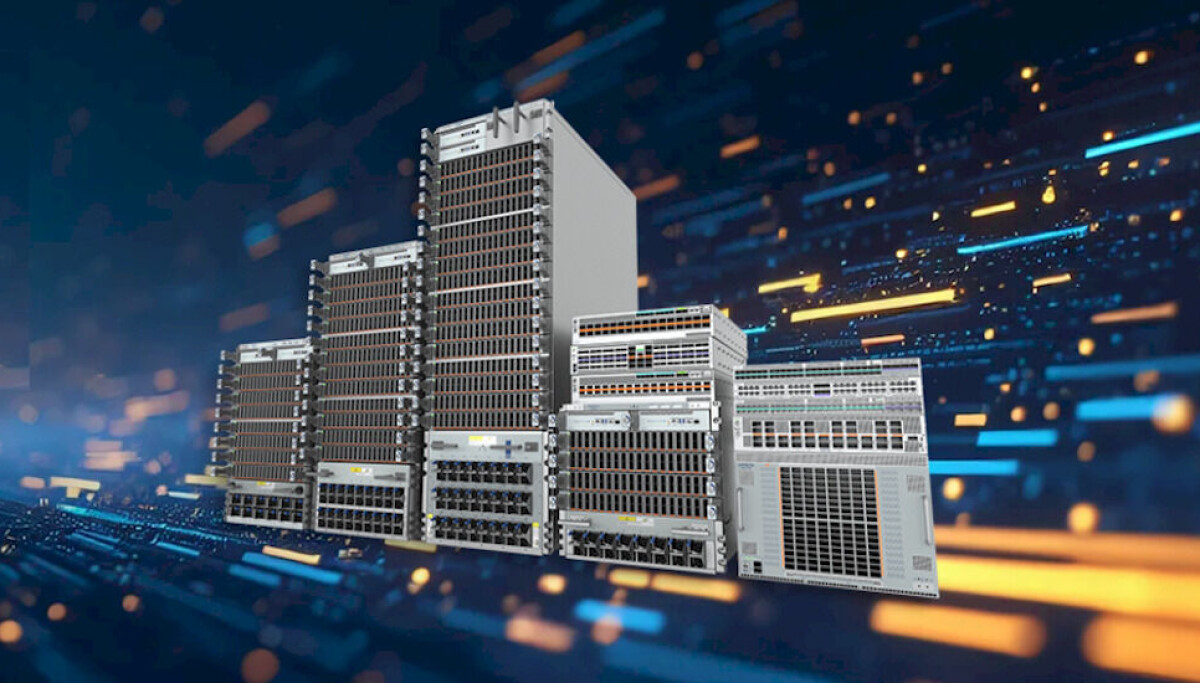
The industry often refers to the economic efficiency of these systems as "tokenomics." If GPUs were as inexpensive as "chips"—the common English term for the fried potatoes served in pubs—organizations might tolerate some level of architectural inefficiency. They could simply interleave workloads across more devices to make up for lost time. But with AI training and inference, that is not an option. The high capital expenditure required for AI hardware means that every millisecond of idle time erodes the potential return on investment. If the networking fabric cannot keep pace with the compute engines, it threatens to "kill the goose that lays the golden trillions of tokens."
Furthermore, the management of these massive clusters now requires AI to manage AI. To balance workloads across tens of thousands or even hundreds of thousands of accelerators within a single data center—and potentially millions across multiple regions—requires dynamic routing and the processing of vast amounts of telemetry data. Humans cannot correlate and analyze this data at the speed required to keep the system optimized. This has necessitated the development of tools like Arista’s Autonomous Virtual Assistant (AVA), which uses AI to oversee network health and security. As bad actors increasingly use AI to find and exploit vulnerabilities, the defense of this infrastructure must also be AI-driven. These developments have taken years to reach maturity, but they are now becoming essential components of the modern data center.
The Inevitability of Ethernet
In the current landscape of AI interconnects, there is a clear tension between proprietary systems and open standards. Nvidia, having moved early to create tightly coupled, shared-memory GPU clusters, currently enjoys a significant first-mover advantage. Its NVSwitch and NVLink technologies provide the high-speed, low-latency "scale-up" networking required for modern AI. However, the broader industry—including hyperscalers, cloud builders, national laboratories, and rival chipmakers like AMD—is wary of being locked into a single vendor’s proprietary ecosystem.
 Enterprise Tech & Infrastructure
Optimizing Amazon S3: How Enterprise Storage Leaders Can Navigate the Hidden Complexities of Cloud Cost Management
In the landscape of modern enterprise cloud architecture, Amazon S3 has long...
 Enterprise Tech & Infrastructure
The Architecture of Performance and Redundancy: A Deep Dive into RAID 10 Operations and Implementation
In the modern data center, the quest for the optimal balance between...
 Enterprise Tech & Infrastructure
The Pillars of Data Infrastructure: A Comprehensive Evaluation of the Top Enterprise Hard Drives for 2023
In the modern landscape of digital infrastructure, the demand for robust, high-capacity...