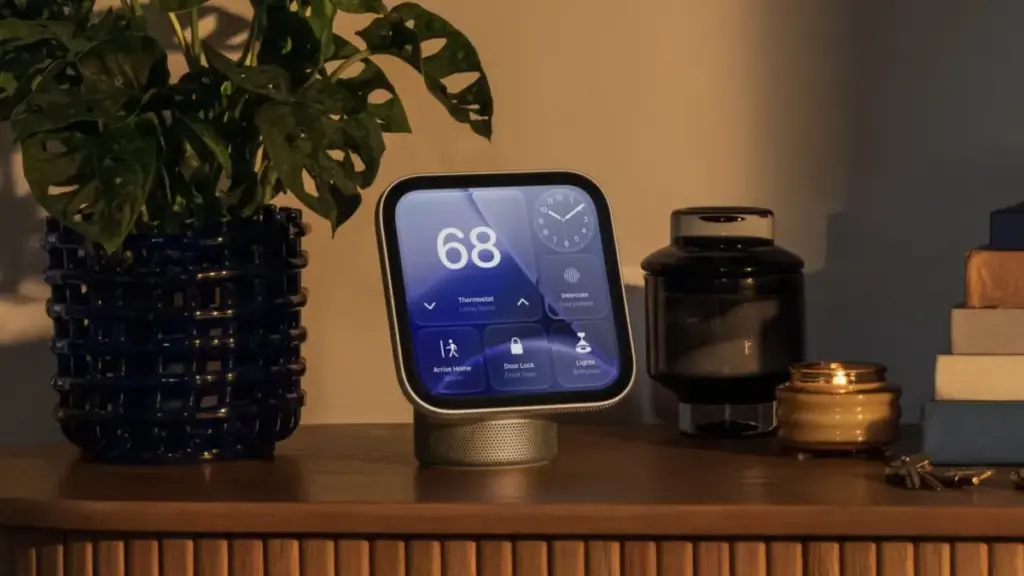
To address the potential for "stealth" recording, Apple has implemented several hardware and software cues. When the security camera feature is actively streaming or recording, a physical indicator light on the display will illuminate. This follows the design language seen on MacBooks and iPhones, where a green dot signifies camera usage. Furthermore, the HomeView will emit a distinct audible chime or sound to alert anyone in the room that the camera has been activated.
Beyond visual and auditory alerts, Apple is leveraging the connectivity of the Home app to keep all residents informed. Whenever the camera is accessed, every member of the "Home" sharing group will receive a notification on their personal devices. This transparency ensures that no single user can monitor the household without the knowledge of others, a move that aligns with Apple’s broader commitment to user privacy and consent.
Perhaps the most significant privacy feature discovered in the code is a restriction on remote activation. The software indicates that if any registered home members are detected as being physically present in the house, the security camera cannot be turned on remotely from an iPhone or iPad. In such cases, the camera can only be activated through physical interaction with the HomeView device itself.
This specific safeguard appears to be a deliberate effort to combat "stalking" and domestic abuse. By preventing a user from remotely "dropping in" on a camera while others are at home, Apple is mitigating the risk of the device being used to covertly spy on partners or family members. It is a sophisticated piece of ethical engineering that recognizes the potential for smart home technology to be weaponized in domestic settings.
The technical foundation of HomeView security
While the leaked code focuses on settings and privacy, the underlying technology required for these features is likely rooted in Apple’s custom silicon. For the HomeView to handle real-time video analysis—such as distinguishing between a pet and a human or recognizing specific faces—it will require a processor capable of handling the Neural Engine tasks currently found in the A-series or M-series chips.
By performing this analysis on-device, Apple maintains its stance on data privacy. Unlike competitors that may rely on cloud-based processing to identify motion or faces, Apple’s HomeKit Secure Video typically processes the video locally on a "Home Hub" (like a HomePod or Apple TV) before encrypting it and uploading it to iCloud. With HomeView, the display itself would likely act as its own hub, providing the necessary horsepower to keep sensitive data within the walls of the home.
The integration with HomeKit Secure Video also means that users will likely benefit from features like Activity Zones, which allow users to mask out high-traffic areas (like a busy street visible through a window) to prevent false motion alerts. Because the device is intended to be placed on shelves or mounted on walls in high-traffic areas like kitchens or living rooms, these granular controls will be essential for a functional security experience.
 Smart Home & IoT Solutions
Apple’s Upcoming HomeView Device Discovered to Feature Integrated HomeKit Security Camera Capabilities
As Apple prepares to deepen its footprint in the smart home market,...
 Smart Home & IoT Solutions
Controller for HomeKit app adds AI feature: ‘Just say it’
The core premise of the update is to allow users to use...
 Smart Home & IoT Solutions
Schlage Set to Launch Sense Pro Smart Deadbolt with Ultra Wideband Support for Seamless Apple Home Integration
The landscape of the modern smart home is undergoing a significant shift...