
For years, Apple’s presence in the smart home market has been characterized by a cautious, secondary approach. While Amazon and Google aggressively populated households with a diverse array of smart speakers, displays, and security cameras, Apple remained focused on its core ecosystem of iPhones, Macs, and Watches. However, recent developments and industry reports suggest that a fundamental shift is underway. Apple is reportedly preparing to mount its most significant challenge yet to the smart home status quo, culminating in a sophisticated home security and monitoring service slated for a 2027 debut.
According to a detailed report from Bloomberg’s Mark Gurman, Apple is not merely planning a few hardware refreshes but is instead architecting a comprehensive home security ecosystem. This strategy involves a blend of advanced hardware powered by "Apple Intelligence" and a dedicated subscription-based monitoring service. The move represents a pivot from providing the infrastructure for others—via the HomeKit framework—to becoming a primary provider of both the hardware and the professional services that protect the modern household.
Apple’s Strategic Expansion into Home Security and Monitoring
The cornerstone of this new ambition is a hardware device described as a privacy-centric home security camera and automation sensor. Unlike traditional security cameras that rely on constant video streaming and cloud-based recording, Apple’s upcoming device is expected to leverage high-level artificial intelligence to monitor the surrounding environment. The report indicates that the system may prioritize environmental data and behavioral patterns over traditional video footage, a move that aligns perfectly with Apple’s long-standing corporate identity as a champion of user privacy.
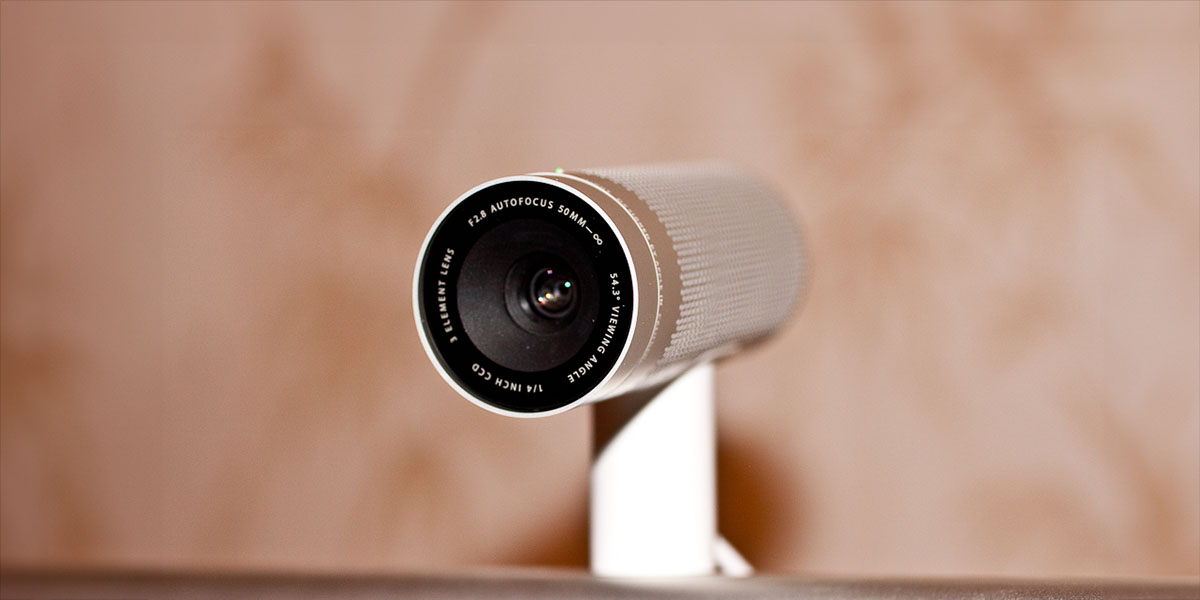
By utilizing on-device processing—a hallmark of the "Apple Intelligence" initiative—the proposed security sensor could potentially identify threats, detect falls, or recognize unauthorized entry without ever transmitting raw video of a user’s private life to a central server. This "privacy-first" approach to surveillance could serve as a major differentiator in a market currently dominated by companies whose business models often rely on data collection.
However, the most significant revelation in the recent report is the mention of a dedicated "home security and monitoring service." This suggests that Apple is looking to move beyond the one-time sale of hardware. By entering the monitoring space, Apple would be positioning itself against established security giants and tech competitors like Amazon’s Ring and Google’s Nest, both of which offer tiered subscription plans for professional monitoring and emergency response.
A dedicated monitoring service would represent a logical extension of Apple’s rapidly growing Services division. Over the past several years, services such as iCloud+, Apple Music, and Apple TV+ have become vital to the company’s bottom line, providing steady, recurring revenue that balances the cyclical nature of hardware sales. Integrating home security into this portfolio would not only increase the "stickiness" of the Apple ecosystem but also provide a new, high-value tier for the Apple One subscription bundle.
The 2027 Roadmap and the "HomePad" Revolution
While the security service is the long-term goal for 2027, Apple’s broader overhaul of its home products is expected to begin much sooner. The company is reportedly working on a multi-stage rollout of hardware designed to unify the smart home experience, which has historically been fragmented across various devices and apps.
Central to this immediate strategy is a new home hub device, colloquially referred to as the "HomePad." This device is expected to be a wall-mountable or tabletop display that acts as the command center for the modern smart home. For years, users have used iPads as makeshift home controllers, but the HomePad is rumored to be a purpose-built solution. It would likely run a specialized version of the operating system tailored for quick-access home controls, FaceTime calls, and acting as a central node for Matter-enabled devices.
In addition to the HomePad, Apple is reportedly readying updates for its existing home staples. A new Apple TV 4K is expected to bring faster processing and deeper integration with Apple’s AI features, while a refreshed HomePod mini is slated to offer improved audio capabilities and enhanced connectivity. These devices are seen as the "connective tissue" that will support the more advanced security sensors arriving in 2027.
The delay until 2027 for the security-specific hardware suggests that Apple is taking the time to refine the sensor technology. Building a camera that can accurately "monitor" a room using AI without traditional video requires immense processing power and sophisticated algorithms. Apple appears to be betting that by the time this product launches, its silicon will be more than capable of handling these complex tasks locally, ensuring that the "what happens in your home, stays in your home" promise remains intact.
Privacy as a Competitive Advantage in Surveillance
The home security market is currently at a crossroads. While consumers increasingly value the peace of mind that comes with connected cameras and sensors, there is a growing unease regarding the privacy implications of having internet-connected microphones and lenses inside the home. Competitors have faced numerous controversies over the years, ranging from unauthorized data access to the sharing of footage with law enforcement without warrants.

Apple’s entry into this space with an AI-driven, video-lite monitoring system could fundamentally change the conversation. If Apple can prove that its sensors can distinguish between a family pet and a human intruder—or a routine delivery and a potential theft—without storing hours of identifiable video, it may capture a segment of the market that has previously been hesitant to adopt smart security.
This approach also leverages Apple’s vertical integration. Because Apple designs its own chips, its own operating systems, and its own cloud infrastructure, it can create a "closed-loop" security system. In such a system, the encryption keys for home data would likely remain on the user’s device, making it technically impossible for even Apple to view the data. This level of security is difficult for competitors who rely on third-party hardware or less integrated software stacks to match.
Furthermore, the integration of these sensors with the broader Apple ecosystem offers unique possibilities. An Apple security system could, in theory, use the proximity of an Apple Watch or iPhone to automatically disarm itself when a resident arrives home, or use the HomePod’s microphones to listen for the sound of breaking glass or smoke alarms, feeding that data into the new monitoring service for a comprehensive safety net.
Impact on the Services Ecosystem and Market Position
The strategic implications of a 2027 monitoring service extend far beyond the home. Apple’s Services business is currently a powerhouse, but it requires constant innovation to maintain its growth trajectory. A professional monitoring service—potentially including features like 24/7 human dispatch, cellular backup for security sensors, and advanced AI alerts—would likely command a premium price point.

Industry analysts suggest that Apple could fold this service into the "Premier" tier of Apple One. This would create an incredibly compelling value proposition: for a single monthly fee, a family could have access to cloud storage, music, movies, news, fitness, and now, professional home security. This level of integration is something that few other companies can offer at a global scale.
However, the road to 2027 is not without challenges. The smart home market is notoriously difficult to penetrate due to the long life cycles of home appliances and the complexity of cross-brand compatibility. While the Matter standard has helped alleviate some of these issues, Apple will still need to convince consumers to replace their existing Ring or Nest setups with Apple-branded hardware.
The success of this initiative will likely depend on how well Apple executes the launch of its 2025 and 2026 home products. If the "HomePad" and the new Apple TV can establish Apple as a competent and central player in home automation, the transition to a full-scale security and monitoring provider in 2027 will be a natural progression.
As the tech giant prepares for its upcoming product events, the focus is often on the next iPhone or the latest Mac. But the real story may be unfolding in the background, as Apple quietly builds the foundation for a future where it is not just a provider of personal electronics, but the primary guardian of the digital and physical home. With a 2027 timeline in place, the company has set a clear path toward redefining what it means to be "secure" in the modern age.
 Smart Home & IoT Solutions
Philips Hue Enhances Smart Home Ecosystem with Launch of SpatialAware and New Video Doorbell Features
The landscape of smart home lighting has undergone a significant transformation today...
 Smart Home & IoT Solutions
Apple’s Smart Home Ambitions Expand with LG Partnership and Exclusive ‘Proximity Control’ Features
As the technology industry looks toward Apple’s upcoming "Welcome Home" special event...
 Smart Home & IoT Solutions
Apple Poised to Enter Smart Home Display Market with Design Inspired by Iconic iMac G4
In a move that signals a significant shift in its hardware strategy,...






