
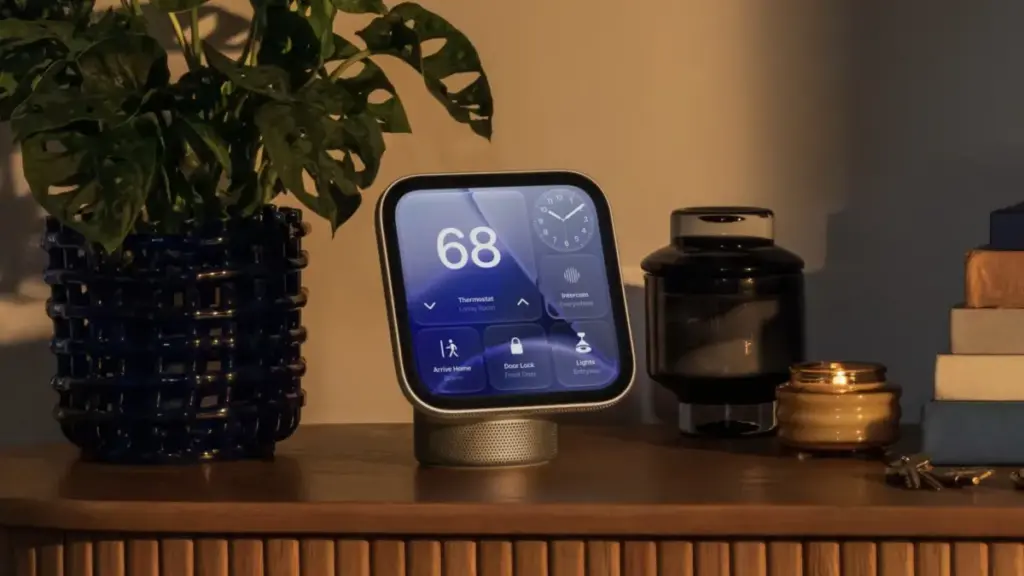
These measures are designed to prevent "silent" surveillance, a common concern with connected devices. By ensuring that every person in the home is alerted to the camera’s status, Apple is attempting to mitigate the discomfort often associated with having an "always-on" lens in private living spaces.
Preventing Misuse and Domestic Surveillance
Perhaps the most noteworthy discovery within the software is a restriction on remote activation. The code indicates that if any registered household members are detected within the home, the security camera feature cannot be activated remotely via an iPhone or iPad. Instead, in these scenarios, the camera can only be enabled or disabled through the physical HomeView device itself.
This design choice appears to be a proactive measure to prevent the device from being used as a tool for domestic surveillance or abuse. In many smart home ecosystems, a primary account holder can often view camera feeds at any time without the knowledge of other residents. By locking out remote access when someone is physically present, Apple is creating a technical barrier against "stalkerware" style behavior within the home. This ensures that the device serves the safety of the household as a whole, rather than becoming a tool for one individual to monitor others covertly.
This level of consideration reflects a broader trend in Apple’s software engineering, where the company anticipates potential societal misuses of its technology. Similar to the anti-stalking measures implemented for AirTags, the HomeView privacy protocols suggest that Apple is prioritizing the safety and autonomy of the individual over the convenience of unrestricted remote access.
Market Context and the Value of Integration
The revelation that HomeView will double as a HomeKit security camera significantly shifts the value proposition of the device. For several years, Apple has lagged behind competitors like Amazon and Google in the smart display category. The Amazon Echo Show and the Google Nest Hub have long offered camera integration for both security and communication. However, Apple’s entry into this space appears to be focused on a more secure, privacy-first implementation of these features.
For consumers already invested in the Apple ecosystem, the inclusion of a security camera in a hub device could be a deciding factor. Many users currently purchase third-party HomeKit-compatible cameras to monitor their living spaces. If HomeView can provide high-quality video recording and streaming natively, while adhering to the strict end-to-end encryption standards of HomeKit Secure Video, it could consolidate two devices into one.

The integration also hints at the broader utility of the HomeView hardware. If the device is intended to be a "shelf-mounted" or "wall-mounted" unit, its positioning would be ideal for capturing wide-angle views of a room. This placement, combined with Apple’s silicon—likely an A-series or M-series chip—would allow for advanced on-device processing of video feeds, ensuring that facial recognition and object detection happen locally rather than in the cloud.
 Smart Home & IoT Solutions
Apple Poised for Major Smart Home Overhaul as Apple Intelligence Breaks Siri Development Bottleneck
For several years, Apple’s presence in the smart home market has felt...
 Smart Home & IoT Solutions
Schlage Set to Launch Sense Pro Smart Deadbolt with Ultra Wideband Support for Seamless Apple Home Integration
The landscape of the modern smart home is undergoing a significant shift...
 Smart Home & IoT Solutions
Apple Set to Revolutionize the Smart Home with Upcoming Smart Display Launch
Apple is reportedly less than two weeks away from unveiling its highly...







