
The debut of OpenAI’s ChatGPT in the closing months of 2022 did more than just introduce a new consumer tool; it ignited a generational shift in computing that shows few signs of slowing down. This "GenAI era" has moved with a velocity that has redefined the priorities of the modern datacenter, driving an insatiable demand for high-performance silicon. However, as the industry matures, the nature of the artificial intelligence workload is undergoing a fundamental transformation. While the first wave of generative AI was characterized by massive large language models (LLMs) and "chatty" interfaces, the next frontier is defined by agentic AI—autonomous systems capable of reasoning, planning, and executing complex tasks.
This shift comes at a time of significant broader volatility. In the United States, the recent "Blue Wave" in the midterm elections has introduced a new layer of uncertainty for the technology sector. The potential for increased regulation of the AI industry could serve as a drag on the massive datacenter building boom that has swept the country over the last two years. Simultaneously, the latest scandal involving Nvidia co-founder and CEO Jensen Huang has left analysts wondering if the industry leader is facing a temporary "blip" or a more systemic, long-term challenge. Against this backdrop of political and corporate flux, the technological requirements of the datacenter are pivoting, and Advanced Micro Devices (AMD) is positioning itself to be the primary beneficiary of this new architecture.
The emerging agentic AI market is currently the focus of intense speculation and aggressive forecasting. Some analyst firms suggest the sector will expand at a compound annual growth rate of nearly 43 percent between now and 2034. This growth is expected to drive a significant realignment of datacenter infrastructure. For the past four years, the various iterations of generative AI—including reasoning models and Mixture-of-Experts (MoE) architectures—have been an unprecedented boon for GPU manufacturers. Nvidia, in particular, has seen its valuation rocket into the trillions as the industry prioritized raw floating-point performance for model training. During this period, the central processing unit (CPU), which was long the undisputed heart of the server, was often relegated to a supporting role, acting as a traffic controller for the massive arrays of GPUs.
However, the computational demands of agentic AI are distinct from the prompt-and-response patterns of early chatbots. Unlike a standard LLM that generates a string of text based on a single input, an AI agent operates as a persistent, multi-step problem solver. This shift requires the specific capabilities that CPUs bring to the table, particularly in their roles as AI host processors and as the "sandboxes" that run the code generated by AI models.
In the agentic AI era, the shape of the workload changes entirely. Dan McNamara, senior vice president and general manager for compute and enterprise AI at AMD, recently noted that instead of merely answering a single prompt, an agent must break a high-level goal into a series of discrete steps. The agent must decide what to do next, call upon multiple different models, query various databases, and connect with external APIs. It must run enterprise applications, verify permissions, retrieve specific memories, validate its own output, and then loop back through the process to refine its results. This creates an infrastructure profile that is radically different from the "prompt-in, answer-out" workflow of a basic chatbot.
Because CPUs are inherently better than GPUs at orchestrating these complex, branching tasks—as well as managing policy, security, and the execution of diverse code—the industry is anticipating a change in system design. Currently, the ratio of GPUs to CPUs in high-end AI servers typically ranges between 1:4 and 1:8. Industry experts expect that as agentic AI becomes the dominant workload, that ratio will move toward 1:1. For companies like AMD and Intel, this shift represents a return to a more comfortable and lucrative equilibrium.
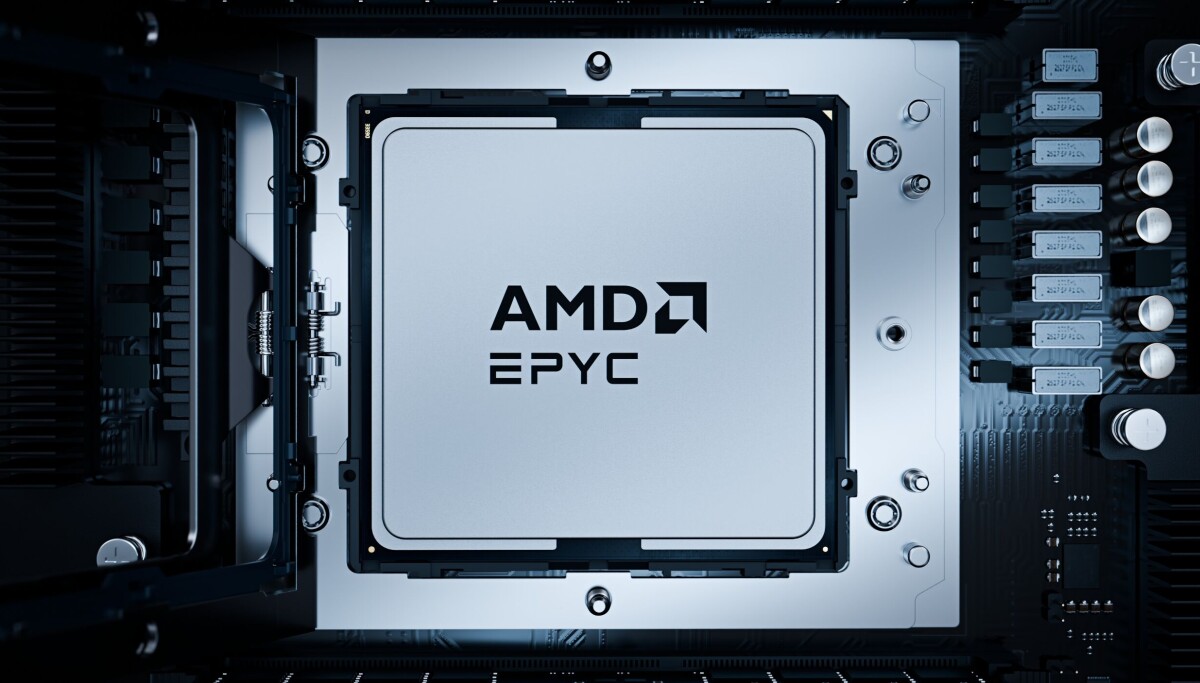
AMD executives have spent the past week highlighting this opportunity as they unveil more details regarding their 6th Generation Epyc CPUs. Codenamed "Venice" and built on the 6th generation of the Zen microarchitecture, these chips represent AMD’s long-term bet on the evolving AI landscape. Mike Clark, a Corporate Fellow and the lead Zen architect at AMD, recently told journalists and analysts that while they could not have predicted exactly how agentic AI would manifest, they always maintained a belief that the Core Complex Die (CCD) would play a critical role in the future of AI. Clark noted that the company made significant investments in Zen 5 to prepare for this shift, and with Zen 6, they have continued to double down on enhancing AI capabilities.
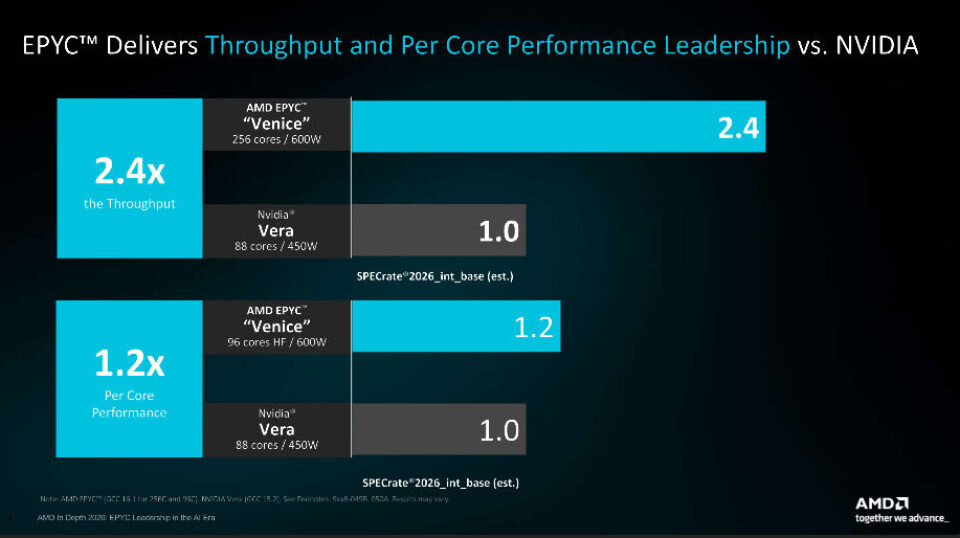
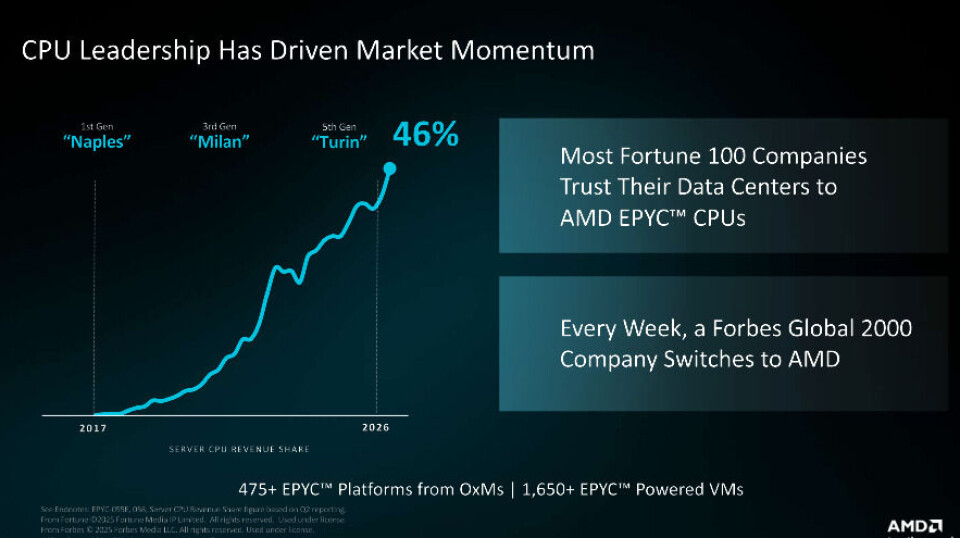
While AMD’s advancements do not necessarily mean the company will overtake Nvidia in the GPU market, they do suggest that AMD is excellently positioned to dominate the CPU side of the AI equation. Currently holding approximately 46 percent of the datacenter CPU market, AMD is proving to be a formidable rival to Intel, and more importantly, is demonstrating an ability to generate significant revenue from the agentic wave.
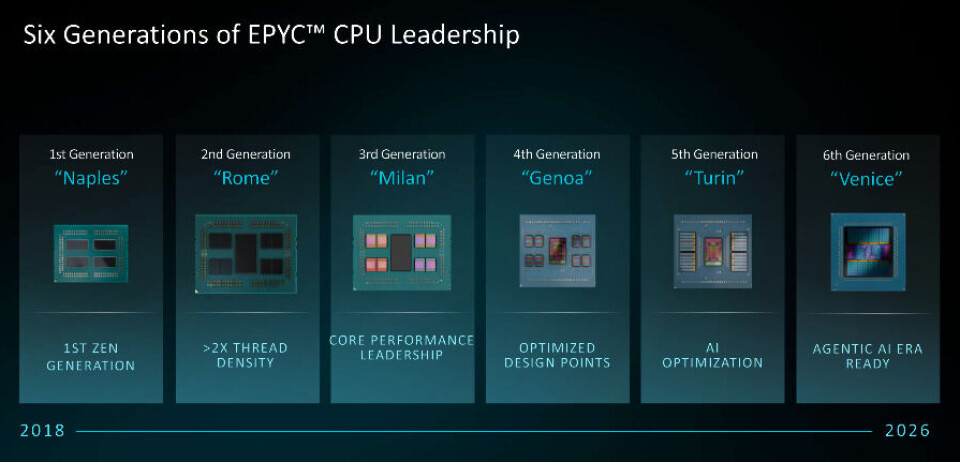
Madhu Rangarajan, corporate vice president for compute and enterprise AI products at AMD, recently emphasized that the development of the "Venice" family was a natural progression of a strategy started nearly a decade ago. Since the introduction of the first-generation "Naples" chips in 2018, AMD has been refining its Epyc line to serve increasingly specialized segments of the market. By the time the fourth-generation "Genoa" chips arrived in 2022, the company had expanded its roadmap to include optimized designs like "Turin," "Bergamo," and "Siena," each targeting different sub-segments of the datacenter ecosystem.
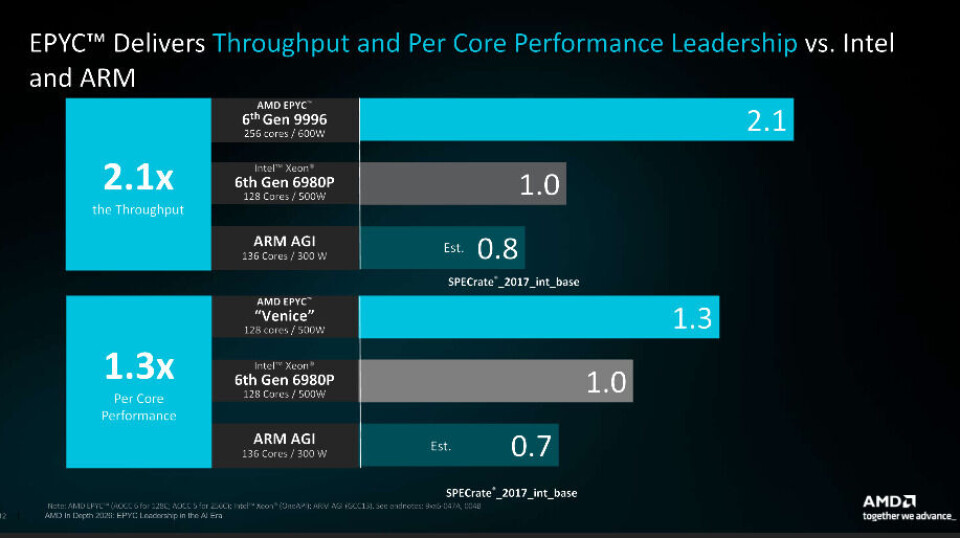
Rangarajan echoed the sentiment that while "Venice" wasn’t purpose-built for a market that didn’t fully exist yet, its architecture is a perfect fit for the demands of AI agents. These agents require a CPU that can handle a broad set of workloads simultaneously. With over 1,000 instances currently available, AMD is offering customers a consistent platform that can scale regardless of the specific implementation of their AI strategy.
The performance metrics for the Venice Epyc 9006 series are particularly striking. AMD is essentially doubling the throughput from one generation to the next, with Venice delivering 1.9 times the throughput of the prior "Turin" Epyc 9005 processors. The hardware specifications have seen a massive uplift: clock speeds have increased from 5.0 GHz with 64 cores in the Turin generation to 5.3 GHz with up to 96 cores in Venice. Memory bandwidth has also seen a significant leap, moving from 12 channels of DDR5 at 614 GB/sec to 16 channels delivering 1.6 TB/sec. Furthermore, I/O bandwidth has doubled with the transition from PCI-Express Gen 5 to Gen 6.
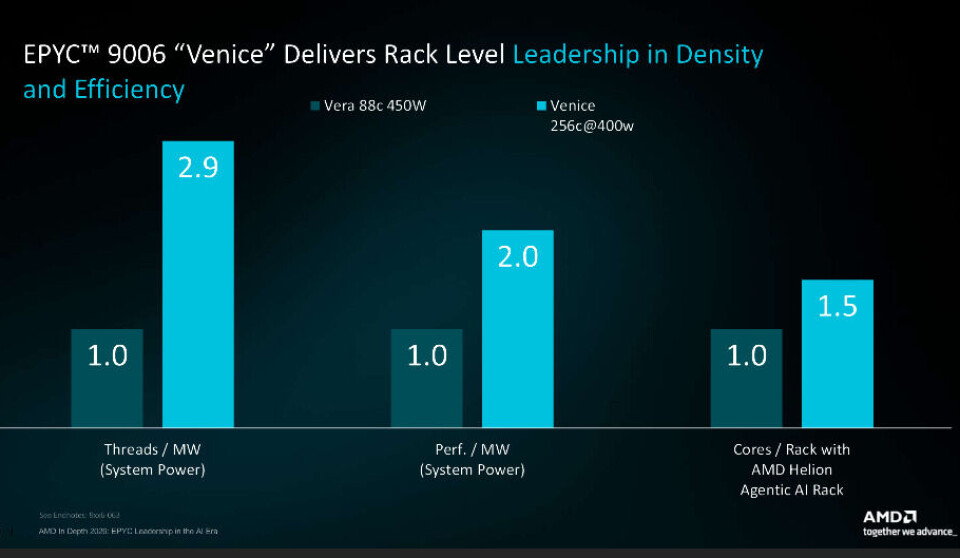
When compared to its competitors, AMD claims that Venice holds a distinct edge. In terms of concurrent agents—an increasingly vital metric for modern enterprises—AMD’s 6th Gen 256-core chip, running at 400 watts, reportedly offers 3.3 times the agents-per-watt of Nvidia’s Vera. It also claims 1.8 times the agents-per-dollar when compared to Intel’s 6th Gen Xeon 6980P and can fit 1.5 times more agents into a Helion AI Rack than a comparable Vera-based setup.
Rangarajan pointed out that agentic AI is driving CPU demand across three distinct networks rather than just general-purpose servers. Agents frequently perform intensive searches in dedicated clusters, execute enterprise tools like CRM and ERP systems, and access massive databases. This multifaceted activity requires a broad and powerful CPU portfolio. One of the most critical areas of performance for Venice involves "ephemeral tools." These are short-lived, isolated runtimes created during an agent’s session to perform a specific task—such as parsing a document or compiling code—and are then automatically destroyed.
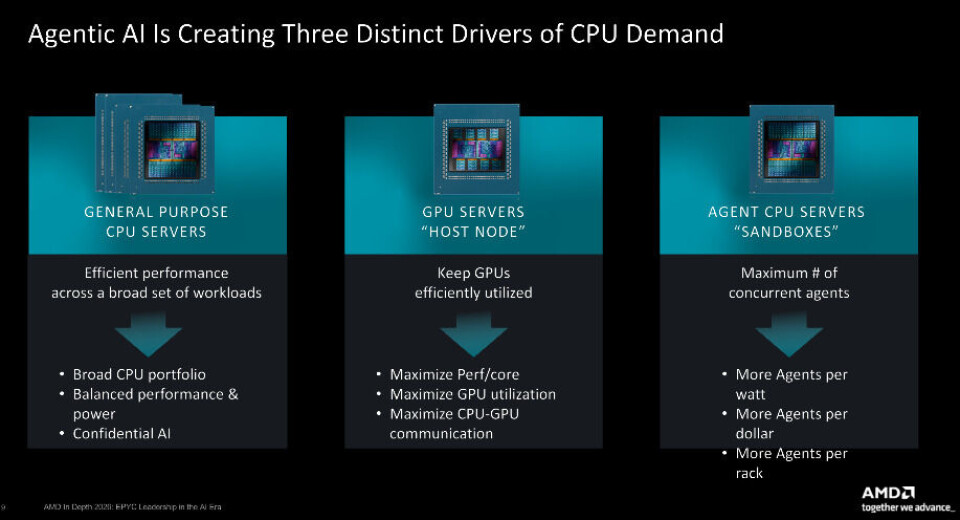
According to Rangarajan, ephemeral tools represent the most interesting and challenging part of agentic AI because there is no single, well-defined benchmark for them. They encompass a vast and varied set of workloads. To measure Venice’s efficacy, AMD selected a representative mix of tasks, including group graphs, document parsing, and coding agent compilations. In each of these stages, the Venice architecture showed significant improvements over previous generations and competitor products. The 256-core Epyc 9996 Venice processor, in particular, outperformed both Intel’s 128-core Xeon 6980P and Amazon’s 192-core Graviton5 chips by substantial margins.
As the industry prepares for the next stage of the AI revolution, the focus is shifting from raw power to intelligent orchestration and efficiency. The "Venice" generation of Epyc CPUs appears to be the cornerstone of AMD’s strategy to lead this transition. By focusing on the specific, multi-step requirements of agentic AI, AMD is not just participating in the current boom but is helping to define the hardware standards for the next decade of computing. With further analyses of the Venice SKU stack and deep dives into the forthcoming "Verano" and "Venice-X" CPUs expected next year, the roadmap for the agentic era is becoming increasingly clear.
 Enterprise Tech & Infrastructure
Decoding the Total Cost of Ownership: A Strategic Approach to Amazon S3 Storage Optimization
For the modern enterprise, the Amazon S3 bill is frequently a source...
 Enterprise Tech & Infrastructure
The Security Architecture of Enterprise Storage: Evaluating the Vulnerabilities of DAS and NAS Systems
In the modern enterprise landscape, data is frequently characterized as the lifeblood...
 Enterprise Tech & Infrastructure
The Architecture of Performance: Assessing the Strategic Role of RAID 10 in Modern Data Centers
In the complex ecosystem of enterprise data storage, the search for an...







