
Because CPUs are inherently better than GPUs at orchestrating these complex, branching tasks—as well as managing policy, security, and the execution of diverse code—the industry is anticipating a change in system design. Currently, the ratio of GPUs to CPUs in high-end AI servers typically ranges between 1:4 and 1:8. Industry experts expect that as agentic AI becomes the dominant workload, that ratio will move toward 1:1. For companies like AMD and Intel, this shift represents a return to a more comfortable and lucrative equilibrium.
AMD executives have spent the past week highlighting this opportunity as they unveil more details regarding their 6th Generation Epyc CPUs. Codenamed "Venice" and built on the 6th generation of the Zen microarchitecture, these chips represent AMD’s long-term bet on the evolving AI landscape. Mike Clark, a Corporate Fellow and the lead Zen architect at AMD, recently told journalists and analysts that while they could not have predicted exactly how agentic AI would manifest, they always maintained a belief that the Core Complex Die (CCD) would play a critical role in the future of AI. Clark noted that the company made significant investments in Zen 5 to prepare for this shift, and with Zen 6, they have continued to double down on enhancing AI capabilities.
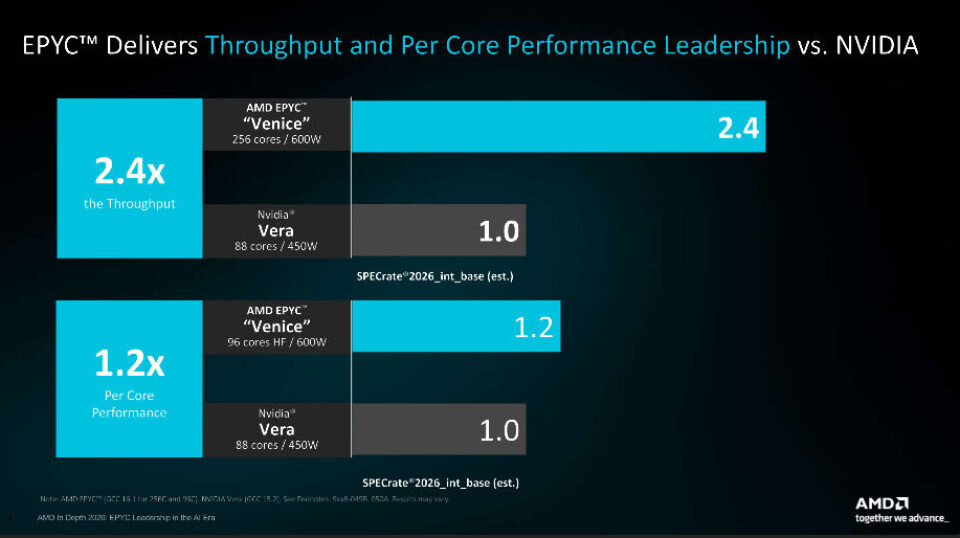
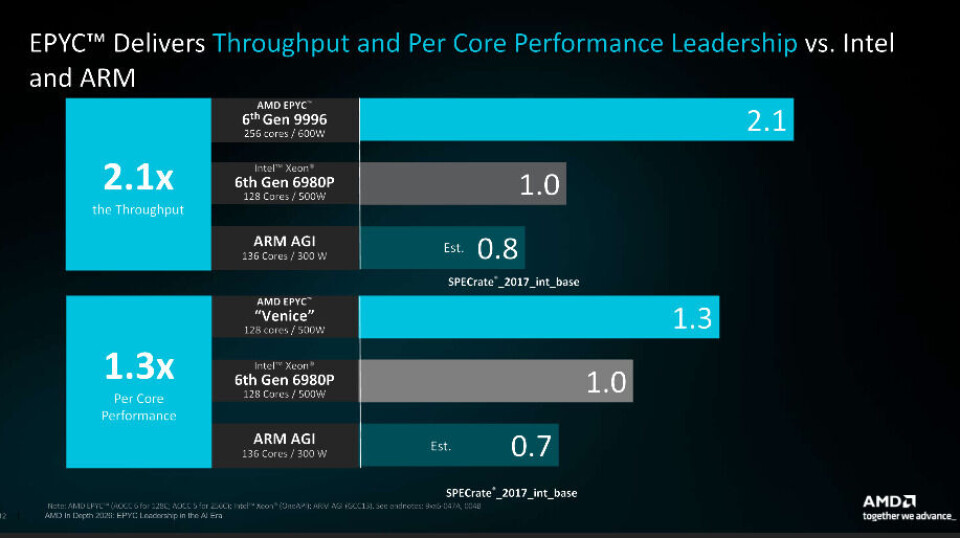
While AMD’s advancements do not necessarily mean the company will overtake Nvidia in the GPU market, they do suggest that AMD is excellently positioned to dominate the CPU side of the AI equation. Currently holding approximately 46 percent of the datacenter CPU market, AMD is proving to be a formidable rival to Intel, and more importantly, is demonstrating an ability to generate significant revenue from the agentic wave.
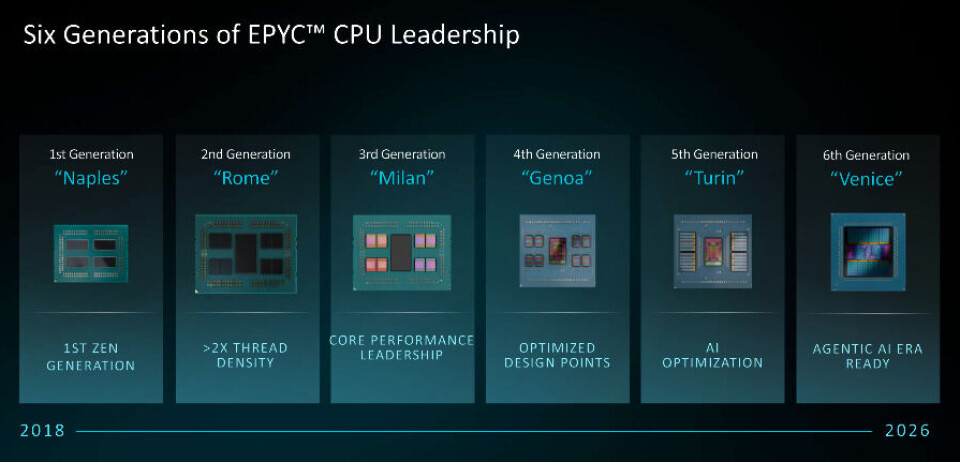
Madhu Rangarajan, corporate vice president for compute and enterprise AI products at AMD, recently emphasized that the development of the "Venice" family was a natural progression of a strategy started nearly a decade ago. Since the introduction of the first-generation "Naples" chips in 2018, AMD has been refining its Epyc line to serve increasingly specialized segments of the market. By the time the fourth-generation "Genoa" chips arrived in 2022, the company had expanded its roadmap to include optimized designs like "Turin," "Bergamo," and "Siena," each targeting different sub-segments of the datacenter ecosystem.
Rangarajan echoed the sentiment that while "Venice" wasn’t purpose-built for a market that didn’t fully exist yet, its architecture is a perfect fit for the demands of AI agents. These agents require a CPU that can handle a broad set of workloads simultaneously. With over 1,000 instances currently available, AMD is offering customers a consistent platform that can scale regardless of the specific implementation of their AI strategy.
 Enterprise Tech & Infrastructure
Dell Overtakes HPE in Shifting HPC and AI-Sci Market as Global Spending Eyes $135 Billion Milestone
The annual rhythm of the supercomputing community is defined by two major...
 Enterprise Tech & Infrastructure
AMD Acquires World Labs for $8.2 Billion to Rival Nvidia in the Frontier of World Models
In a massive strategic move designed to reshape its standing in the...
 Enterprise Tech & Infrastructure
The Pillars of Data Infrastructure: A Comprehensive Review of 2023’s Top Enterprise Hard Drives
In the modern corporate landscape, data storage is no longer a secondary...







