
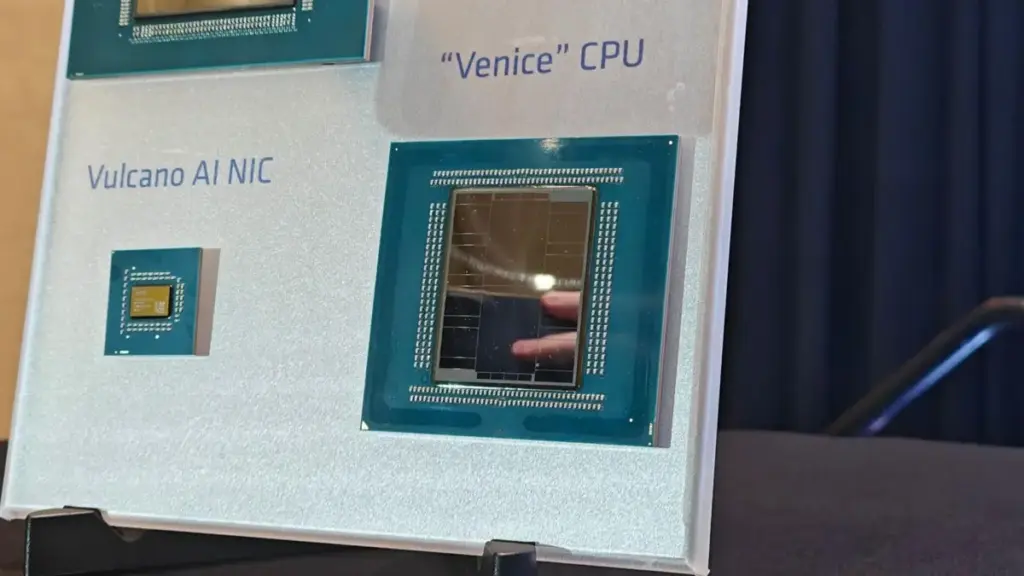
In a significant expansion of its data center strategy, AMD has released comprehensive performance data for its upcoming EPYC "Venice" processor family. The new details, shared via an extensive technical white paper, provide the first official look at how the company’s next-generation Zen 6 architecture intends to reshape the competitive landscape of the server market. By targeting both traditional x86 rivals and the burgeoning presence of ARM-based silicon from Nvidia, AMD is positioning its 256-core flagship as a transformative force in high-performance computing and enterprise infrastructure.
The release follows the initial introduction of the Venice platform earlier this summer, but the new documentation offers a much more granular view of the performance metrics AMD expects to achieve. The primary takeaway from the latest data is a direct challenge to Nvidia’s Grace-successor, the "Vera" CPU. AMD claims that its top-tier 256-core Venice chip is more than twice as fast as Nvidia’s Vera in critical workloads. Furthermore, in scenarios where per-core performance is the primary metric, AMD’s 96-core high-frequency model reportedly outperforms Nvidia’s 88-core Vera by approximately 20% per-core.
This aggressive posturing marks a shift in the industry’s narrative. For years, the server market was defined by the rivalry between AMD’s EPYC and Intel’s Xeon. While that competition remains fierce—with AMD claiming up to a 3.4x performance jump over current Intel Xeon competition in specific benchmarks—the focus on Nvidia suggests that AMD views the rise of ARM-based data center CPUs as the next major frontier to conquer.
Architectural Innovations and Technical Specifications
The EPYC Venice processors are built upon the Zen 6 architecture, which represents a fundamental evolution in how AMD designs its server chips. According to the white paper, the flagship EPYC 9996 model will feature a staggering 256 cores. This massive core count is designed to meet the demands of modern cloud providers and hyperscalers who require maximum thread density for virtualization, containerized microservices, and large-scale data processing.
One of the most striking technical specifications revealed is the inclusion of up to 1,024MB of L3 cache. In the world of high-performance computing, cache size is often a bottleneck for complex simulations and database management. By offering a full gigabyte of L3 cache, AMD is addressing the "memory wall" that often hampers performance when the CPU must wait for data to be fetched from system RAM. This massive cache pool, combined with the Zen 6 architecture, is a primary driver behind the significant performance gains reported in the SPEC CPU 2026 Integer Rate tests.
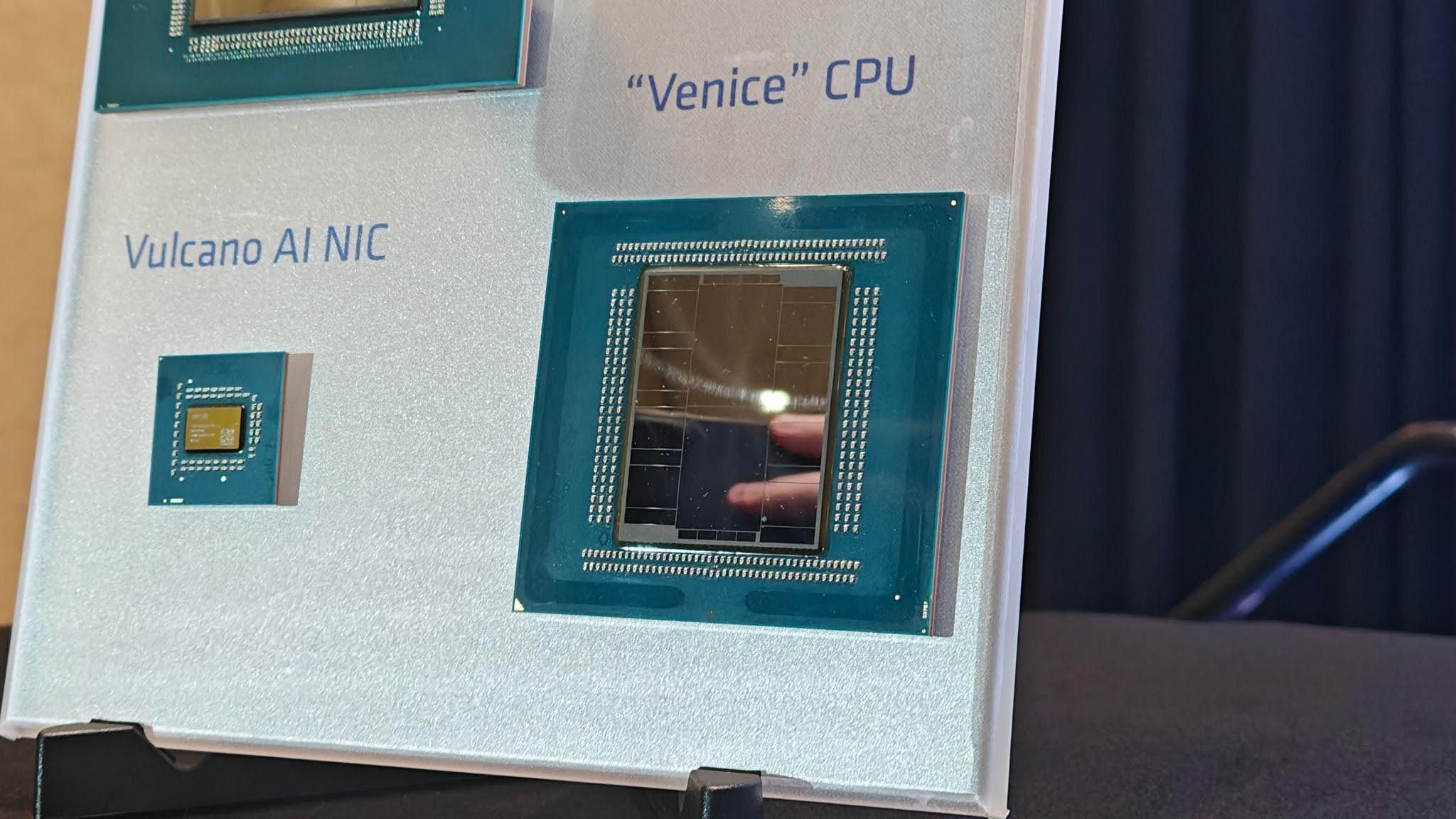
To feed these 256 cores, AMD is also upgrading the memory subsystem. The Venice platform will support 16-channel memory, a substantial increase from the 12-channel configuration found in current-generation EPYC Turin and Genoa chips. This expanded memory bandwidth is essential for ensuring that the high core counts are not starved of data, particularly in AI inference and memory-intensive scientific workloads. Additionally, AMD is targeting clock speeds of up to 5GHz for certain models within the Venice lineup, a notable milestone for server-class hardware where power efficiency and thermal management usually necessitate lower frequencies than consumer desktop parts.
The Competitive Stand-off with Nvidia and Intel
The comparison with Nvidia’s Vera architecture is particularly noteworthy because it highlights the divergence in design philosophies between x86 and ARM. Nvidia has been gaining ground in the data center by pairing its powerful GPUs with custom ARM CPUs, such as the Grace Superchip. By demonstrating that Venice can outperform Vera by such a wide margin, AMD is making the case that x86 remains the superior architecture for general-purpose server workloads and high-density compute.
The 20% per-core advantage claimed for the 96-core Venice model against the 88-core Vera is a critical metric for enterprise customers. Many software licenses are sold on a per-core basis, meaning that higher performance per-core directly translates to lower total cost of ownership (TCO) for the customer. If AMD can deliver significantly more work per core while maintaining competitive power envelopes, it places immense pressure on Nvidia’s CPU-only offerings.
The contrast with Intel is even more pronounced in AMD’s internal testing. The claim of a 3.4x performance increase over Intel Xeon competition suggests that AMD believes it has widened the gap in throughput-heavy applications. While Intel has been focusing on specialized accelerators integrated into its Xeon chips—such as those for AI and data compression—AMD’s strategy with Venice appears to be centered on raw, scalable throughput and massive architectural efficiency.
SPEC CPU 2026 and the Importance of Integer Rate
The benchmarks cited in the white paper rely heavily on the SPEC CPU 2026 Integer Rate test. This benchmark is widely regarded as the industry standard for measuring the general-purpose compute performance of a processor. It simulates a variety of real-world tasks, including compilers, data compression, and various algorithmic workloads.
AMD’s decision to use SPEC CPU 2026 as the primary battleground for Venice is a clear signal to IT decision-makers. It emphasizes that these chips are not just specialized "AI-only" components, but are instead versatile workhorses capable of handling everything from traditional enterprise applications to the most modern cloud-native stacks. The integer rate performance is a direct reflection of the Zen 6 core’s ability to handle complex instructions efficiently, and the 20% per-core lead suggests that the architectural improvements in Zen 6 go beyond simply adding more cores to a die.
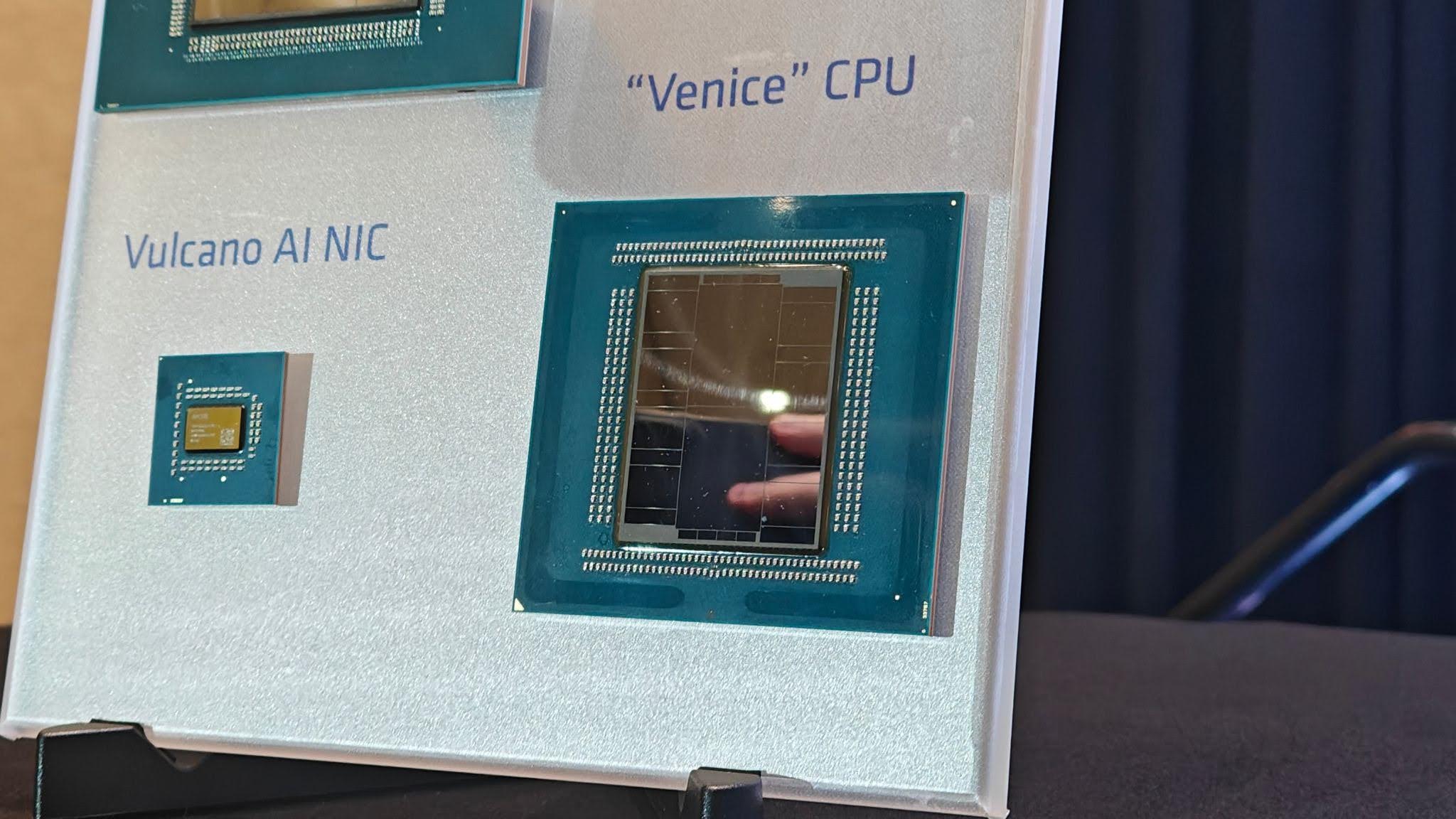
The white paper also touches on the scalability of the Venice platform. By utilizing a multi-chip module (MCM) approach that AMD has perfected over several generations of EPYC, the company can offer a wide range of products within the Venice family. This allows them to tailor specific chips for different market segments—ranging from high-frequency, lower-core-count chips for latency-sensitive tasks to the 256-core behemoths for maximum throughput.
Market Implications and the Road Ahead
The data center market is currently in a state of rapid flux, driven by the explosion of generative AI and the continuous migration of enterprise workloads to the cloud. AMD’s EPYC Venice processors are arriving at a time when efficiency and density are more important than ever. As data centers face increasing scrutiny over power consumption and physical footprint, the ability to pack 256 high-performance cores into a single socket becomes a major competitive advantage.
AMD’s roadmap has been remarkably consistent over the last few years, allowing them to gain significant market share from Intel. With Venice and the Zen 6 architecture, AMD is attempting to maintain that momentum while pre-emptively striking at Nvidia’s attempts to diversify into the CPU space. The 16-channel memory support and 5GHz clock speeds are not just headline-grabbing numbers; they represent the infrastructure necessary to support the next decade of data center growth.
While the benchmarks provided by AMD are internal and will eventually need to be verified by independent third-party testing once the hardware is commercially available, the level of detail in the white paper suggests a high degree of confidence in the Zen 6 architecture. For enterprise customers, the promise of a chip that is twice as fast as the nearest ARM competitor and more than three times faster than legacy x86 options is a compelling proposition.
As the industry moves toward the official release of the Venice platform, the focus will likely shift to power efficiency and real-world deployment. AMD has historically performed well in performance-per-watt metrics, and if Venice can maintain that reputation while delivering these massive performance leaps, it will solidify AMD’s position at the top of the server market. The battle for the data center is no longer just about who has the most cores, but who can provide the most efficient, scalable, and powerful platform for the diverse workloads of the future. With the latest Venice data, AMD has made it clear that they intend to be the ones setting the pace.
 Hardware Reviews & PC Building
Unofficial Grand Theft Auto V Browser Port Faces Swift Takedown Following Viral Technical Demonstration
The landscape of modern gaming is often defined by the boundaries of...
 Hardware Reviews & PC Building
Nvidia launches Open Agent Safety Platform to restrain rogue AI agents — new hardware-and-software security stack…
The introduction of the Open Agent Safety Platform arrives at a critical...
 Hardware Reviews & PC Building
Privacy Concerns Surface for Meta’s Muse AI as Reports Suggest Unauthorized Access to Personal Messages
The rapid evolution of artificial intelligence has brought with it a wave...







