For years, domain investors have sought more efficient ways to interact with the Afternic ecosystem. As one of the world’s largest liquidity providers for the domain secondary market, Afternic’s influence on how domains are priced, listed, and sold is immense. The introduction of the Portfolio API represents a move to modernize the "plumbing" of the domain industry, allowing for a level of automation that was previously reserved for institutional-scale registrars or exclusive partners.
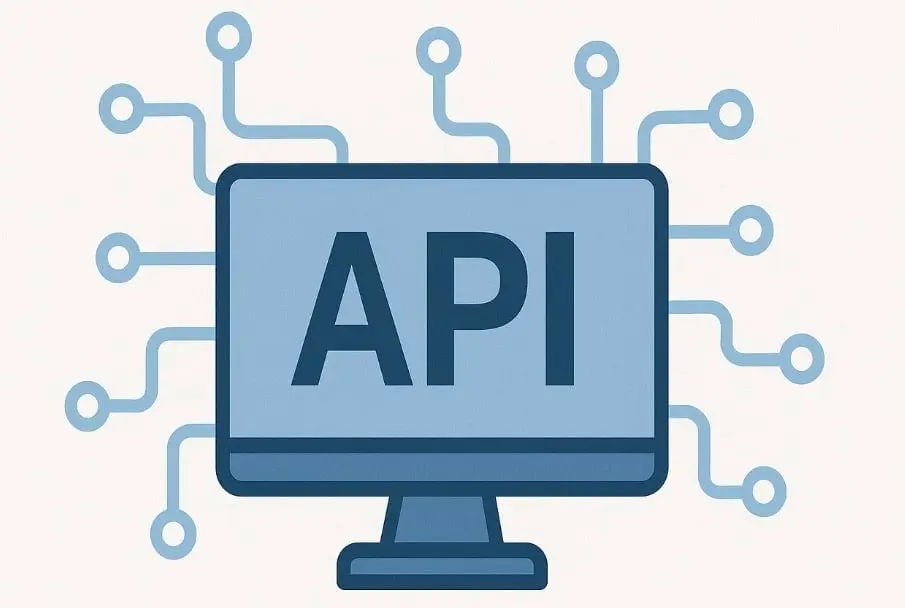
The core value of the new API lies in its ability to bridge the gap between Afternic’s vast marketplace and the various third-party tools or custom-built software used by professional investors. By providing a programmatic interface, Afternic is essentially allowing sellers to build their own bespoke management systems. This means that instead of manually logging into a dashboard to update prices or change listing settings, an investor can now write code or use middleware to handle these tasks across their entire portfolio simultaneously.
Industry experts and long-time users of the platform, including Andrew Allemann of Domain Name Wire, have already begun exploring the practical applications of this tool. The API’s utility can be categorized into two primary functions: bulk management and data-driven optimization. In the realm of management, the API allows for the seamless updating of domain prices and the adjustment of specific settings, such as "Buy It Now" (BIN) prices or "Lease to Own" (LTO) configurations. For a seller with a portfolio of 10,000 domains, the ability to adjust pricing based on market trends or internal financial goals through a single script is a transformative capability.
However, Afternic has not left its less-technical users behind. The platform continues to offer and support the Afternic Portfolio Agent, a tool designed to simplify many of these same tasks without requiring the user to write a single line of code. For many casual or mid-sized sellers, the Portfolio Agent remains the recommended path. It provides a user-friendly interface for managing listings and ensures that the most common optimization tasks are accessible. The release of the API is not intended to replace the Portfolio Agent but rather to augment the ecosystem for those who require a higher degree of customization and integration.
The API adds value in several distinct ways that the standard web interface or the Portfolio Agent cannot easily replicate. First, it allows for deep integration with an investor’s existing workflow. Many professional domainers use proprietary databases or third-party CRM systems to track their acquisitions, costs, and sales leads. With the Portfolio API, these external systems can now "talk" directly to Afternic. If a domain is marked as "sold" in a private database, a script can automatically trigger the API to update the status on Afternic, ensuring that the seller’s public listings are always in sync with their internal records.
Secondly, the API opens the door to sophisticated data analysis. By fetching search data and performance metrics directly from Afternic, sellers can gain insights into how much traffic and interest their domains are generating. This data is the lifeblood of modern domaining. Understanding which keywords are trending or which domains are receiving the most "search hits" within the Afternic network allows an investor to make informed decisions about which prices to raise and which to lower to stimulate a sale.
One of the most compelling aspects of this release is how it fits into the broader GoDaddy technological stack. Afternic sellers who also utilize GoDaddy’s other developer tools can create a highly automated "full-stack" domaining operation. By combining the Portfolio API with the GoDaddy Auctions API and the standard Domains API, an investor can automate the entire lifecycle of a domain name. A system could be designed to identify undervalued domains at auction, purchase them via API, immediately list them for sale on Afternic with optimized pricing via the Portfolio API, and manage the renewal or transfer process through the Domains API.
This level of automation is particularly relevant in the current era of artificial intelligence. As Large Language Models (LLMs) like ChatGPT and Claude become more integrated into professional workflows, the Portfolio API provides the necessary "hooks" for these AI tools to act upon. An investor can provide the API documentation to an LLM and ask it to generate scripts that optimize a portfolio based on specific criteria. For example, a prompt might ask the AI to analyze a list of domains and write a script that increases the price of any domain receiving more than a certain threshold of search queries over a 30-day period.
However, the power of an API also brings with it significant responsibilities regarding security. Afternic and industry veterans have been quick to emphasize the importance of protecting API keys. An API key is essentially a master password that allows software to make changes to an account. If a key is compromised, an unauthorized actor could potentially change the prices of an entire portfolio to a nominal amount or alter critical account settings. Investors are cautioned to treat these keys with the same level of security as their primary account passwords, specifically advising against pasting them into public or unsecured AI chat interfaces.
The release of the Portfolio API also reflects a broader trend in the domain industry: the professionalization of the secondary market. As the industry matures, the tools available to individual investors are beginning to mirror those used by high-frequency traders in the financial markets. The move toward API-first development suggests that Afternic views its sellers not just as customers, but as partners who require robust technical infrastructure to succeed in a competitive global market.
From a practical standpoint, one of the most immediate benefits for sellers is the ability to create automated reporting systems. Instead of manually checking the Afternic dashboard for updates, an investor can set up a simple application that monitors their portfolio and sends them a daily or weekly email. This email could highlight trending search data for specific domains, notify the seller of price changes in the market, or provide a summary of which domains are nearing their expiration dates.
As Afternic continues to roll out updates to its platform—including recent improvements to landing pages and the expansion of the "Lease to Own" model—the Portfolio API will serve as the foundation upon which these new features are managed at scale. The ability to toggle LTO settings across thousands of domains or to update the visual style of thousands of "For Sale" landing pages via a programmatic command is a significant efficiency gain.
The Afternic Portfolio API is now available through the official Afternic developer portal. Sellers interested in utilizing the tool are encouraged to review the comprehensive documentation provided by Afternic, which outlines the various endpoints and authentication protocols required to get started. While the API is a powerful tool for those with the technical skill to implement it, its existence benefits the entire marketplace by fostering a more dynamic, responsive, and data-driven environment for domain buyers and sellers alike.
As the domain industry looks toward the future, the integration of APIs, automation, and AI-driven analysis is set to become the standard rather than the exception. Afternic’s decision to open its Portfolio API to all sellers is a clear acknowledgment of this reality, providing the community with the tools necessary to navigate an increasingly complex digital asset landscape. By empowering sellers to automate the mundane and focus on the strategic, Afternic is positioning itself as a central hub for the next generation of domain name investing.
 Web Hosting & Domain Management
Verisign Set to Increase .com Domain Prices on November 1, Prompting Rush for Multi-Year Renewals
Domain name registrants across the globe are facing a narrowing window of...
 Web Hosting & Domain Management
Strategic Brand Acquisitions Highlight Recent Global Domain Name Market Activity
The secondary domain name market continues to serve as a critical infrastructure...
 Web Hosting & Domain Management
AI-Driven Development and Defensive Strategies Shape Recent Surge in End-User Domain Sales
The landscape of the domain name secondary market is undergoing a significant...