
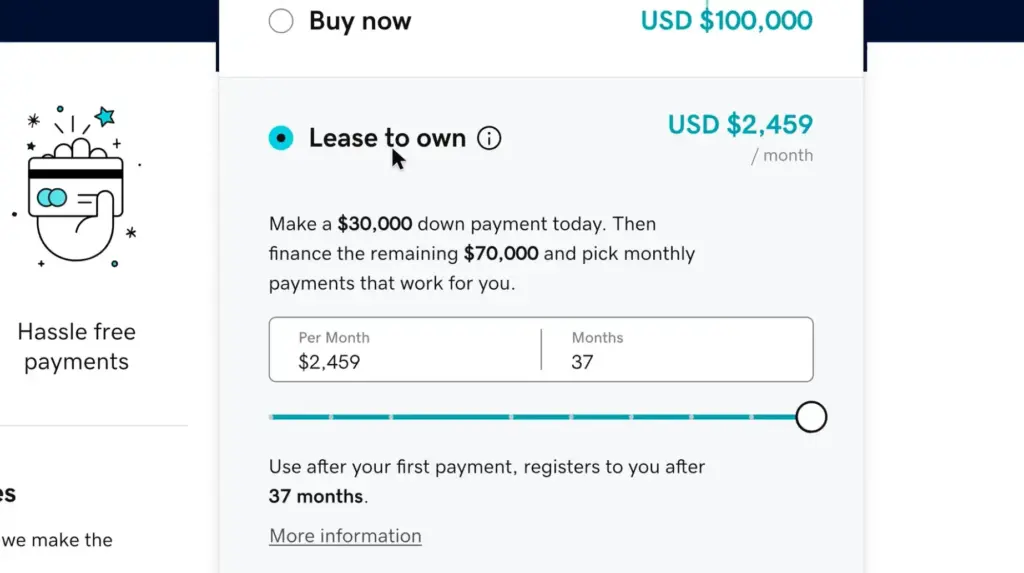
While the feature provides a new layer of security for sellers, Afternic has accompanied the launch with a note of caution. The company suggests that sellers should use down payments judiciously, acknowledging that any additional financial hurdle can introduce friction into the sales process. In the fast-moving world of domain sales, where impulsive or rapid decision-making often leads to conversions, a required down payment could act as a deterrent for certain buyers. Afternic suggests that this tool is perhaps best suited for high-value domains and longer-term LTO arrangements, where the total contract value justifies a more rigorous commitment from the purchaser.
The tension between security and conversion is a well-known dynamic in e-commerce. By requiring more cash upfront, a seller may inadvertently cause a prospect to reconsider the purchase or look for a cheaper alternative. This is particularly true for lower-to-mid-range domains where the buyer might have a limited budget. For a domain priced at $2,000, a $500 down payment represents a significant percentage of the total cost and might be enough to kill the deal. However, for a $50,000 domain, a $5,000 down payment might be viewed by a serious corporate buyer as a standard part of a professional acquisition.
Interestingly, GoDaddy has not yet implemented or tested the down payment feature on its own massive "NameFind" portfolio. NameFind, which consists of hundreds of thousands of premium domains owned by GoDaddy, often serves as a bellwether for industry trends and platform features. Because the feature has not been tested at that scale, the company admitted it currently lacks hard data regarding how down payments specifically impact sell-through rates. The current guidance remains based on market intuition: while a down payment increases the quality and commitment of the buyer, it likely decreases the total volume of successful leads.
The decision to add down payments comes at a time when the domain industry is seeing a maturation of the LTO model. Originally popularized by boutique marketplaces and later brought into the mainstream by platforms like Dan.com—which GoDaddy acquired in 2022—Lease-to-Own has transformed the secondary market. It has allowed domainers to achieve higher sale prices by offering "financing" to buyers who otherwise could not afford a five- or six-figure lump sum. As these LTO contracts have become more common, the need for more sophisticated management tools has grown.
For domain investors, the "opportunity cost" of a failed LTO is a significant concern. When a domain is under a lease agreement, it is typically "locked." It cannot be sold to another buyer who might come along with a full cash offer, and it cannot be easily moved between registrars. If a buyer defaults after a year of a five-year plan, the seller gets the domain back, but they may have missed the peak of a particular trend or a specific high-intent buyer. A down payment acts as a form of non-refundable collateral that compensates the seller for this period of exclusivity.
 Web Hosting & Domain Management
High-Value Domain Transactions Highlight Strong Demand Across Fintech, Aerospace, and AI Sectors
The domain name secondary market continues to demonstrate significant liquidity and high-value...
 Web Hosting & Domain Management
Afternic Expands Access to Portfolio API, Enabling Global Sellers to Automate and Scale Domain Management Operations
Afternic, the industry-leading domain name marketplace owned by GoDaddy, has officially announced...
 Web Hosting & Domain Management
Executive Leadership Transition at fTLD: Craig Schwartz to Retire as Search for Successor Begins
The landscape of the specialized domain name industry is preparing for a...







