
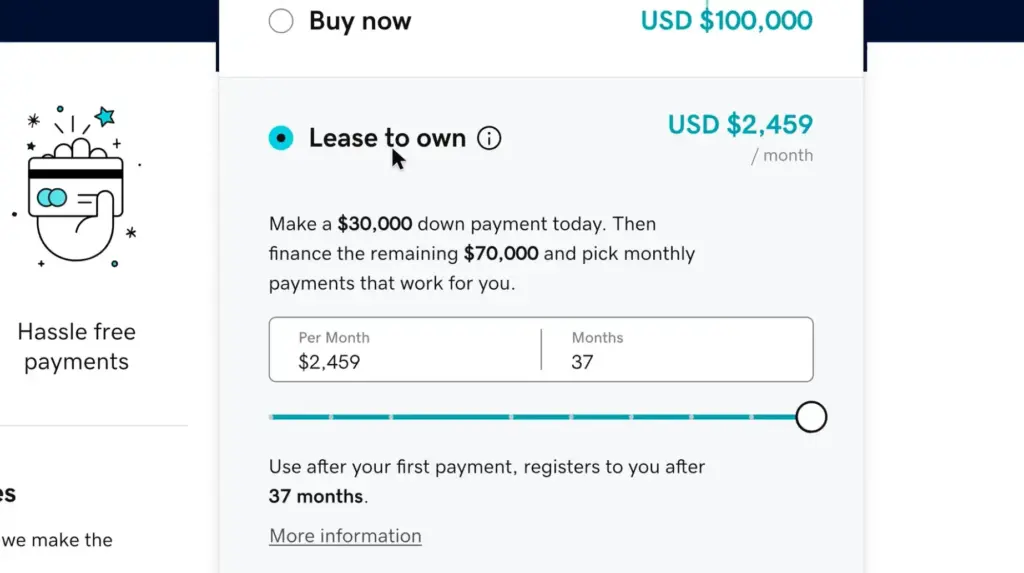
In a significant update to its secondary market capabilities, Afternic has announced the launch of a new feature that allows domain name sellers to request an upfront down payment on Lease-to-Own (LTO) transactions. This move marks a pivotal shift in how the platform handles long-term domain acquisitions, providing sellers with a new mechanism to mitigate risk while offering buyers a structured path toward full ownership of premium digital assets.
The Lease-to-Own model has become an increasingly popular method for startups and established businesses to acquire high-value domain names without the immediate burden of a large capital expenditure. By spreading the cost of a domain over several months or years, buyers can preserve cash flow while securing the brand identity they desire. However, from the perspective of a domain investor or seller, the traditional LTO model carries inherent risks, primarily the possibility of a buyer defaulting after a few months, during which time the domain was effectively removed from the open market. The introduction of down payments aims to address this imbalance by requiring what the industry often calls "skin in the game."
Under the new system, the transaction process begins with the buyer paying a predetermined down payment. Once this initial commitment is satisfied, the buyer proceeds to make regular monthly payments as they would in a standard LTO agreement. This hybrid approach essentially combines the immediate liquidity of a traditional sale with the flexibility of a payment plan. For sellers, this initial influx of capital provides a buffer against the opportunity cost of taking a domain off the market. If a buyer were to walk away from the deal after six months, the seller would at least have retained the down payment in addition to the monthly installments paid up to that point.
The integration of this feature is comprehensive across the GoDaddy-owned ecosystem. According to the company, down payment requirements will be clearly visible to potential buyers within the GoDaddy search results path. This transparency ensures that buyers are aware of the financial requirements before they enter the checkout process. Furthermore, for those utilizing Afternic’s Custom Lander options—the dedicated sales pages that appear when a user navigates directly to a for-sale domain—the down payment terms will be prominently displayed, providing a professional and clear breakdown of the total acquisition cost.
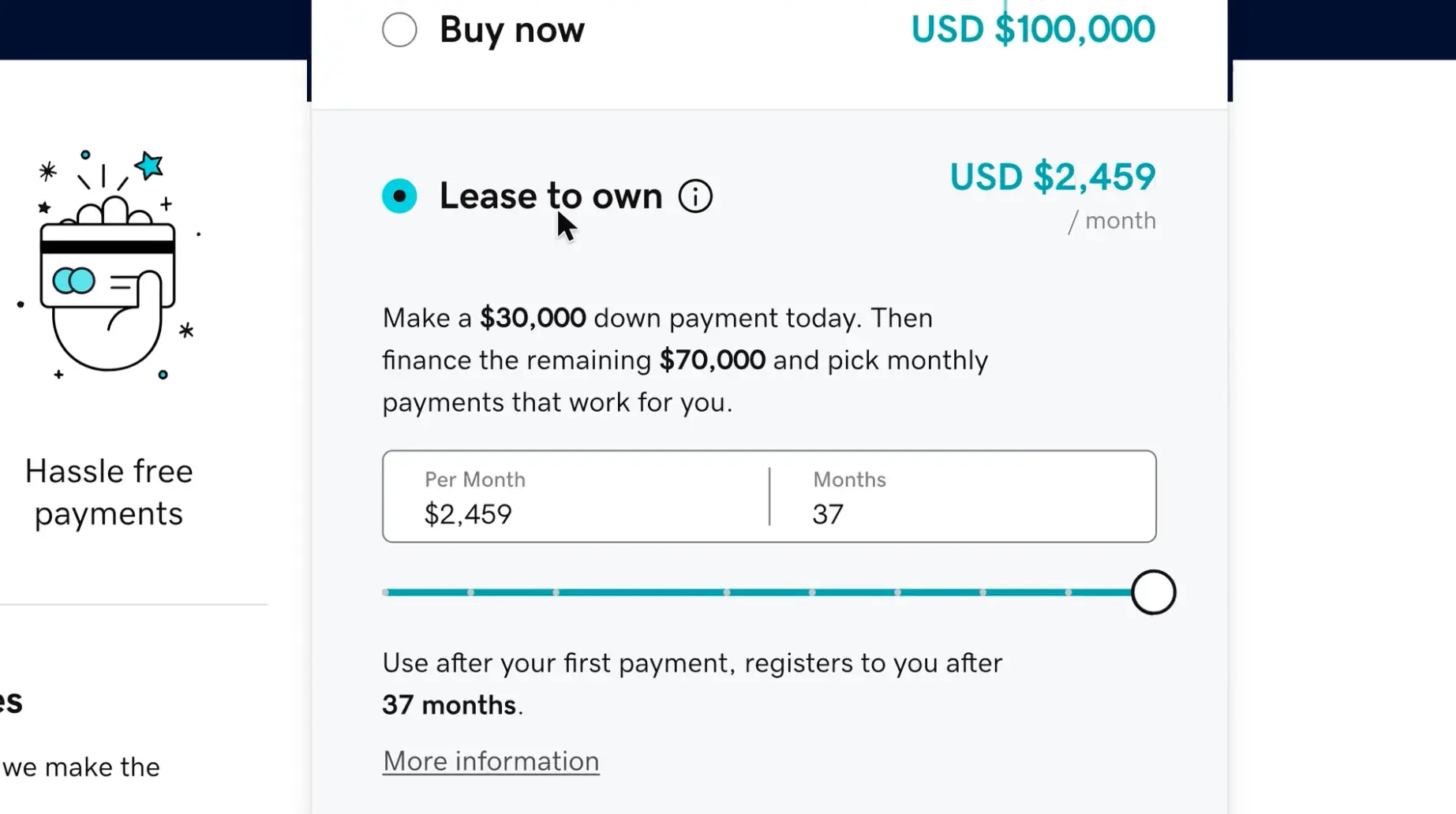
One of the more nuanced aspects of this update involves the commission structure, which distinguishes between the initial down payment and the subsequent monthly installments. Afternic has clarified that the down payment will be subject to standard sales commissions. In contrast, the recurring monthly LTO payments will be charged at the platform’s specific LTO rates. Notably, Afternic’s LTO commission structure is designed to be more favorable for longer-term deals, offering discounts for terms that extend beyond 12 months. This tiered approach to fees is intended to align the platform’s incentives with those of the sellers, particularly when dealing with high-value assets that require extended payment horizons.
While the feature provides a new layer of security for sellers, Afternic has accompanied the launch with a note of caution. The company suggests that sellers should use down payments judiciously, acknowledging that any additional financial hurdle can introduce friction into the sales process. In the fast-moving world of domain sales, where impulsive or rapid decision-making often leads to conversions, a required down payment could act as a deterrent for certain buyers. Afternic suggests that this tool is perhaps best suited for high-value domains and longer-term LTO arrangements, where the total contract value justifies a more rigorous commitment from the purchaser.
The tension between security and conversion is a well-known dynamic in e-commerce. By requiring more cash upfront, a seller may inadvertently cause a prospect to reconsider the purchase or look for a cheaper alternative. This is particularly true for lower-to-mid-range domains where the buyer might have a limited budget. For a domain priced at $2,000, a $500 down payment represents a significant percentage of the total cost and might be enough to kill the deal. However, for a $50,000 domain, a $5,000 down payment might be viewed by a serious corporate buyer as a standard part of a professional acquisition.
Interestingly, GoDaddy has not yet implemented or tested the down payment feature on its own massive "NameFind" portfolio. NameFind, which consists of hundreds of thousands of premium domains owned by GoDaddy, often serves as a bellwether for industry trends and platform features. Because the feature has not been tested at that scale, the company admitted it currently lacks hard data regarding how down payments specifically impact sell-through rates. The current guidance remains based on market intuition: while a down payment increases the quality and commitment of the buyer, it likely decreases the total volume of successful leads.
The decision to add down payments comes at a time when the domain industry is seeing a maturation of the LTO model. Originally popularized by boutique marketplaces and later brought into the mainstream by platforms like Dan.com—which GoDaddy acquired in 2022—Lease-to-Own has transformed the secondary market. It has allowed domainers to achieve higher sale prices by offering "financing" to buyers who otherwise could not afford a five- or six-figure lump sum. As these LTO contracts have become more common, the need for more sophisticated management tools has grown.
For domain investors, the "opportunity cost" of a failed LTO is a significant concern. When a domain is under a lease agreement, it is typically "locked." It cannot be sold to another buyer who might come along with a full cash offer, and it cannot be easily moved between registrars. If a buyer defaults after a year of a five-year plan, the seller gets the domain back, but they may have missed the peak of a particular trend or a specific high-intent buyer. A down payment acts as a form of non-refundable collateral that compensates the seller for this period of exclusivity.
The technical rollout of this feature also reflects Afternic’s ongoing efforts to modernize its interface and user experience. By ensuring that these terms appear directly in the GoDaddy search path, Afternic is leveraging the world’s largest registrar to drive sales. When a small business owner searches for a name and sees that it is available via a payment plan with a specific down payment, it provides a "buy now, pay later" experience that is familiar to modern consumers.
Industry observers will be watching closely to see how the community of domain investors adopts this tool. Some may choose to apply a modest down payment across their entire portfolio to weed out "tire-kickers"—buyers who start a lease with no real intention of finishing it. Others may reserve the feature only for their most valuable "liquid" assets, where the risk of taking the name off the market is highest.
As the secondary domain market continues to evolve, the balance between buyer accessibility and seller protection remains a moving target. Afternic’s introduction of down payments provides a much-requested level of granularity to LTO transactions, even if it requires a strategic touch to execute successfully. Without historical data from the NameFind portfolio to rely on, individual sellers will essentially be conducting their own A/B testing in the coming months to find the "sweet spot" where the down payment is high enough to ensure buyer commitment but low enough to maintain a healthy sell-through rate.
For now, the feature stands as a significant addition to the Afternic toolkit, offering a middle ground between the "all-or-nothing" nature of a standard Buy It Now sale and the sometimes-volatile nature of zero-down Lease-to-Own contracts. As the digital economy continues to prioritize flexible payment structures, tools like these will likely become standard requirements for any major domain marketplace looking to serve both professional investors and the global business community.
 Web Hosting & Domain Management
ICANN Confirms 1,616 Applications for 2026 New gTLD Round as Fees Top $350 Million
The Internet Corporation for Assigned Names and Numbers (ICANN) has officially confirmed...
 Web Hosting & Domain Management
Strategic Brand Acquisitions Highlight Recent Secondary Domain Market Activity
In the constantly evolving landscape of digital real estate, the acquisition of...
 Web Hosting & Domain Management
Roblox Fails to Secure roblox.io in Cybersquatting Dispute as Panelist Issues Finding of Reverse Domain Name Hijacking
In a significant legal setback for one of the world’s most prominent...







