
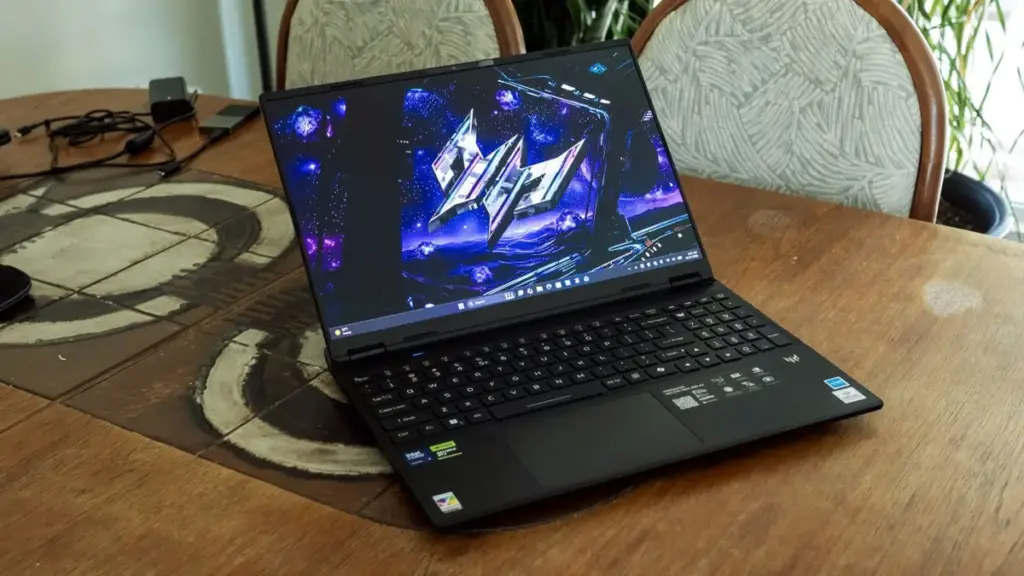
The landscape of high-end gaming laptops is currently undergoing a significant transformation. For years, the industry was defined by a binary choice: one could opt for a massive, desktop-replacement titan that offered uncompromising power at the cost of mobility, or a thin-and-light ultraportable that sacrificed graphical fidelity for the sake of a backpack-friendly form factor. Acer’s latest entry into this competitive arena, the Predator Helios Neo 16S AI, attempts to bridge that long-standing gap. By integrating cutting-edge internal components into a chassis that weighs less than five pounds, Acer is targeting a specific demographic of gamers and creators who demand top-tier performance without the physical burden of traditional gaming rigs.
The "AI" moniker in the device’s name is more than just a marketing buzzword; it represents a fundamental shift in how modern hardware manages workloads. With a specification list that reads like a hardware enthusiast’s wish list, the Helios Neo 16S AI is positioned as a forward-looking machine. However, as with any device that attempts to push the boundaries of power density, the laptop faces the perennial challenge of balancing thermal management and energy consumption against its slim physical profile.
A New Benchmark for Internal Specifications
At the heart of the Acer Predator Helios Neo 16S AI lies a formidable combination of processing and graphical power. The inclusion of the Intel Core Ultra 9 290HX Plus processor signals Acer’s commitment to the latest silicon architecture. This processor is designed not just for raw speed, but for the intelligent distribution of tasks, leveraging dedicated neural processing units to handle background AI workloads. This allows the primary cores to focus entirely on high-demand applications, such as real-time gaming or complex video rendering.
Complementing this processing power is the Nvidia GeForce RTX 5070 Ti. As part of the latest generation of mobile GPUs, the RTX 5070 Ti provides the graphical horsepower necessary to drive modern AAA titles at high settings. The synergy between the Core Ultra 9 and the RTX 5070 Ti ensures that the Helios Neo 16S AI remains competitive with much larger systems. In testing, this hardware configuration delivers solid performance across the board, proving that a sub-five-pound machine can indeed handle the rigors of modern gaming without stuttering or significant compromises in visual quality.
The inclusion of these components highlights a broader trend in the industry where "thin-and-light" no longer equates to "mid-range." By utilizing the "HX" series of processors, which are typically reserved for larger enthusiasts’ laptops, Acer is making a bold statement about the efficiency of their internal engineering and thermal solutions.
Design of the Acer Predator Helios Neo 16S AI
The aesthetic philosophy of the Predator Helios Neo 16S AI marks a departure from the aggressive, neon-soaked designs that once dominated the Predator lineup. Acer has pivoted toward a "stealthier" appearance, recognizing that many modern gamers are also professionals or students who require a machine that looks as appropriate in a boardroom or a lecture hall as it does in a gaming den. The chassis is sleek and refined, avoiding the over-the-top flourishes that often scream "gaming laptop" from across the room.
Despite its understated look, the build quality remains robust. Achieving a weight of under five pounds while housing a 16-inch display and high-wattage components is a feat of engineering. The portability factor is the headline feature here; the laptop is remarkably easy to transport, fitting comfortably into standard messenger bags and backpacks. This makes it an ideal candidate for users who find themselves constantly on the move but refuse to leave their gaming library or creative workstations behind.
The input devices on the Helios Neo 16S AI also deserve recognition. Acer has equipped the machine with a keyboard and touchpad that prioritize user comfort. The keys offer a tactile response that is essential for both fast-paced gaming and long typing sessions, while the touchpad is responsive and adequately sized. For a laptop focused on portability, these ergonomic details are crucial, as users are more likely to use the built-in interface rather than carrying external peripherals while traveling.
Furthermore, Acer has not sacrificed connectivity in the pursuit of a thinner profile. The Helios Neo 16S AI features a plentiful array of ports, ensuring that users can connect multiple displays, high-speed storage devices, and other essential accessories without the need for cumbersome dongles. This level of utility reinforces the machine’s status as a versatile tool for both play and productivity.
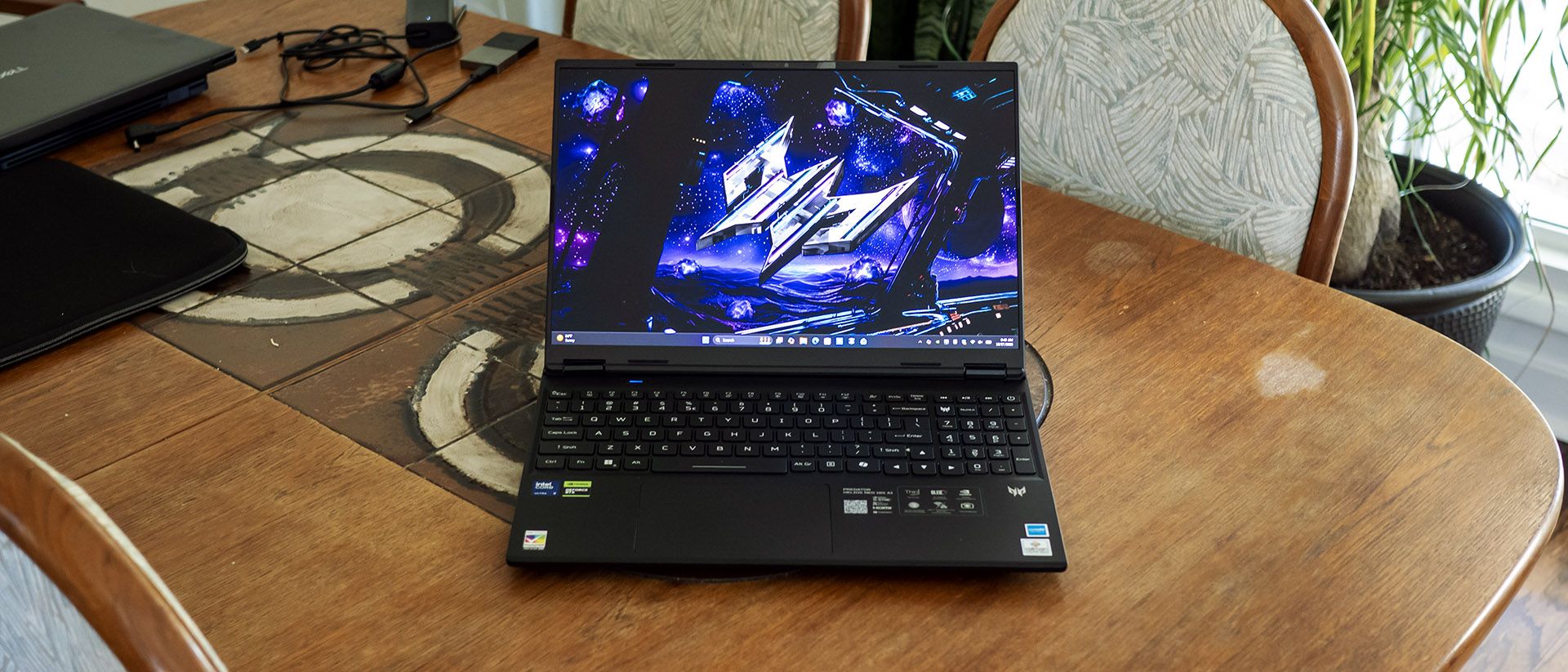
The Visual Excellence of OLED Technology
Perhaps the most striking feature of the Predator Helios Neo 16S AI is its 240 Hz OLED display. In the current market, OLED technology is the gold standard for visual fidelity, offering near-infinite contrast ratios and vibrant color reproduction that traditional LCD panels simply cannot match. The deep blacks and brilliant highlights provided by the OLED panel make for an immersive gaming experience, particularly in titles that utilize high dynamic range (HDR) to enhance atmospheric lighting.
The 240 Hz refresh rate ensures that motion is fluid and blur-free, a vital requirement for competitive gamers who rely on split-second reactions. When combined with the low response times inherent to OLED technology, the display provides a level of clarity that enhances both gameplay and media consumption. Whether one is navigating a dark, atmospheric horror game or editing high-resolution photography, the screen remains one of the laptop’s strongest selling points. It is a premium addition that justifies the "Neo" branding, elevating the device above more budget-oriented gaming laptops.
The Portability Paradox: Battery Life and Performance
While the Acer Predator Helios Neo 16S AI succeeds in packing immense power into a portable frame, it falls victim to what can be described as the portability paradox. The very components that make the laptop a powerhouse—the Core Ultra 9 290HX Plus and the RTX 5070 Ti—are also incredibly demanding when it comes to power consumption. Ironically, for a system so heavily focused on mobility, the battery life emerges as its most significant weakness.
In practical use, the battery life falls short of the expectations set by its thin-and-light design. Users who intend to use the laptop away from a power outlet for extended periods may find themselves tethered to a wall sooner than anticipated. This creates a friction point in the user experience: the laptop is physically easy to carry anywhere, but its internal stamina limits how long it can truly function as a mobile workstation.
This is a common struggle for high-performance gaming laptops, but it is felt more acutely here because the Helios Neo 16S AI markets itself so strongly on its portability. The high-refresh-rate OLED screen, while beautiful, is also a known drain on battery resources. While software optimizations and power-saving modes can mitigate some of these issues, they often do so by throttling the very performance that makes the laptop desirable in the first place.
Conclusion and Market Positioning
The Acer Predator Helios Neo 16S AI is a testament to how far gaming laptop technology has progressed. It successfully houses some of the most powerful hardware currently available in a chassis that defies the traditional "bulky" gaming aesthetic. For the user who prioritizes a high-quality display, excellent build quality, and top-tier gaming performance in a package that won’t strain their back, this machine offers a compelling package.
However, potential buyers must weigh these advantages against the reality of its limited battery life. The Helios Neo 16S AI is a machine designed for the "plugged-in" mobile user—someone who moves from location to location but generally has access to a power source once they arrive. It excels as a high-performance hub that can be easily transported, rather than a device intended for long-haul use on a single charge.
Ultimately, Acer has delivered a laptop that mostly succeeds in its ambitious goals. By focusing on a stealthy design, a world-class display, and cutting-edge AI-ready internals, the Predator Helios Neo 16S AI carves out a significant niche in the market. It is a sophisticated tool for the modern era, provided the user understands the trade-offs required to achieve such a high concentration of power in such a slender frame.
 Hardware Reviews & PC Building
U.S. Data Center Expansion Projected to Drive Unprecedented Surge in Natural Gas Consumption Through 2035
The rapidly evolving landscape of the American technology sector is poised to...
 Hardware Reviews & PC Building
Nvidia launches Open Agent Safety Platform to restrain rogue AI agents — new hardware-and-software security stack…
The introduction of the Open Agent Safety Platform arrives at a critical...
 Hardware Reviews & PC Building
35-year-old SNES runs ChatGPT, accelerated with a Super FX 2 chip — 21 MHz of RISC muscle speeds 2.2M parameter…
The initiative is the work of Benj Edwards, a prominent journalist and...






