
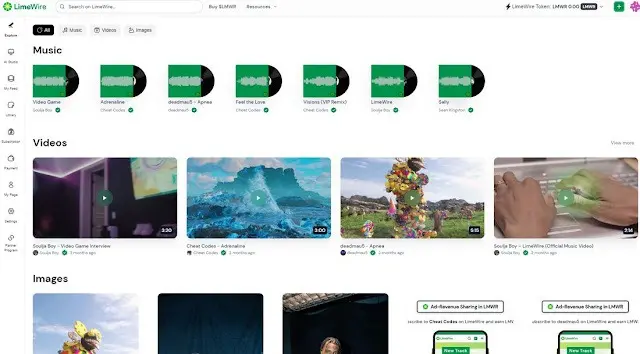
The digital landscape is witnessing a remarkable transformation of one of the most recognizable names from the early internet era. LimeWire, once a brand synonymous with the peer-to-peer file-sharing revolution of the early 2000s, has successfully navigated a complete structural and conceptual rebirth. Moving far beyond its origins, the platform has re-emerged as a sophisticated hub for generative artificial intelligence, offering a comprehensive suite of tools designed to empower a new generation of digital creators. In an era where AI technology is rapidly redefining the boundaries of art and media, LimeWire is positioning itself not just as a tool for creation, but as a holistic ecosystem for the publication, monetization, and ownership of AI-generated content.
The new LimeWire is an entirely different entity from the software that defined the Napster era. It has been reimagined as a cutting-edge AI content publishing platform, bridging the gap between advanced machine learning models and the burgeoning creator economy. By integrating blockchain technology with generative AI, LimeWire allows users to do more than simply generate images; it provides a framework where digital assets carry inherent value, ownership is verifiable, and creators can build sustainable revenue streams from their work.
The Emergence of the LimeWire AI Studio
The centerpiece of this transformation is the LimeWire AI Studio. This creative hub is designed to be an inclusive space where the barriers to high-level digital artistry are significantly lowered. The platform invites users to register and immediately begin crafting original content, which is then showcased within the LimeWire Studio environment. This transition has already attracted significant attention from the traditional creative industries, with high-profile artists and musicians such as Deadmau5, Soulja Boy, and Sean Kingston utilizing the platform to explore new frontiers in digital media. These artists have leveraged LimeWire to publish content in various formats, including NFT-backed music, videos, and imagery, signaling a shift in how established talent views the intersection of AI and fan engagement.
Within the LimeWire Studio, the philosophy of "content as an asset" is central. Every piece of media generated on the platform is treated as a unique, ownable, and tradable digital asset. This is achieved through a seamless integration with blockchain networks, ensuring that when a creator produces a piece of AI art, they hold a definitive claim to its provenance. Fans and followers are not merely passive observers in this ecosystem; they can subscribe to a creator’s page to follow their artistic journey and acquire digital collectibles. These collectibles hold tradeable value within the LimeWire community, creating a secondary market where creators continue to benefit from their work. Notably, LimeWire has implemented a royalty system where creators earn a 2.5% fee every time their content is traded on the platform’s marketplace, providing long-term incentives for quality production.
Flexibility is a cornerstone of the platform’s distribution model. LimeWire understands that different creators have different goals, and thus offers multiple publication pathways. A creator can choose to release their work to the public for maximum exposure or opt for a premium subscription model. The latter allows artists to gate their most specialized or high-value content, offering exclusive access to a dedicated inner circle of subscribers. This dual approach mimics the evolving trends in social media and content platforms, where "freemium" models allow for both broad discovery and deep monetization.
Advancements in AI Image Generation Tools
At its current stage, LimeWire’s primary focus lies in the realm of AI image generation. The platform provides a sophisticated toolkit that caters to both novices and experienced digital artists. Rather than relying on a single proprietary algorithm, LimeWire has opted for a versatile approach by supporting several of the industry’s most advanced generative models. Users have access to Stable Diffusion 2.1, Stable Diffusion XL, and OpenAI’s DALL-E 2. This variety allows creators to choose the specific "brain" behind their art, depending on the aesthetic or complexity they wish to achieve.
The user interface of the image generation tool is designed to be intuitive yet powerful. Much like other leading generative AI services, the process begins with a prompt. These can range from simple descriptive phrases to highly intricate sets of instructions that detail lighting, texture, and composition. What distinguishes LimeWire is the fluidity with which users can navigate these complex technologies. The platform allows for effortless switching between different AI models and artistic styles. Whether a creator is looking for a cinematic finish, digital art aesthetics, pixel art, anime-inspired visuals, or the nostalgic look of analog film, the tools are readily available to pivot between these identities.
Furthermore, the platform offers technical "samplers" and fine-tuning options. These features allow users to adjust the quality and level of detail in their creations, providing a layer of control that goes beyond basic prompting. To assist those who may be new to the medium, LimeWire includes prompt guidance and customization options that help bridge the gap between a creative concept and a finished visual product.
 Tech News & Digital Trends
LimeWire’s Strategic Pivot: How the Iconic Brand is Reimagining Content Creation Through Generative AI and Blockchain Integration
The digital landscape is witnessing a remarkable transformation of one of the...
 Tech News & Digital Trends
The Digital Vanguard: How Ten AI Innovations are Redefining Content Creation in 2025
The digital landscape of 2025 has reached a pivotal turning point, where...
 Tech News & Digital Trends
The Rise of AI Optimization: Content Creators Pivot as Search Behavior Shifts Toward Generative Models
A fundamental transformation is currently reshaping the landscape of digital discovery. For...







