
Looking toward the future, LimeWire is not content with simply hosting third-party models. The company is actively developing its own proprietary AI model. This move signals a commitment to long-term innovation and suggests that LimeWire aims to offer unique capabilities that cannot be found elsewhere in the market. By controlling its own model, LimeWire will be able to more tightly integrate its features with the specific needs of its user base, potentially offering more efficient generation or specialized styles tailored to the platform’s ecosystem.
Strategic Expansion into Music and Video
While image generation is the current flagship service, LimeWire has outlined an ambitious roadmap that seeks to encompass the full spectrum of multimedia creation. The platform plans to introduce AI-powered music and video generation tools in the near future. This expansion is particularly resonant given the LimeWire brand’s historical connection to the music industry. By moving into AI music, LimeWire is coming full circle, transitioning from a platform that once disrupted the music industry through file sharing to one that empowers musicians through generative technology and blockchain-backed ownership.
This strategic expansion is expected to offer creators even more avenues for expression. AI music tools could allow artists to generate backing tracks, experiment with new compositions, or create entirely new soundscapes with the assistance of machine learning. Similarly, the introduction of video generation tools will enable creators to produce motion content that complements their visual and auditory outputs. This multi-modal approach positions LimeWire Studio as a comprehensive creative suite, potentially serving as a one-stop shop for digital creators who want to produce diverse content portfolios.
Automated NFT Minting and Blockchain Integration
One of the most innovative features of the LimeWire ecosystem is the automation of the minting process. Once a creator is satisfied with their AI-generated image, the platform offers the option to publish the work. Upon publication, LimeWire automatically mints the creation as a Non-Fungible Token (NFT). To ensure efficiency and lower the barrier to entry, the platform utilizes the Polygon and Algorand blockchains. Both networks are known for their high transaction speeds and significantly lower environmental impact and costs compared to the Ethereum mainnet.
This automated minting process serves a vital function: it imbues the artwork with a unique digital signature. In the decentralized realm, this signature is the definitive proof of authenticity and ownership. It transforms a digital file into a verifiable asset. Creators maintain full control over the accessibility of these NFTs. If a post is made public, it enters the global LimeWire discovery feed where any user can view, interact with, and trade the associated NFT. This fosters a community-driven market where popularity can translate directly into liquidity.
Conversely, for creators who prefer to build a more exclusive community, the platform allows for "subscriber-only" posts. In this scenario, the content and its associated NFT status remain exclusive to the creator’s premium fans. This functionality is essential for artists who wish to offer "member-only" perks or limited-edition digital goods, creating a sense of scarcity and value that is highly prized in the digital asset space.
Revenue Models and the LMWR Token
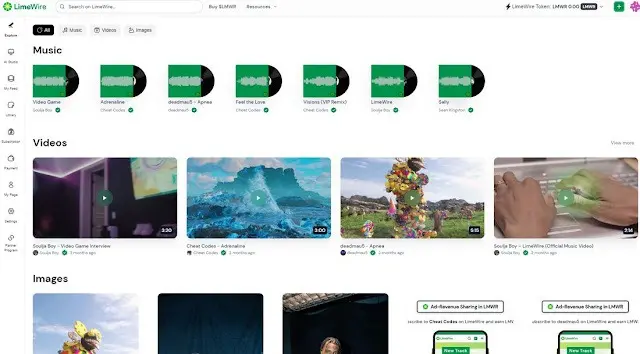
LimeWire has introduced a monetization structure that is notably more generous than many traditional social media or content platforms. Beyond the sale of NFTs and subscription fees, creators can earn a share of the ad revenue generated by their content. When a creator publishes work on LimeWire, they are eligible to receive 70% of all ad revenue generated from other users viewing their images, music, or videos on the platform.
 Tech News & Digital Trends
The Artificial Intelligence Revolution in Marketing: 11 Essential Tools Powering the Next Generation of Data Strategy
The global marketing landscape is currently undergoing a fundamental transformation, driven by...
 Tech News & Digital Trends
The Rise of AI Optimization: How a New Search Paradigm is Redefining Digital Visibility
A fundamental transformation is currently reshaping the digital landscape, as the traditional...
 Tech News & Digital Trends
The Rise of AI Optimization: How Content Creators are Navigating the Shift from Search Engines to Generative Answers
A fundamental shift in digital discovery is currently underway, marking the most...







