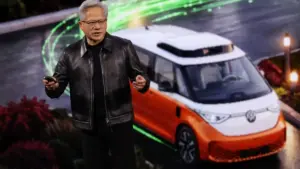
In a stunning reversal that has sent shockwaves through the technology sector and the financial markets, the board of directors of Nvidia Corporation has officially reinstated its co-founder, Jen-Hsun “Jensen” Huang, as president, chief executive officer, and a member of the board. The decision, announced on November 22, 2026, marks the end of a tumultuous ten-day period for the world’s most valuable semiconductor company, during which its leadership was in a state of high-stakes flux and its future direction was questioned by investors and geopolitical observers alike.
The path back to the corner office for Huang was paved by a series of rapidly unfolding events on the morning of the reinstatement. Just before the opening bell on Wall Street, Rene Haas—the current CEO of chip architecture firm Arm Holdings and a former executive who once led Nvidia’s powerhouse datacenter business—publicly announced that he had extended his contract with Arm through 2033. This announcement was significant not only for Arm but for Nvidia; Haas had been widely reported as the primary candidate to succeed Huang. By locking himself into a long-term commitment at Arm, Haas effectively removed himself from the running, leaving the Nvidia board with a narrowed field of options at a critical juncture in the company’s history.
Approximately thirty minutes after the Haas announcement, Nvidia filed a succinct 8-K with the U.S. Securities and Exchange Commission (SEC). The filing was direct, stripped of the corporate drama that had preceded it: “On November 22, 2026, the board of directors of Nvidia Corporation reinstated Jen-Hsun Huang as Nvidia’s president, chief executive officer and member of the board of directors, effective immediately.” The filing further confirmed that Colette Kress, who had helped steer the company through the brief interim period, would remain in her role as executive vice president and chief financial officer.
The reinstatement stands in stark contrast to the firm stance taken by the board only days earlier. During a call to discuss Nvidia’s third-quarter fiscal 2027 financial results on November 18, board chairman Harvey Jones—a fixture at Nvidia since its early days in 1993—had been unequivocal. Jones had stated that the board had unanimously accepted Huang’s resignation and had no intention of bringing him back, noting that an executive search was actively underway to identify a successor capable of leading the company through the complexities of the generative AI era.
The shift from that "unanimous" refusal to a full reinstatement within four days appears to have been driven by a combination of internal necessity and external pressure from the highest levels of the American government. In a more detailed statement released through Nvidia’s investor relations channel, the board admitted that its change of heart was influenced by consultations with federal authorities.
The involvement of the executive branch was a pivotal factor. President Donald Trump, who has maintained a rapport with Huang over several years as the administration crafts its long-term artificial intelligence and domestic manufacturing strategies, had been vocal in his support for Huang’s return. The board’s supplemental statement acknowledged this influence, noting that during its deliberations, it received "input from senior levels of the United States government." Based on this high-level feedback, the board expressed confidence that Huang’s return to the helm "poses no national security risk."
 Enterprise Tech & Infrastructure
Decoding the Amazon S3 Bill: Why the Per-Gigabyte Rate Is Often the Smallest Part of Cloud Storage Costs
In the world of enterprise cloud infrastructure, the Amazon S3 storage bill...
 Enterprise Tech & Infrastructure
Navigating the Complexity of Amazon S3 Cost Management: Beyond the Per-Gigabyte Rate
In the world of enterprise cloud infrastructure, Amazon S3 has long been...
 Enterprise Tech & Infrastructure
Cisco Unveils Automated Control Layer to Bridge the Gap Between Isolated Quantum Nodes and Distributed Architectures
In the rapidly evolving landscape of quantum information science, the primary focus...