
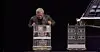
The DSX Pod represents a significant evolution in how high-performance computing is deployed. Huang described the system as a "factory-built integrated system" that essentially puts an entire AI factory in a box. The architecture begins with the Vera Rubin NVL72, a liquid-cooled configuration that serves as the heart of the pod. Each DSX Pod consists of seven liquid-cooled compute racks, which are intricately interconnected by 17 kilometers of high-speed Spectrum X cabling. By integrating these components, cabling them, and performing rigorous factory testing before they ever leave the manufacturing floor, NVIDIA aims to deliver transportable containers that are essentially "plug-and-play" at the datacenter site. This approach is intended to reduce the "time to token"—the duration between the arrival of hardware and the generation of AI outputs—from a typical window of four to five months down to just a few weeks.
Central to the design of the DSX Pod is a focus on thermal and power efficiency, which are critical concerns for European operators facing strict environmental regulations and high energy costs. The pods utilize a dry cooling system rather than traditional evaporative cooling, which can consume vast amounts of water. Furthermore, the architecture employs 800V DC power delivery. While these technical specifications are part of the broader DSX reference architecture, their inclusion in a pre-certified, containerized format addresses the specific deployment and supply chain challenges that have become the primary hurdles for the industry. Huang emphasized that the scale at which the world is now producing computing power is "unimaginable," but noted that the physical reality of assembling these machines on-site remains a "crazy" endeavor involving tens of thousands of kilometers of wiring.
The logistical strain of building massive AI facilities was a recurring theme in Huang’s keynote. He cited the example of TeraWulf’s Lake Mariner site in New York to illustrate a growing industry-wide problem: the shortage of skilled labor. At that site, nearly half of the 1,800 tradespeople required were electricians. Huang pointed out that even when GPUs and memory are available, the sheer complexity of on-site assembly can stall a project for months. By moving the assembly, qualification, and "burn-in" processes back into the supply chain, NVIDIA hopes to eliminate the need for extensive on-site wiring and troubleshooting. This "pre-assembled" model ensures that by the time the computing power reaches the datacenter, it is already fully functional and ready to be integrated into the grid.
The economic argument for this acceleration is perhaps even more compelling than the technical one. Huang laid out the stark financial stakes involved in modern datacenter construction. A 1GW datacenter today represents a capital investment of approximately $50 billion. Operators investing such sums generally expect to generate annual revenues in the neighborhood of $40 billion. In this high-stakes environment, a three-month delay in deployment is not merely a scheduling inconvenience; it represents a missed opportunity of roughly $10 billion in revenue. "Even for me," joked Huang, whose personal net worth is estimated at $200 billion, "$10 billion worth of revenues will make anybody anxious." The DSX Pod is positioned as a solution to this anxiety, ensuring that expensive hardware does not sit idle while waiting for on-site assembly to catch up.
 Enterprise Tech & Infrastructure
Cerebras Systems Forges Cloud Path as OpenAI Mega-Deal Anchors Massive Revenue Backlog
Throughout 2026, Cerebras Systems, the innovator behind the world’s largest AI processors,...
 Enterprise Tech & Infrastructure
The Hidden Architecture of Amazon S3 Costs: Why the Per-Gigabyte Rate is Only the Tip of the Iceberg
For many enterprise IT leaders, the initial appeal of Amazon S3 lies...
 Enterprise Tech & Infrastructure
The Security Perimeter: Evaluating the Strengths and Vulnerabilities of DAS vs. NAS Storage
In the contemporary digital economy, data has emerged as the most critical...







