

In an era defined by a relentless cycle of artificial intelligence breakthroughs and escalating marketing claims, Microsoft is attempting to shift the conversation from technical speculation to practical economic utility. Jared Spataro, Microsoft’s Chief Marketing Officer for AI at Work, recently addressed the company’s customer base with a comprehensive vision for the future of enterprise AI, signaling a move away from the "sound and fury" of model benchmarks toward the "genuine, economically valuable work" that AI can now perform within a corporate environment.
The message arrives at a critical juncture for the technology industry. While the past eighteen months have focused heavily on the generative capabilities of Large Language Models (LLMs), the focus is now pivoting toward implementation, safety, and scalability. Spataro’s briefing outlines a three-pillared strategy—Platform, Business Model, and Partnership—designed to help organizations navigate the complexities of a market that is moving faster than traditional software cycles can typically accommodate.
Platform
At the heart of Microsoft’s strategy is a recognition that the AI landscape is currently characterized by a "constant game of leapfrog." With major research labs like OpenAI and Anthropic frequently releasing updated models that claim superiority in specific reasoning tasks or creative outputs, Spataro argues that enterprise customers should avoid tethering their operations to a single provider. Because different models are trained on different datasets and architectures, they inevitably "fail differently," creating a diversification requirement for businesses that prioritize reliability.
To address this, Microsoft is positioning its platform as a model-agnostic gateway. By integrating leading models from a variety of sources, including Anthropic and OpenAI, the company aims to provide a layer of stability over a volatile underlying market. However, the strategy extends beyond mere access to raw intelligence. Microsoft is focusing on the "grounding" of AI—the process of connecting these models to the specific data, context, and intellectual property that define a particular business. This approach is intended to transform generic AI into a bespoke tool that understands the nuances of a company’s internal operations and competitive advantages.
A significant portion of this platform evolution centers on the rise of "agents." Unlike standard chatbots that respond to prompts in isolation, agents are designed to execute complex, multi-step workflows. Spataro emphasizes that the deployment of an agent is not a singular event but the beginning of a continuous improvement cycle. In this model, organizations must define what "good work" looks like, measure the agent’s performance against those standards, and iterate. Microsoft is building these feedback loops directly into its product suite, allowing companies to compound small, incremental improvements into a significant competitive edge over time. This focus on "agentic" capabilities represents a shift from AI as a passive assistant to AI as an active participant in the corporate workforce.
Business Model
As AI moves from experimental pilot programs to core business functions, the question of cost management has become a primary concern for Chief Financial Officers. For two decades, the software-as-a-service (SaaS) industry has been dominated by the User Subscription License (USL)—a flat, predictable monthly fee per employee. While this model provided budget stability, Spataro suggests it is insufficient for the era of AI agents.
 Productivity Software & Office Suites
Microsoft to Headline ESPC 2026 in Amsterdam: A Deep Dive into the Future of AI-Powered Work and Agentic Ecosystems
The landscape of enterprise technology is currently undergoing one of its most...
 Productivity Software & Office Suites
Microsoft Announces Fifth Annual Power Platform Community Conference in Las Vegas to Address the Future of AI-Driven Business Processes
As modern enterprises continue to navigate an era defined by rapid digital...
 Productivity Software & Office Suites
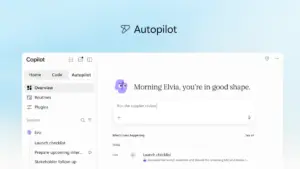
Microsoft Reimagines Copilot: New "Autopilot" and "Code" Features Lead a Major Shift Toward Agentic Work
In a significant pivot toward the next era of enterprise productivity, Microsoft...







