

In an era defined by a relentless cycle of artificial intelligence breakthroughs and escalating marketing claims, Microsoft is attempting to shift the conversation from technical speculation to practical economic utility. Jared Spataro, Microsoft’s Chief Marketing Officer for AI at Work, recently addressed the company’s customer base with a comprehensive vision for the future of enterprise AI, signaling a move away from the "sound and fury" of model benchmarks toward the "genuine, economically valuable work" that AI can now perform within a corporate environment.
The message arrives at a critical juncture for the technology industry. While the past eighteen months have focused heavily on the generative capabilities of Large Language Models (LLMs), the focus is now pivoting toward implementation, safety, and scalability. Spataro’s briefing outlines a three-pillared strategy—Platform, Business Model, and Partnership—designed to help organizations navigate the complexities of a market that is moving faster than traditional software cycles can typically accommodate.
Platform
At the heart of Microsoft’s strategy is a recognition that the AI landscape is currently characterized by a "constant game of leapfrog." With major research labs like OpenAI and Anthropic frequently releasing updated models that claim superiority in specific reasoning tasks or creative outputs, Spataro argues that enterprise customers should avoid tethering their operations to a single provider. Because different models are trained on different datasets and architectures, they inevitably "fail differently," creating a diversification requirement for businesses that prioritize reliability.
To address this, Microsoft is positioning its platform as a model-agnostic gateway. By integrating leading models from a variety of sources, including Anthropic and OpenAI, the company aims to provide a layer of stability over a volatile underlying market. However, the strategy extends beyond mere access to raw intelligence. Microsoft is focusing on the "grounding" of AI—the process of connecting these models to the specific data, context, and intellectual property that define a particular business. This approach is intended to transform generic AI into a bespoke tool that understands the nuances of a company’s internal operations and competitive advantages.
A significant portion of this platform evolution centers on the rise of "agents." Unlike standard chatbots that respond to prompts in isolation, agents are designed to execute complex, multi-step workflows. Spataro emphasizes that the deployment of an agent is not a singular event but the beginning of a continuous improvement cycle. In this model, organizations must define what "good work" looks like, measure the agent’s performance against those standards, and iterate. Microsoft is building these feedback loops directly into its product suite, allowing companies to compound small, incremental improvements into a significant competitive edge over time. This focus on "agentic" capabilities represents a shift from AI as a passive assistant to AI as an active participant in the corporate workforce.
Business Model
As AI moves from experimental pilot programs to core business functions, the question of cost management has become a primary concern for Chief Financial Officers. For two decades, the software-as-a-service (SaaS) industry has been dominated by the User Subscription License (USL)—a flat, predictable monthly fee per employee. While this model provided budget stability, Spataro suggests it is insufficient for the era of AI agents.
Microsoft’s proposed economic framework introduces a dual-track pricing system that distinguishes between personal productivity and autonomous work. The first track remains the traditional USL, which powers the Copilot experience across Microsoft 365 applications. This subscription provides employees with access to chat functions, ready-made tools like "Researcher" and "Analyst" agents, and the infrastructure to build their own simple automations. In this scenario, the intelligence of the underlying models can improve without a corresponding increase in the monthly per-user price.
The second track, however, introduces Usage-Based Billing (UBB), a departure from the "all-you-can-eat" subscription model. This shift is driven by the fact that long-running, complex AI jobs—such as those performed by autonomous agents—carry variable compute costs that a flat fee cannot easily absorb. Spataro argues that these costs should not be viewed as traditional software "overhead." Instead, they should be treated as "capital" invested to build organizational capability, much like the investment in human headcount.
To simplify this transition, Microsoft is introducing "Copilot Credits." This shared currency aggregates AI operations across the platform, allowing agentic capabilities like "Copilot Cowork" to draw from a single meter. This system is designed to provide businesses with complete visibility into their AI expenditures, offering the ability to set strict limits and governance policies before an invoice is generated. By providing this level of granular control, Microsoft hopes to alleviate the "sticker shock" that has plagued some early adopters of high-compute AI services.
Partnership
Perhaps the most candid aspect of Microsoft’s new roadmap is the acknowledgment that the primary barrier to AI adoption is not the technology itself, but the human and organizational change required to implement it. Rewiring how work gets done and building trust in automated systems are tasks that Spataro notes "you can’t buy."
To bridge this gap, Microsoft is doubling down on its "Partnership" pillar. This includes a commitment to a long-term collaborative relationship with enterprise clients, often involving "Forward Deployed Engineers." These technical experts work directly alongside a customer’s internal teams to craft and execute implementation plans, ensuring that the AI tools are integrated deeply into the company’s specific workflows rather than sitting as an isolated layer on top of them.
This hands-on approach is informed by Microsoft’s own internal transformation. The company is sharing its research and the lessons learned from its own deployment of AI across its global operations. Spataro characterizes this as having "skin in the game," suggesting that Microsoft’s role is no longer just that of a vendor, but of a strategic partner in the fundamental restructuring of the modern workplace.
The philosophy underpinning these efforts is one of "human agency." In a market often prone to hyperbole about the total replacement of human workers, Microsoft is positioning its tools as a means to expand, rather than narrow, what people can achieve. The goal is to provide a platform where AI handles the rote, data-intensive tasks, thereby freeing employees to take on more complex problems and exercise higher-level judgment.
In concluding his address to customers, Spataro emphasized a "purposefully understated" approach. He noted that the systems required to run a global company are not the same as those required for a flashy technology demo. Real-world business operations reward consistency, security, and reliability—systems that "show up every day and do the job."
As Microsoft rolls out these new platform features and pricing structures, the industry will be watching closely to see if this pragmatic approach can turn the "sound and fury" of the AI boom into a sustainable engine for economic growth. By focusing on the intersection of platform flexibility, transparent economics, and deep organizational partnership, Microsoft is betting that the true value of AI will be found not in the loudest claims, but in the quiet, daily work of moving a business forward.
The transition to an agent-led economy represents one of the most significant shifts in enterprise computing since the move to the cloud. With this roadmap, Microsoft has laid out its plan to remain the central infrastructure for that transition, providing the tools and the financial framework for organizations to choose their own path in an increasingly automated world. The success of this strategy will likely depend on how effectively businesses can translate these new "Copilot Credits" and "agentic loops" into measurable ROI, a task that Microsoft is now signaling it is ready to tackle alongside its customers.
 Productivity Software & Office Suites
Microsoft Reports 30 Million Paid Copilot Seats as Enterprise AI Shifts from Assistance to Autonomy
In a recent earnings call that signaled a pivotal moment for the...
 Productivity Software & Office Suites
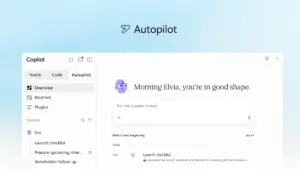
Microsoft Reimagines Copilot as a Comprehensive AI System for Enterprise Automation and Custom Development
In a significant shift that signals the next phase of the generative...
 Productivity Software & Office Suites
Microsoft Reports 30 Million Copilot Seats as Enterprise AI Shifts from Assistance to Autonomous Agents
In its most recent earnings report, Microsoft announced a significant milestone in...







