
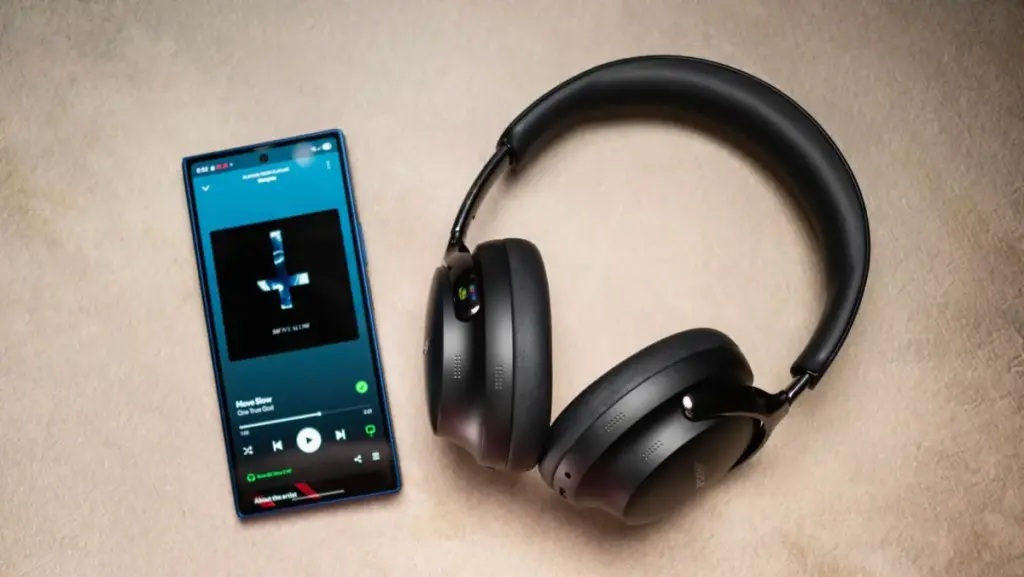
The landscape of the premium audio market has long been defined by a handful of dominant players. For years, consumers looking for high-end, over-ear noise-canceling headphones have generally gravitated toward a predictable shortlist: Sony’s industry-leading WH-1000X series, Bose’s legendary QuietComfort line, Apple’s luxury-oriented AirPods Max, or perhaps the audiophile-leaning offerings from Sennheiser. While Samsung has established itself as a formidable force in the true wireless stereo (TWS) earbud market with its Galaxy Buds lineup, it has remained curiously absent from the flagship over-ear category.
That may be about to change. According to a new report, the South Korean tech giant is finally preparing to mount a serious challenge to the heavyweights of the over-ear world. Samsung is reportedly developing a new pair of premium over-ear headphones that could be branded as the "Galaxy Studio." This move represents a significant strategic shift for Samsung, which has spent the last several years refining its in-ear audio technology while leaving the over-ear "prosumer" segment to its competitors.
What you need to know
The news of this development comes via a leak from the X (formerly Twitter) user evowizz, as first reported by 9to5Google. While the name "Galaxy Studio" is a new addition to the rumor mill, the source behind it has already established a degree of credibility within the Samsung ecosystem. The leaker was the first to reveal accurate details regarding Samsung’s recently released open-ear earbuds, which hit the market earlier this month under the "Galaxy Buds On" moniker. With the successful launch of that product confirming the leaker’s access to Samsung’s audio roadmap, the "Galaxy Studio" report is being taken seriously by industry observers.
Despite the emergence of the branding, specific technical details regarding the Galaxy Studio remain scarce. As of now, there are no leaked renders of the design, no confirmed specifications regarding driver size or battery life, and no official word from Samsung. However, the naming convention itself offers some clues as to where Samsung intends to position this product. By opting for the "Studio" suffix rather than the "Buds" branding used for its in-ear products, Samsung appears to be signaling a focus on high-fidelity audio, professional-grade noise cancellation, and perhaps a more robust build quality intended for long-form listening sessions.
Entering a Crowded and Competitive Market
The decision to enter the over-ear market is a bold one, as the segment is currently more competitive than ever. Sony has spent the better part of a decade perfecting the balance between industry-leading active noise cancellation (ANC) and consumer-friendly features. Their current flagship, the WH-1000XM5, is widely regarded as the gold standard for travelers and office workers alike. Meanwhile, Apple’s AirPods Max, despite their high price point and aging hardware, remain a status symbol with deep integration into the iOS ecosystem.
Samsung’s entry into this space suggests that the company sees a gap in the market for a flagship over-ear product that offers the same level of seamless integration for Android and Galaxy users that the AirPods Max offer for the iPhone crowd. While Samsung’s Galaxy Buds Pro 2 and the more recent Galaxy Buds 3 Pro have been praised for their sound quality and ecosystem features—such as Auto Switch between tablets and phones—they cannot match the physical comfort, battery endurance, and passive isolation provided by a dedicated over-ear design.
To succeed, the Galaxy Studio will likely need to leverage Samsung’s extensive research and development resources. It is worth noting that Samsung is the parent company of Harman International, which owns legendary audio brands such as AKG and JBL. For years, Samsung has utilized AKG’s acoustic engineering to tune its earbuds and smartphone speakers. It is highly probable that the Galaxy Studio will benefit from this partnership, potentially offering a sound signature that appeals to both mainstream listeners and more discerning audiophiles.
 Mobile Device Management (MDM) & Mobile OS
Motorola Signals a High-End Return to North America with the Snapdragon-Powered Signature 27
At the recent Snapdragon Summit hosted by Qualcomm, an event typically dominated...
 Mobile Device Management (MDM) & Mobile OS
Power on the Move: Why High-Wattage Wired Charging is Becoming Essential for Modern Travelers
In the rapidly evolving landscape of mobile technology, the way we power...
 Mobile Device Management (MDM) & Mobile OS
Google Photos Users Report Crippling App Freezes on Pixel Devices Following Latest AI Update
The Google Pixel ecosystem has long been celebrated for its seamless integration...







