
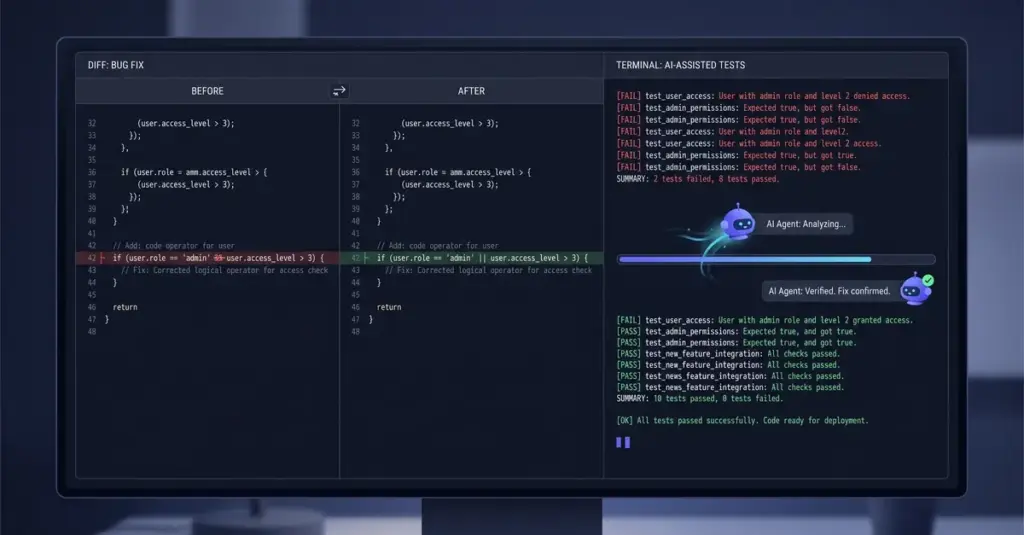
The initial promise of Artificial Intelligence in software development was centered on a single, intoxicating metric: speed. For the past several years, the narrative has been dominated by how quickly an LLM can generate a function, a boilerplate, or even a full application. However, as the industry moves deeper into late 2026, the long-term reality of maintaining that machine-generated code is beginning to collide with the limits of human endurance.
A series of recent reports and surveys have highlighted a growing phenomenon known as the "almost right" illusion. While AI coding tools have become proficient at producing code that looks syntactically correct and sounds plausible, the cognitive burden of verifying, debugging, and integrating these snippets is driving a surge in developer burnout. On October 6, 2026, Business Insider cited a comprehensive Stack Overflow survey that revealed a profound identity crisis within the engineering community. Many developers now feel their roles have been reduced to those of "button-pushers and human meat proxies," acting as the final, manual filter for an endless stream of probabilistic output.
This shift in the daily life of a developer—from architecting complex systems to acting as a high-pressure quality assurance (QA) tester—is creating a new kind of exhaustion. Reports from TechTarget and Medium in early October have echoed this sentiment, describing a state of "QA fatigue." The core of the problem lies in the deceptive nature of AI output: it is often 90% correct, but the remaining 10% contains subtle logic errors, hallucinated variables, or edge-case failures that require more mental energy to find than it would have taken to write the code from scratch.
The "Almost Right" Illusion and Developer Burnout
The psychological toll of reviewing AI-generated code is fundamentally different from reviewing code written by a human colleague. When a human engineer writes a pull request, they bring a mental model of the system and a clear intent. If a reviewer is confused, they can engage in a dialogue with the author to understand the context. In contrast, reviewing an AI snippet requires the developer to reverse-engineer the intent of a statistical model.
This process forces the engineer to hunt for "hallucinations"—instances where the AI assumes a library function exists when it does not, or where it fails to account for specific type mismatches in a complex codebase. Because the code looks correct at first glance, the developer cannot skim it; they must scrutinize every line with a high degree of skepticism. This constant state of hyper-vigilance is the primary driver of the current burnout crisis.
The workflow of modern AI tools often creates a "manual verification loop." Once a snippet is pasted into a file, the AI’s participation typically ends. The developer is then left to wire the code into the existing architecture, write the necessary tests, run those tests, interpret the errors, and manually correct the implementation. In this scenario, the human being effectively becomes the runtime environment for a black-box model. This repetitive, reactive cycle is a far cry from the creative problem-solving that draws most people to software engineering.
The Deskilling of Junior Engineers
Beyond the immediate burnout of senior staff, the industry is facing a more insidious long-term threat: the deskilling of the next generation of engineers. A report from LeadDev on October 5, 2026, warned that an overreliance on AI generation tools is significantly impairing the ability of junior engineers to develop fundamental debugging and architectural skills.
 Software Development & Scripting for IT
Bridging the Gap Between Canvas and Cafe: Developer Builds Local AI Suite to Help Madrid Artist Manage Exhibitions
In the bustling cultural landscape of Madrid, where neighborhood cafes and local...
 Software Development & Scripting for IT
UNC6240 Exploits Critical Oracle PeopleSoft Vulnerability Through Sophisticated WAF Bypass Techniques
A sophisticated cyber-espionage and data theft campaign has been identified targeting organizations...
 Software Development & Scripting for IT
AI That Urges You to Unplug: Pranav Suryawanshi Unveils TouchCall Voice Assistant for the Hacktoberfest AI Challenge
In an era where digital wellness applications often paradoxically demand more of...







