
The initial promise of Artificial Intelligence in software development was centered on a single, intoxicating metric: speed. For the past several years, the narrative has been dominated by how quickly an LLM can generate a function, a boilerplate, or even a full application. However, as the industry moves deeper into late 2026, the long-term reality of maintaining that machine-generated code is beginning to collide with the limits of human endurance.
A series of recent reports and surveys have highlighted a growing phenomenon known as the "almost right" illusion. While AI coding tools have become proficient at producing code that looks syntactically correct and sounds plausible, the cognitive burden of verifying, debugging, and integrating these snippets is driving a surge in developer burnout. On October 6, 2026, Business Insider cited a comprehensive Stack Overflow survey that revealed a profound identity crisis within the engineering community. Many developers now feel their roles have been reduced to those of "button-pushers and human meat proxies," acting as the final, manual filter for an endless stream of probabilistic output.
This shift in the daily life of a developer—from architecting complex systems to acting as a high-pressure quality assurance (QA) tester—is creating a new kind of exhaustion. Reports from TechTarget and Medium in early October have echoed this sentiment, describing a state of "QA fatigue." The core of the problem lies in the deceptive nature of AI output: it is often 90% correct, but the remaining 10% contains subtle logic errors, hallucinated variables, or edge-case failures that require more mental energy to find than it would have taken to write the code from scratch.
The "Almost Right" Illusion and Developer Burnout
The psychological toll of reviewing AI-generated code is fundamentally different from reviewing code written by a human colleague. When a human engineer writes a pull request, they bring a mental model of the system and a clear intent. If a reviewer is confused, they can engage in a dialogue with the author to understand the context. In contrast, reviewing an AI snippet requires the developer to reverse-engineer the intent of a statistical model.
This process forces the engineer to hunt for "hallucinations"—instances where the AI assumes a library function exists when it does not, or where it fails to account for specific type mismatches in a complex codebase. Because the code looks correct at first glance, the developer cannot skim it; they must scrutinize every line with a high degree of skepticism. This constant state of hyper-vigilance is the primary driver of the current burnout crisis.
The workflow of modern AI tools often creates a "manual verification loop." Once a snippet is pasted into a file, the AI’s participation typically ends. The developer is then left to wire the code into the existing architecture, write the necessary tests, run those tests, interpret the errors, and manually correct the implementation. In this scenario, the human being effectively becomes the runtime environment for a black-box model. This repetitive, reactive cycle is a far cry from the creative problem-solving that draws most people to software engineering.
The Deskilling of Junior Engineers
Beyond the immediate burnout of senior staff, the industry is facing a more insidious long-term threat: the deskilling of the next generation of engineers. A report from LeadDev on October 5, 2026, warned that an overreliance on AI generation tools is significantly impairing the ability of junior engineers to develop fundamental debugging and architectural skills.
The process of struggling through a complex stack trace or manually tracing data flow through a codebase is not merely a chore; it is a pedagogical necessity. These "crucibles of frustration" are where architectural understanding is forged. When a junior developer encounters an error and immediately asks an AI to fix it, they bypass the critical thinking required to understand why the error occurred.
The result is a generation of engineers who may be highly efficient at generating boilerplate but lack the system-level comprehension needed to navigate a production outage. If developers continue to be treated as passive reviewers of AI output rather than active creators, the industry risks creating a workforce that is highly dependent on the very tools that created the errors they are trying to solve. This "atrophy of understanding" could have dire consequences for the stability and security of future software infrastructure.
Shifting from Manual QA to Agentic Verification
Recognizing that the current path is unsustainable, some corners of the industry are calling for a fundamental shift in how AI is integrated into the development lifecycle. The consensus emerging is that the burden of verifying AI-generated code must shift from human line-by-line reading to automated, "agentic" execution. The goal is to move the human developer back to the role of an architect who defines requirements and reviews validated outcomes, rather than a janitor cleaning up raw AI output.
MonkeysCode has positioned itself at the forefront of this shift, addressing the "button-pushing" dilemma through its latest updates to the Capuchin agent and the Agent Manager CLI. Released on October 5, 2026, MonkeysCode Editor 1.2.12 and Agent Manager 1.0.16 introduce a workflow that prioritizes autonomous verification over raw generation.
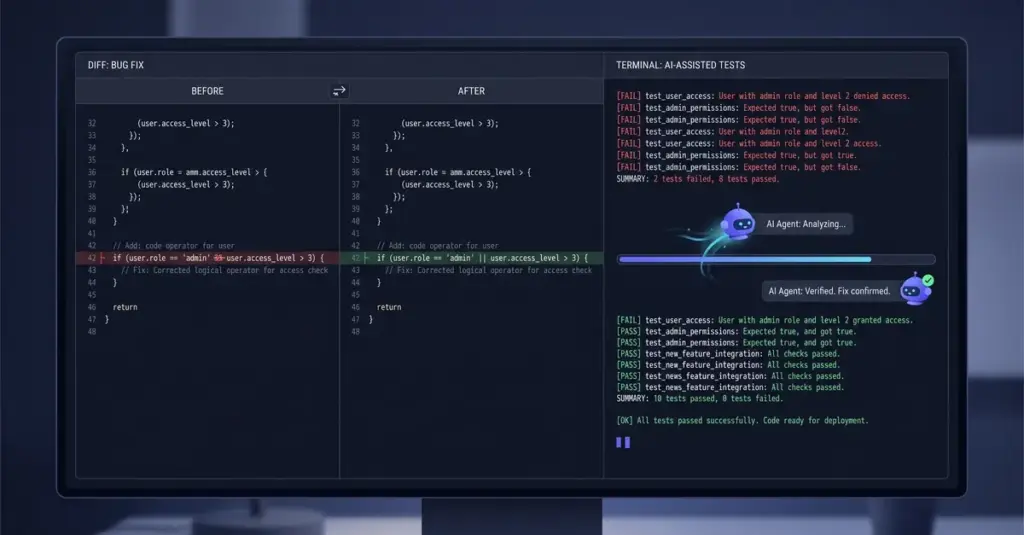
The philosophy behind Capuchin is that an AI should not simply dump code into a file and leave. Instead, the agent is designed to work within a "test-and-repair loop." When assigned a task, Capuchin creates a plan, edits the necessary files across the codebase, and—crucially—executes the project’s own test suite. If the tests fail, the agent does not wait for a human to find the error. It reads the stack trace, analyzes the failure, and attempts to repair the code autonomously.
This process continues until the tests pass or the agent reaches a predefined iteration limit. By the time the developer is asked to review the changes, the code has already been validated against the project’s actual requirements. This shifts the human’s role from "Does this syntax look right?" to "Does this logic meet the business requirements?"—a significantly more engaging and less exhausting task.
Supervised Runs with Agent Manager
For developers who operate primarily in the terminal or need to integrate these agentic workflows into existing CI/CD pipelines and scripts, the release of MonkeysCode CLI 1.0.2 and Agent Manager 1.0.16 provides a more granular level of control. This setup allows for "supervised agent runs," where the developer can delegate complex implementation tasks directly from the command line.
The process is designed to be transparent, providing the developer with real-time visibility into the agent’s reasoning and actions. For example, a developer might issue a command to implement a new middleware and ensure all associated tests pass. The Agent Manager then orchestrates the entire lifecycle of that task:
- Planning: The agent identifies which files need to be modified (e.g., the middleware itself and the test files).
- Execution: The agent applies the edits.
- Verification: The agent runs the specific test suite related to the changes.
- Iteration: If a system error occurs—such as a 500 error when a 401 was expected—the agent analyzes the stack trace and applies a fix.
- Completion: Only after the tests pass (e.g., "4 passing") does the agent mark the task as ready for human review.
This automated verification loop aims to eliminate the "almost right" trap. When the developer finally opens the code in the editor, they are not hunting for syntax errors or basic logic flaws; those have already been filtered out by the agent’s interaction with the compiler and test runner.
To further streamline this, MonkeysCode Editor 1.2.11 introduced improved diff navigation. When a developer reviews the agent’s work, diff card headers allow them to jump directly to the affected file tabs. This targeted inspection ensures that the human’s cognitive energy is spent on high-level logic and architectural alignment, rather than the tedious work of finding where the AI made a change.
Model Choice and BYOK
A significant source of frustration for many engineering teams has been the "black box" nature of many AI tools. Being locked into a single, opaque model can lead to inconsistent results and a lack of trust in the tool’s output. To counter this, the latest industry trends—and the MonkeysCode platform—are moving toward multi-model routing and "Bring Your Own Key" (BYOK) architectures.
By allowing developers to choose which model powers their agentic workflows, teams can match the reasoning engine to the specific needs of their codebase. Some models may perform better with legacy Java systems, while others might excel at modern TypeScript architectures. This flexibility, combined with the ability to use private API keys, provides teams with a sense of control and security that is often missing from one-size-fits-all AI solutions.
Takeaway
The software engineering industry is at a crossroads. The data from major industry surveys and reports suggests that the current trajectory—where developers act as manual QA testers for AI-generated snippets—is leading to a crisis of burnout and a dangerous decline in foundational skills among junior staff. The "almost right" illusion has proven to be a significant drain on cognitive resources, threatening the very productivity that AI was supposed to enhance.
The solution lies in evolving the workflow from passive code generation to active, agentic verification. By shifting the burden of syntax checking, test execution, and basic debugging back to the machine, tools like Capuchin and the Agent Manager CLI aim to restore the developer’s role as an architect and problem-solver. As these autonomous test-and-repair loops become the standard, the industry may finally be able to realize the efficiency of AI without sacrificing the well-being and expertise of the engineers who build and maintain our digital world.
 Software Development & Scripting for IT
Navigating the "Lakh and Crore" Divide: New AI Benchmark Exposes Significant Errors in Indian Real Estate Mathematics
The dream of homeownership in India is often a complex journey through...
 Software Development & Scripting for IT
Re-evaluating the Enterprise Test Automation Stack: Why Past Decisions Require New Scrutiny in the Age of AI
In the fast-moving world of enterprise software, a test automation tool that...
 Software Development & Scripting for IT
AI That Urges You to Unplug: Pranav Suryawanshi Unveils TouchCall Voice Assistant for the Hacktoberfest AI Challenge
In an era where digital wellness applications often paradoxically demand more of...







