

The long-anticipated transition of quantum computing from a theoretical pursuit of physics to a practical tool for global industry has officially begun. According to a recent report from analysts at McKinsey & Co., the sector reached a "commercial tipping point" this spring, marking a fundamental shift in how the technology is perceived by the global business community. No longer confined to the laboratory, quantum systems are increasingly being integrated into the strategic planning of companies across a diverse array of sectors, including life sciences, climate technology, travel, logistics, and financial services. These early adopters are already leveraging emerging quantum capabilities to optimize complex processes, test high-stakes scenarios, and run simulations that were previously beyond the reach of classical architectures.
The scale of this commercial embrace is perhaps most clearly reflected in the flow of capital. McKinsey’s data highlights that investors funneled a staggering $12.6 billion into quantum startups over the past year. This massive influx of funding suggests that the market has moved past the fundamental question of "can it be done?" and is now fixated on the timeline of "when will it happen?" This sentiment is echoed by some of the most influential figures in the information technology sector, who see the current era not as a sudden "flip-the-switch" moment, but as a deliberate and steady march toward maturity.
John Roese, the global chief technology officer and chief AI officer at Dell Technologies, is among those leading the charge in articulating this roadmap. In his view, the path forward is characterized by the incremental development of increasingly scalable, fault-tolerant systems. This progression relies on the constant refinement of error-corrected qubits, the advancement of system architectures, and the maturation of both software and specialized applications. As the quantum and traditional IT industries become increasingly "entangled," the focus is shifting toward the infrastructure required to make quantum power accessible and reliable for the modern enterprise.
The traditional titans of the datacenter—original design manufacturers such as Dell Technologies, Hewlett Packard Enterprise (HPE), Cisco Systems, and IBM—are already laying the groundwork for this future. Rather than viewing quantum as a replacement for classical computing, these companies are positioning it as a powerful co-processor within a hybrid framework. This has led to the emergence of the hybrid quantum-classical High-Performance Computing (HPC) datacenter, a model where the immense processing power of supercomputers is augmented by the unique capabilities of quantum processors.
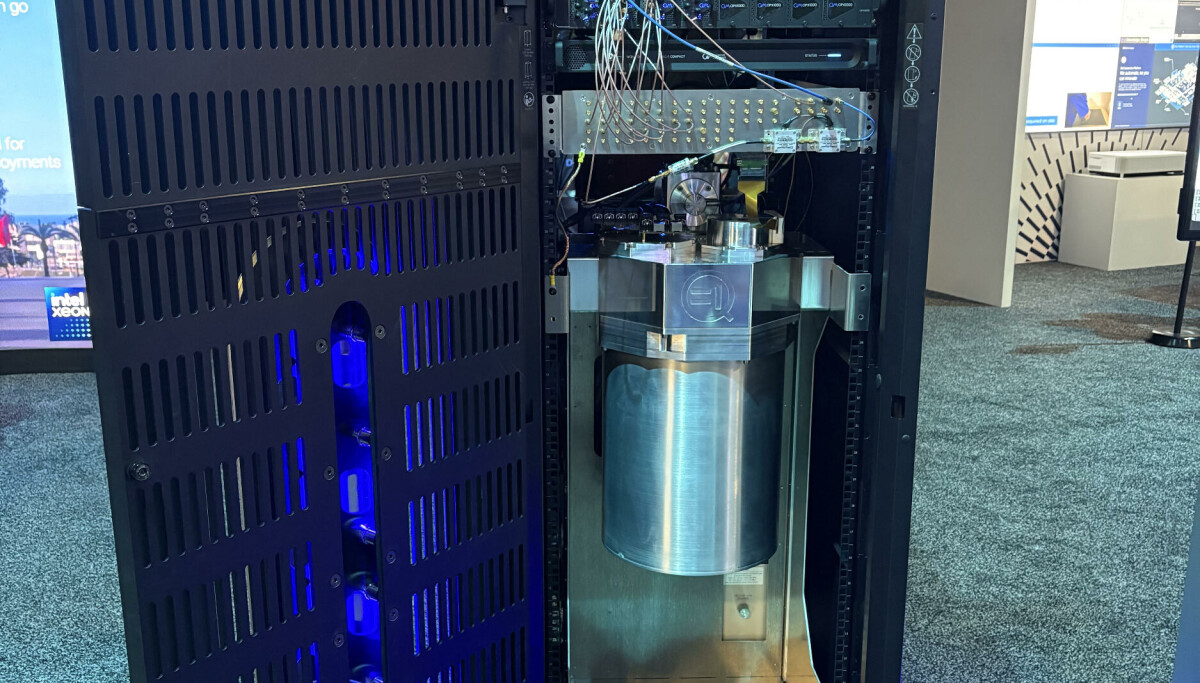
Cisco, for instance, is focusing its efforts on the connective tissue of these systems, developing a quantum-focused networking architecture designed to handle the unique demands of quantum data. Meanwhile, Dell and HPE are aggressively pursuing a strategy of partnership and integration. At the Dell Technologies World 2026 conference earlier this year, the industry caught a glimpse of this integration in action when the quantum firm Equal1 showcased its RacQ system. This display served as a tangible example of how quantum hardware is being designed to sit alongside traditional server racks, signaling a move toward physical and operational compatibility.
HPE has followed a similar trajectory, unveiling a series of high-profile partnerships with a diverse roster of quantum specialists, including IQM Quantum Computers, Quantinuum, QuEra, and Rigetti. By integrating systems like IQM’s Radiance quantum processor with its own legendary Cray supercomputers, HPE is building a unified platform that allows researchers and enterprises to toggle between classical and quantum resources seamlessly. This collaborative approach suggests that the "quantum winner" will not be a single company, but rather an ecosystem of hardware providers and integrators working in concert.
 Enterprise Tech & Infrastructure
Navigating the Hidden Complexities of Amazon S3 Cost Optimization: A Strategic Approach to Storage Management
For enterprise IT leaders and cloud architects, the promise of Amazon S3...
 Enterprise Tech & Infrastructure
Understanding the Architecture of Modern Storage: Decoding the Relationship Between Flash Technology and Solid-State Drives
In the rapidly evolving landscape of data storage, the terminology used to...
 Enterprise Tech & Infrastructure
Decoding the Total Cost of Ownership: A Strategic Approach to Amazon S3 Storage Optimization
For the modern enterprise, the Amazon S3 bill is frequently a source...






