
For decades, the concept of the hologram has been a staple of science fiction, most notably immortalized by the flickering, blue-tinted projections of the Star Wars franchise. While those cinematic depictions were often characterized by low-resolution interference and visual "fuzziness," the reality of holographic communication has long been a goal for Silicon Valley’s biggest players. At the Meta Connect 2026 keynote, that vision moved significantly closer to a polished, consumer-ready reality. Meta has officially debuted a sophisticated new digital avatar system, rebranding its long-gestating research into a user-friendly feature simply titled "Holograms."
The announcement marks a pivotal shift in how Meta approaches digital representation. The company’s journey with avatars has been a public and often criticized evolution. From the early, simplified, and often "uncanny" cartoonish figures that lacked lower limbs to the more refined 2024 modern upgrades, Meta has struggled to find a balance between performance and realism. With the introduction of Holograms, the company appears to have leaped over the "uncanny valley" by leveraging advanced artificial intelligence to create digital twins that are virtually indistinguishable from their human counterparts. This new system is set to roll out across Meta’s ecosystem, beginning with high-fidelity integration in WhatsApp video calls and extending into the company’s burgeoning hardware lineup.
The creation of a personal Hologram is designed to be a frictionless experience, requiring nothing more than a modern smartphone and the Meta app. During a recent demonstration of the technology, the setup process was remarkably brief, taking approximately 60 seconds to complete. During this "onboarding" phase, users are prompted to perform a series of simple physical actions, such as turning their head in various directions to capture a full 360-degree map of their facial features and expressions. Additionally, the app requires users to answer a series of questions out loud. This step is crucial, as it allows the Meta AI to record and learn the specific mannerisms, vocal inflections, and micro-expressions unique to the individual.
Once the initial scan is finished, the heavy lifting moves to the cloud. Meta AI initiates a five-to-ten-minute server-side processing window. During this time, the raw data captured by the smartphone is transformed into a personalized, high-fidelity model capable of being rendered in real-time across various platforms. This model is not a static image or a simple video filter; it is a dynamic, data-rich digital entity designed to mimic the user’s real-world behavior with startling accuracy.
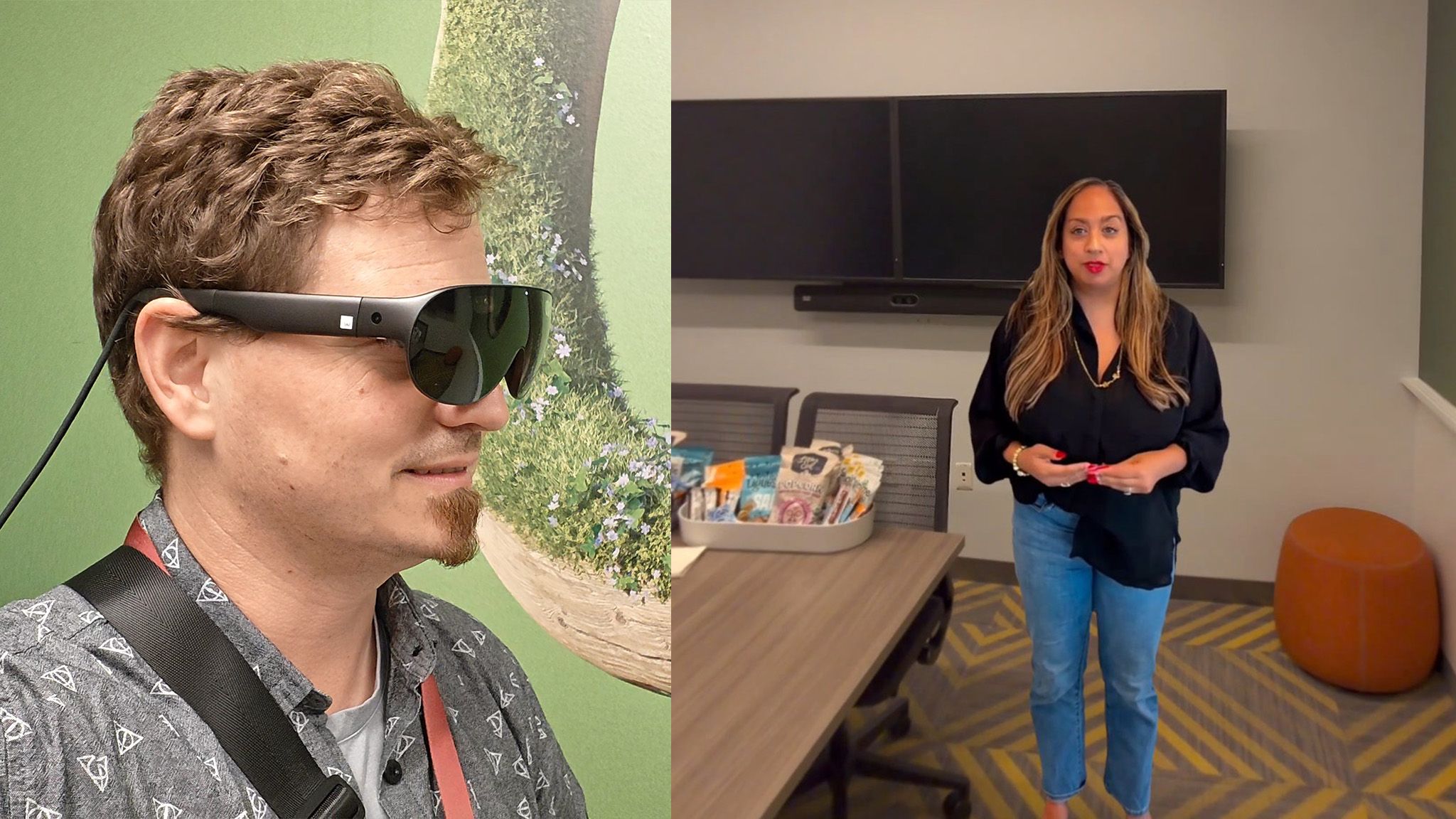
One of the most immediate and practical applications for this technology is found in the Meta Ray-Ban Display glasses. Traditionally, video calling from smart glasses has presented a significant hardware challenge: because the cameras on the glasses face outward to show the wearer’s environment, there is no camera pointed back at the wearer’s face. This has historically meant that the person on the other end of the call sees what the wearer sees, rather than the wearer themselves.
 Mobile Device Management (MDM) & Mobile OS
Motorola Signals a High-End Return to North America with the Snapdragon-Powered Signature 27
At the recent Snapdragon Summit hosted by Qualcomm, an event typically dominated...
 Mobile Device Management (MDM) & Mobile OS
Google Launches New Googlebook Hardware Lineup Amid Revelations of Android App Compatibility Issues on Intel Models
The highly anticipated launch of the Googlebook has arrived, marking a significant...
 Mobile Device Management (MDM) & Mobile OS
Samsung’s Foray into the Googlebook Era: Leaked Benchmarks Reveal Snapdragon X Elite Power and Android 17 Integration
The landscape of portable computing is undergoing its most significant transformation in...







