
For decades, the concept of the hologram has been a staple of science fiction, most notably immortalized by the flickering, blue-tinted projections of the Star Wars franchise. While those cinematic depictions were often characterized by low-resolution interference and visual "fuzziness," the reality of holographic communication has long been a goal for Silicon Valley’s biggest players. At the Meta Connect 2026 keynote, that vision moved significantly closer to a polished, consumer-ready reality. Meta has officially debuted a sophisticated new digital avatar system, rebranding its long-gestating research into a user-friendly feature simply titled "Holograms."
The announcement marks a pivotal shift in how Meta approaches digital representation. The company’s journey with avatars has been a public and often criticized evolution. From the early, simplified, and often "uncanny" cartoonish figures that lacked lower limbs to the more refined 2024 modern upgrades, Meta has struggled to find a balance between performance and realism. With the introduction of Holograms, the company appears to have leaped over the "uncanny valley" by leveraging advanced artificial intelligence to create digital twins that are virtually indistinguishable from their human counterparts. This new system is set to roll out across Meta’s ecosystem, beginning with high-fidelity integration in WhatsApp video calls and extending into the company’s burgeoning hardware lineup.
The creation of a personal Hologram is designed to be a frictionless experience, requiring nothing more than a modern smartphone and the Meta app. During a recent demonstration of the technology, the setup process was remarkably brief, taking approximately 60 seconds to complete. During this "onboarding" phase, users are prompted to perform a series of simple physical actions, such as turning their head in various directions to capture a full 360-degree map of their facial features and expressions. Additionally, the app requires users to answer a series of questions out loud. This step is crucial, as it allows the Meta AI to record and learn the specific mannerisms, vocal inflections, and micro-expressions unique to the individual.
Once the initial scan is finished, the heavy lifting moves to the cloud. Meta AI initiates a five-to-ten-minute server-side processing window. During this time, the raw data captured by the smartphone is transformed into a personalized, high-fidelity model capable of being rendered in real-time across various platforms. This model is not a static image or a simple video filter; it is a dynamic, data-rich digital entity designed to mimic the user’s real-world behavior with startling accuracy.
One of the most immediate and practical applications for this technology is found in the Meta Ray-Ban Display glasses. Traditionally, video calling from smart glasses has presented a significant hardware challenge: because the cameras on the glasses face outward to show the wearer’s environment, there is no camera pointed back at the wearer’s face. This has historically meant that the person on the other end of the call sees what the wearer sees, rather than the wearer themselves.
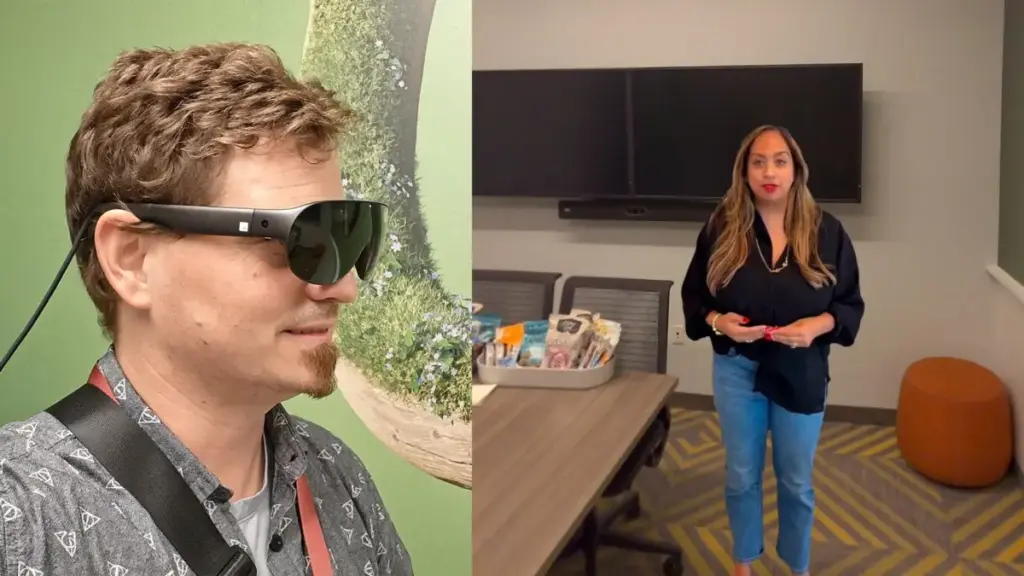
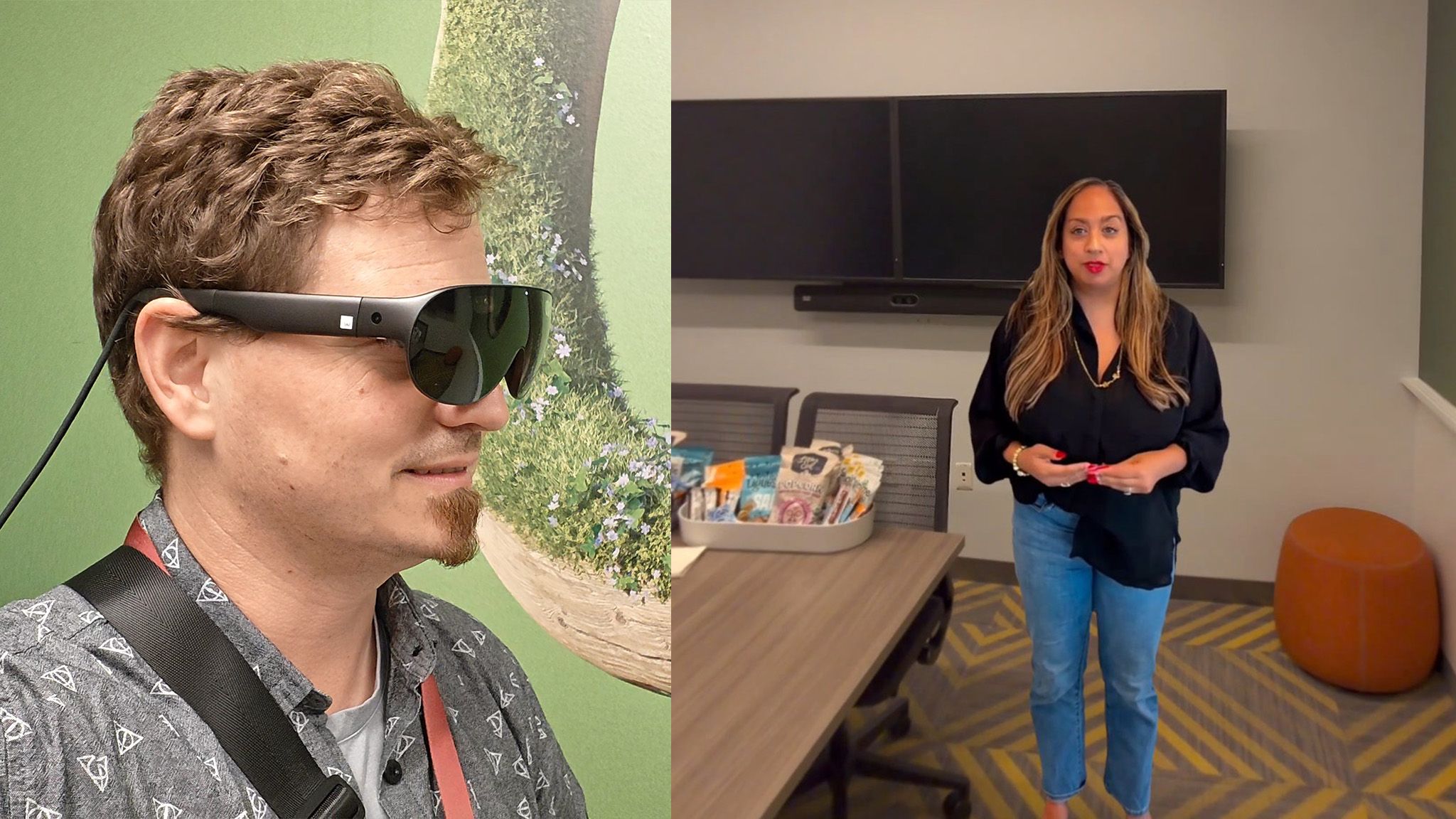
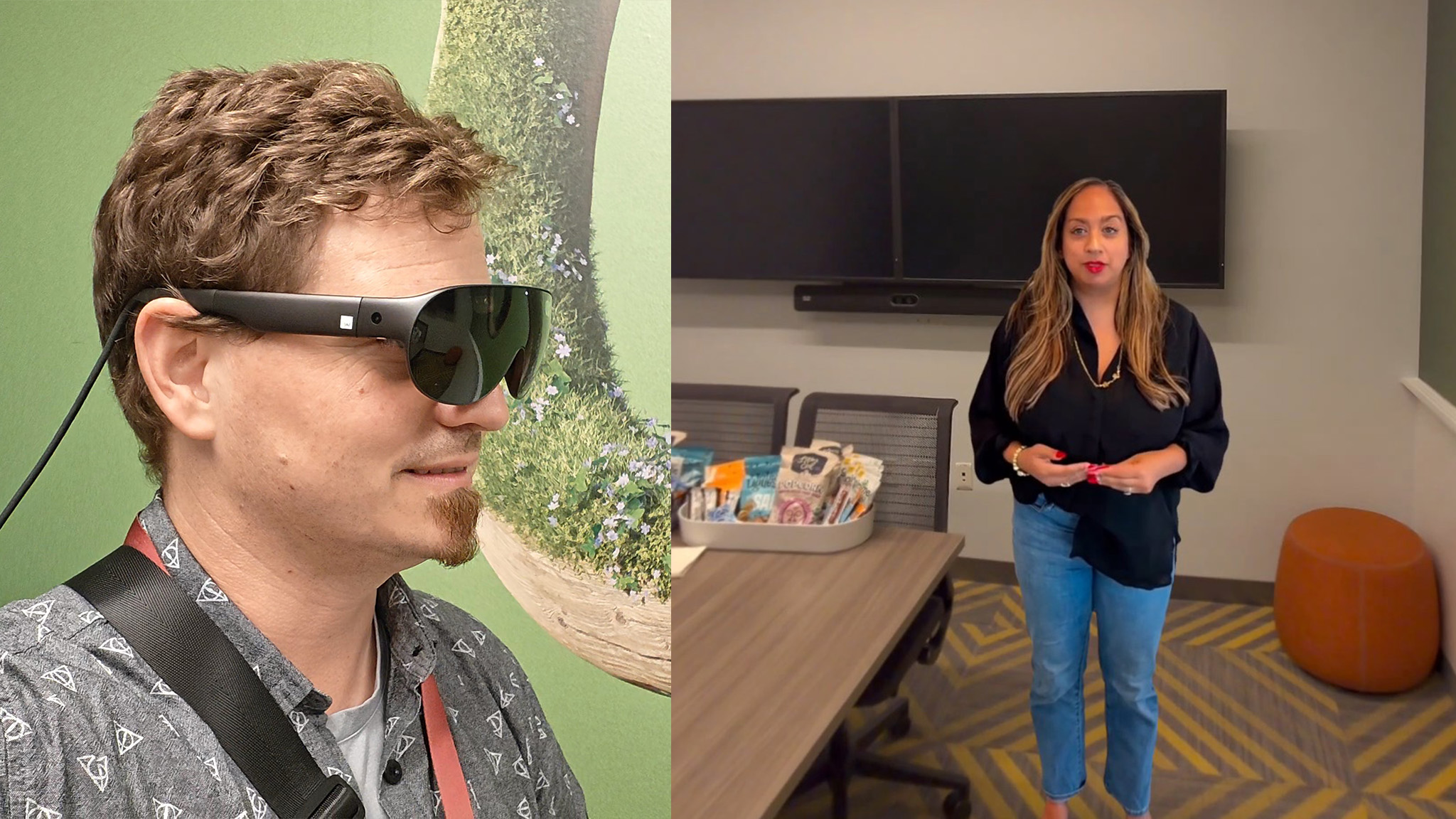
Meta’s Hologram system solves this elegantly. When a user wearing Meta Ray-Ban Display glasses initiates or answers a WhatsApp call, the recipient does not see a camera feed of the wearer’s surroundings. Instead, they see the wearer’s Hologram. In a live demonstration, a Meta representative moved to a separate room and placed a call through the glasses. Upon answering, the representative appeared on the screen as if they were standing in front of a standard smartphone camera, despite the fact that they were wearing glasses that lacked a "selfie" lens. The Hologram appeared entirely natural, showing the representative without the glasses on, effectively recreating their face and torso in real-time.
The visual results are described as uncanny, bordering on the surreal. The video quality of the Hologram matches the expectations of modern high-definition video calls, but because it is an AI-generated model, it remains perfectly stable. The AI uses the audio data from the call and the initial behavior scan to animate the Hologram’s mouth, eyes, and gestures. This allows for a seamless conversational experience where the digital twin reflects the speaker’s actual tone and emotion without the need for a physical camera to be trained on them at all times.
While the mobile and smart glasses applications are impressive, the technology reaches its full potential when experienced through Meta’s VR glasses. Utilizing full-color passthrough video, these devices allow users to see their actual physical environment with digital elements overlaid on top. In a standard call within the VR environment, the Hologram initially appears in a floating window, similar to a traditional video chat but with an added sense of 3D spatial depth. However, the experience changes fundamentally with the activation of the "full-person" feature.
When this mode is engaged, the 2D window dissolves, and the caller is projected directly into the user’s physical room. The Hologram stands at its correct real-world height and proportions, creating the illusion of a physical presence. The level of immersion is a significant upgrade from previous VR social interactions. Because the Hologram is built from a comprehensive scan, it can even replicate the specific outfit the person was wearing during their setup, or it can be updated to reflect their current appearance.
A key technical achievement of the Hologram system is its independence from specialized hardware like full-body tracking suits or external sensors. Meta AI is trained to understand and predict human movement patterns based on the individual’s baseline mannerisms. This allows the Hologram to gesture, shift its weight, and move its hands in a way that feels authentic to the person it represents, all driven by the audio input and the AI’s understanding of human behavior. In a mixed-reality setting, the Hologram is spatially anchored; a user can walk around the digital person to see them from different angles, and the Hologram will maintain its position in the room while naturally turning to face the user.
The flexibility of the system extends beyond just visual representation. Meta has designed these Holograms to be a core part of its broader ecosystem. By introducing a dedicated API, Meta is opening the door for third-party developers to integrate these high-fidelity avatars into their own applications. This suggests a future where a user’s "Hologram" becomes a universal digital identity, appearing in everything from professional meeting software and social spaces to immersive gaming environments. The transition from the research-focused "codec avatars" to the consumer-facing "Holograms" brand indicates that Meta believes the technology is finally ready for the mass market.
The implications for remote work and long-distance communication are profound. By removing the barriers of a flat screen and providing a sense of "co-presence," Meta is betting that Holograms will make digital interactions feel less like a compromise and more like a genuine substitute for being in the same room. The technology addresses the fatigue often associated with traditional video calls by providing a more naturalistic and engaging visual interface.
As Meta moves toward a final release in the coming months, the focus will likely shift to refining the server-side processing speeds and ensuring that the Holograms can operate smoothly across varying internet connection strengths. For now, the demonstration at Meta Connect 2026 serves as a powerful proof of concept. It represents the culmination of years of research into computer vision, generative AI, and spatial computing. While the "Star Wars" comparison remains a popular touchstone, Meta’s version of the hologram is distinctly modern: it is sharp, lifelike, and, most importantly, accessible to anyone with a smartphone. The fuzzy, flickering blue projections of sci-fi are being replaced by high-definition digital twins, fundamentally changing the landscape of human connection in the digital age.
 Mobile Device Management (MDM) & Mobile OS
Samsung Reportedly Developing ‘Galaxy Studio’ Over-Ear Headphones to Challenge Apple and Sony
For nearly a decade, the premium over-ear headphone market has been defined...
 Mobile Device Management (MDM) & Mobile OS
Meta Enhances Creator Toolkit with AI-Powered Edits Assistant for Instagram Performance Analysis
In an era where the creator economy is increasingly driven by data-driven...
 Mobile Device Management (MDM) & Mobile OS
Google Reportedly Developing Next-Generation TV Streamer with Hands-Free Voice Controls and Presence Sensing
The landscape of home entertainment is shifting once again as reports emerge...






