

In an era defined by rapid-fire technological breakthroughs and a relentless cycle of product announcements, the landscape of artificial intelligence has often felt more like a theater of "sound and fury" than a stable foundation for global business. From record-breaking benchmarks to increasingly bold claims from Silicon Valley labs, the sheer volume of innovation has, at times, obscured the practical realities of corporate adoption. However, according to Microsoft’s top AI leadership, the industry has reached a critical inflection point where the focus is shifting from experimental demos to genuine, economically measurable work.
Jared Spataro, Microsoft’s Chief Marketing Officer for AI at Work, recently addressed the company’s global customer base to outline a comprehensive vision for the next phase of the AI revolution. In a detailed strategic update, Spataro emphasized that while the noise in the sector remains high, the underlying technology has matured to a point where it can now perform substantive tasks that drive business value. The challenge for modern organizations, he suggests, is no longer whether AI can be useful, but how to deploy it safely, affordably, and at a scale that transforms the bottom line.
Microsoft’s approach, as articulated by Spataro, is built upon three foundational pillars: a versatile platform architecture, a modernized business model tailored for the "agentic" era, and a deep-seated commitment to partnership that extends beyond traditional software licensing.
Platform
The current state of AI development is often described as a game of "leapfrog," with various research labs vying for dominance. One week, a new model might lead in reasoning capabilities; the next, a competitor might take the crown for creative generation or coding efficiency. Microsoft’s strategy acknowledges this volatility as a permanent feature of the market rather than a temporary phase. Spataro warns that for enterprises, betting on a single model or a single laboratory carries an unnecessary level of risk. Because different models are trained on different datasets and optimized for different tasks, they inevitably fail in different ways.
To mitigate this risk, Microsoft has positioned its platform as a gateway to a diverse ecosystem of world-leading models, including those from its high-profile partnership with OpenAI as well as emerging leaders like Anthropic. By providing access to a variety of "best-of-breed" intelligences, the platform allows businesses to remain agile, switching between or combining models as the technology evolves.
However, the platform strategy extends far beyond mere access to Large Language Models (LLMs). The real value, according to Microsoft, lies in the integration of these models into the existing digital fabric of an organization. This involves embedding AI directly into the productivity applications that employees use daily, such as the Microsoft 365 suite. By grounding these models in a company’s specific data, intellectual property, and operational context, Microsoft aims to turn generic AI into a specialized tool that understands the unique nuances of a particular business.
 Productivity Software & Office Suites
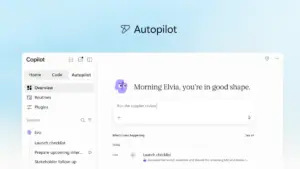
Microsoft Reimagines Copilot as a Unified AI Platform for the Next Generation of Work
In a significant shift that signals the next phase of the artificial...
 Productivity Software & Office Suites
Microsoft to Headline ESPC 2026 in Amsterdam as the European Tech Community Pivots Toward an Agentic AI Future
As the global landscape of work undergoes its most significant transformation since...
 Productivity Software & Office Suites
Microsoft to Headline ESPC 2026 in Amsterdam: A Deep Dive into the Future of AI-Powered Work and Agentic Ecosystems
The landscape of enterprise technology is currently undergoing one of its most...







