
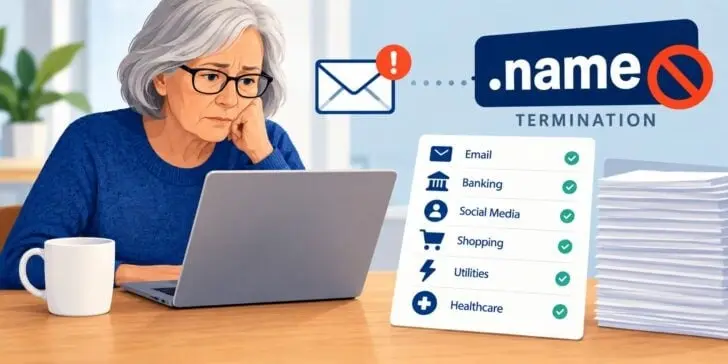
The plight of Judy Johnston, a long-term registrant of a .name domain, has become a focal point in the growing opposition to this termination. Johnston recently filed a formal reconsideration request with ICANN, a document that provides a stark look at the personal toll of administrative shifts in the domain name system. For Johnston, the decision to end support for third-level .name domains is not merely a technical inconvenience; it is a disruption of a digital life that has been established for nearly a quarter of a century.
Johnston first registered her third-level .name domain in 2002. At the time, the .name top-level domain (TLD) was marketed as a unique space for individuals, offering a standardized format—typically "firstname.lastname.name"—that allowed users to claim a professional and personal digital presence. For twenty-five years, this domain has served as the foundation for her communication and online security. The impact of the termination is further amplified by the fact that Johnston’s 97-year-old mother also relies on an email address tied to the same domain. Both women, now senior citizens, find themselves facing a digital migration of staggering proportions.
The scale of the task ahead of Johnston is daunting. She estimates that she will be forced to manually update at least 211 different online accounts. In the modern digital landscape, an email address is far more than a tool for communication; it is a primary identifier and the "master key" for security and account management. Every banking portal, healthcare platform, utility account, and social media profile she possesses is tethered to the .name address that is slated for deletion.
Johnston describes the effort required to transition these accounts as a "full-time daily job" that she expects will last for weeks. This is not a simple matter of clicking a button to update a profile. In many cases, changing a primary email address requires access to the original inbox to verify the change. If a user loses access to their domain before all accounts are transitioned, they are often forced into manual account recovery processes. These processes are notoriously difficult and are becoming increasingly stringent as companies tighten security to prevent identity theft. Johnston reports that some of her service providers are already requiring her to submit multiple forms of government identification and navigate complex data protection forms just to begin the process of updating her contact information.
The situation is compounded by a lack of clear communication and support from the companies responsible for managing these domains. When Johnston received a notification from her registrar, Network Solutions, regarding the upcoming termination, she reached out to their customer service department for clarification and to explore her options. The response she received was both shocking and indicative of a broader failure in the industry’s handling of the sunsetting process. Multiple customer service representatives at Network Solutions informed her that the termination notice was a scam. They advised her to ignore the emails, pointing out that her domain registration was technically secured and paid for through the year 2030.
This internal contradiction within the registrar’s own support system highlights a dangerous gap in information. Johnston was forced to educate the customer service representatives on the reality of the situation, eventually having to direct a staff member to perform a web search for ".name termination" before they acknowledged that the notification was legitimate. This level of misinformation from a major registrar suggests that many other users may be blissfully unaware of the impending loss of their digital identities, having been falsely reassured by support staff that their accounts are safe for the next several years.
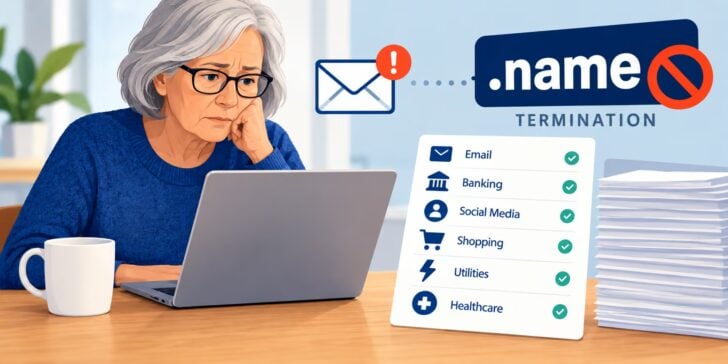
The decision to terminate these domains stems from an agreement between ICANN and Verisign, the registry operator for .name. The .name TLD was unique because it allowed for both second-level registrations (e.g., smith.name) and third-level registrations (e.g., john.smith.name). While second-level registrations will continue to function, the third-level structure is being retired. From a corporate and regulatory perspective, maintaining the infrastructure for these legacy third-level domains may be seen as an unnecessary administrative or technical burden. However, for the users who were encouraged to adopt this format in the early 2000s, the "legacy" status of their domains does not diminish their utility or importance.
The challenges faced by Johnston and her mother also shed light on the specific difficulties the digital divide creates for senior citizens. While younger, tech-savvy users might find the migration of 200 accounts tedious, for seniors, the process can be overwhelming and fraught with security risks. The requirement to provide sensitive personal documents to various online entities to "prove" one’s identity during a forced migration adds a layer of anxiety and potential exposure to fraud.
Critics of the termination, including industry experts like Andrew Allemann of Domain Name Wire, argue that ICANN and Verisign should reverse course. The argument is based on the principle that the domain name system should provide stability and reliability for its users. When an individual pays to register a domain and builds their life around it, there is an implicit expectation that the infrastructure will remain in place as long as the registration fees are paid. The fact that Johnston has paid for her domain through 2030 underscores the sense of a broken contract.
The reconsideration request filed by Johnston serves as a formal plea for the ICANN Board to recognize the human cost of these policy decisions. It highlights a fundamental tension in internet governance: the balance between technical evolution and the protection of long-term users. If the termination proceeds as planned, thousands of users could find themselves locked out of essential services, losing years of archived correspondence and facing the monumental task of rebuilding their digital presence from scratch.
Furthermore, the "scam" confusion at Network Solutions raises questions about how many other people are currently being misled. If a sophisticated user like Johnston had to fight to prove the reality of the termination to her own registrar, less experienced users are likely to follow the advice of customer service agents and ignore the warnings. This creates a "ticking time bomb" scenario where users will only realize their email addresses are dead after the domains have already been deactivated, at which point the recovery of their 211-plus accounts will become exponentially more difficult, if not impossible.
The logistical burden described by Johnston is a testament to how deeply embedded domain names have become in our personal and professional lives. In 2002, when she first registered the domain, the internet was a much simpler place. Today, that email address is the anchor for a lifetime of digital data. The requirement to manually recover accounts after a domain is terminated is more than just a "job"; it is a potential loss of access to financial records, medical history, and personal memories.
As ICANN reviews the reconsideration request, the case of Judy Johnston stands as a powerful argument for a more compassionate and stable approach to domain management. The internet’s infrastructure is often treated as a series of cold, technical protocols, but stories like this remind the global community that at the end of every domain string is a person whose life depends on the stability of the system. The hardship experienced by Johnston and her 97-year-old mother is a clear indication that the current path of termination is causing real-world harm to the very people the .name TLD was originally designed to serve. Without a reversal of the decision or a significantly more robust support system for migration, the sunsetting of third-level .name domains will likely be remembered as a significant failure in the stewardship of the digital commons.
 Web Hosting & Domain Management
Rick Schwartz and the Beanstalk Challenge: A New Era of Domain Development and the Quest for the Next Great Digital Enterprise
In the fast-paced and often opaque world of digital real estate, few...
 Web Hosting & Domain Management
Slovenia’s .si Domain Experiences Unprecedented Surge Following "Super Intelligence" Executive Order
The digital landscape of Slovenia’s country-code top-level domain (ccTLD), .si, has undergone...
 Web Hosting & Domain Management
Dynadot Q2 Report Reveals High Volume and Tight Margins in the Domain Aftermarket
In a comprehensive release that provides a rare glimpse into the high-volume...







