

This internal contradiction within the registrar’s own support system highlights a dangerous gap in information. Johnston was forced to educate the customer service representatives on the reality of the situation, eventually having to direct a staff member to perform a web search for ".name termination" before they acknowledged that the notification was legitimate. This level of misinformation from a major registrar suggests that many other users may be blissfully unaware of the impending loss of their digital identities, having been falsely reassured by support staff that their accounts are safe for the next several years.
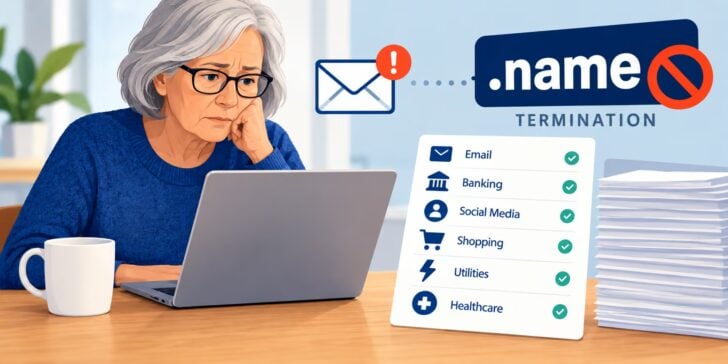
The decision to terminate these domains stems from an agreement between ICANN and Verisign, the registry operator for .name. The .name TLD was unique because it allowed for both second-level registrations (e.g., smith.name) and third-level registrations (e.g., john.smith.name). While second-level registrations will continue to function, the third-level structure is being retired. From a corporate and regulatory perspective, maintaining the infrastructure for these legacy third-level domains may be seen as an unnecessary administrative or technical burden. However, for the users who were encouraged to adopt this format in the early 2000s, the "legacy" status of their domains does not diminish their utility or importance.
The challenges faced by Johnston and her mother also shed light on the specific difficulties the digital divide creates for senior citizens. While younger, tech-savvy users might find the migration of 200 accounts tedious, for seniors, the process can be overwhelming and fraught with security risks. The requirement to provide sensitive personal documents to various online entities to "prove" one’s identity during a forced migration adds a layer of anxiety and potential exposure to fraud.
Critics of the termination, including industry experts like Andrew Allemann of Domain Name Wire, argue that ICANN and Verisign should reverse course. The argument is based on the principle that the domain name system should provide stability and reliability for its users. When an individual pays to register a domain and builds their life around it, there is an implicit expectation that the infrastructure will remain in place as long as the registration fees are paid. The fact that Johnston has paid for her domain through 2030 underscores the sense of a broken contract.
 Web Hosting & Domain Management
GoDaddy domains now automatically verified with Afternic
For years, the process of listing a domain for sale on a...
 Web Hosting & Domain Management
Industry Anxiety Mounts as ICANN Withholds Critical Timeline for New gTLD Reveal Day
The global domain name industry is currently suspended in a state of...
 Web Hosting & Domain Management
WIPO Panel Rebukes Temperley Holdings in Attempted Takeover of Founder’s Personal Domain Name
In a significant ruling that underscores the complexities of personal branding and...







