The most critical phase for Verisign’s return on investment (ROI), however, will be the "limited registration period" that follows. During this window, Verisign plans to implement a strategy that leverages its dominance in the .com market. The company indicated that registrants who currently own .com domains will be given a preferential opportunity to acquire the matching version of their domain with the .web extension.
This "matching" strategy is a proven revenue driver in the domain industry. By marketing .web as a natural companion to .com, Verisign is tapping into a pre-existing customer base of millions. For business owners, the pitch is often rooted in brand protection: "If you own yourbrand.com, you should also own yourbrand.web to ensure no one else can use it." For Verisign, this creates a massive opportunity for high-margin revenue, as the cost of maintaining a TLD registry remains relatively fixed regardless of whether they have one million or ten million registrations.
Historical Precedents and Market Challenges
The success of such a launch often depends on the cooperation of domain registrars—the retail outlets like GoDaddy, Namecheap, and Network Solutions where consumers actually buy their names. Registrars are highly motivated to push these new extensions because they offer an opportunity to upsell existing customers.
The industry has seen similar "windfall" events in the past. When the .xxx TLD launched, registrars aggressively marketed defensive blocks to corporations and public figures who wanted to ensure their names weren’t associated with adult content. This resulted in a surge of registrations from entities that had no intention of actually using the domains, but paid the fees nonetheless to avoid reputational risk.
However, .web faces a different set of challenges than the niche TLDs of the past. The internet landscape of 2024 is vastly different from that of 2016, when Verisign first placed its bet. In the intervening years, the market has been flooded with hundreds of new generic TLDs, ranging from .app and .dev to .site and .online. This saturation has led to a degree of "TLD fatigue" among both businesses and consumers.
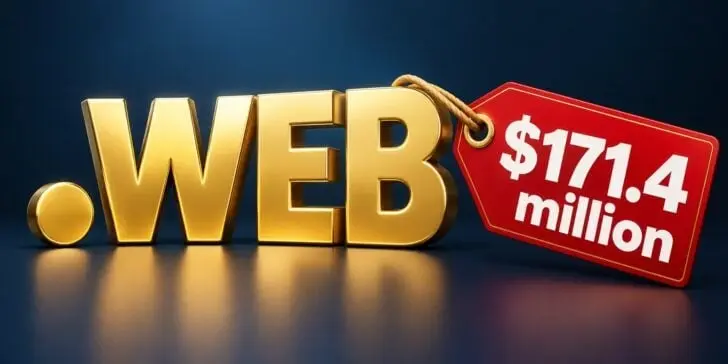
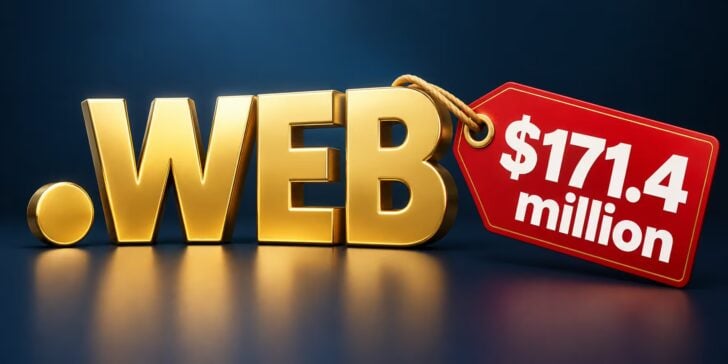
The fundamental question facing Verisign is whether the term "web" still carries enough weight to justify a $171 million price tag. In the early days of the internet, "the web" was synonymous with the online experience. Today, the digital world is increasingly dominated by mobile applications, social media platforms, and specialized ecosystems where the concept of a "web address" is sometimes secondary. There is a risk that the term may feel "passé" to a younger generation of entrepreneurs who might prefer more modern extensions like .ai or .io.
 Web Hosting & Domain Management
Afternic Expands Access to Portfolio API, Enabling Global Sellers to Automate and Scale Domain Management Operations
Afternic, the industry-leading domain name marketplace owned by GoDaddy, has officially announced...
 Web Hosting & Domain Management
.Qa domains get new restrictions: change your nameservers now
The upcoming changes, which are set to take effect at the stroke...
 Web Hosting & Domain Management
Digital Displacement: The Human Cost of Terminating Third-Level .name Domains
For Judy Johnston, a digital identity established at the dawn of the...