

Who’s behind the Fireworks AI attack?
The motivation behind the attack appears to be rooted in a relatively new but rapidly growing sector of cybercrime. Fireworks AI stated that the evidence points to a financially motivated group of cybercriminals whose primary objective was to monetize unauthorized access to enterprise AI capacity.
This practice, known in the cybersecurity community as "LLMjacking," is analogous to "cryptojacking," where hackers hijack a victim’s processing power to mine cryptocurrency. In the case of LLMjacking, attackers seize control of expensive cloud-based GPU (Graphics Processing Unit) resources to run Large Language Models (LLMs) or other AI workloads. Given the high cost and high demand for AI compute power, stolen access to these resources has become a valuable commodity on the dark web.
While the primary goal may have been the theft of computational resources, the collateral damage—such as the theft of Uber’s driver data—remains a severe consequence. This incident serves as a stark example of how attacks on specialized AI infrastructure can lead to the exposure of traditional sensitive personal information.
Uber was not the only high-profile client affected by the Fireworks AI breach. The productivity and collaboration software vendor Notion has also publicly confirmed that it was caught in the wake of the incident. Notion utilized Fireworks AI for specific classification tasks designed to help users understand their own AI usage through a feature called "Insights."
In a security disclosure, Notion explained that they also used Fireworks as a general inference provider to serve open-weight models within their product suite. "The Insights feature has been disabled as we investigate this incident, and we are no longer serving open-weight models through Fireworks," the company stated. The decision to sever ties or suspend features illustrates the immediate operational impact that third-party security failures can have on even the most robust tech platforms.
The situation for Fireworks AI was further complicated by a subsequent security incident on October 24, 2026. In this second event, an attacker gained access to the company’s development environment through the compromise of a different third-party cloud hosting provider. During this window, the intruder ran an unauthorized workload and accessed additional customer data. Fireworks AI reported that this second attack was detected and remediated within the same day, but the back-to-back incidents have raised questions about the broader security posture of the AI service provider industry.
As Uber continues to work with regulators and law enforcement to address the fallout of the driver data theft, the incident highlights a growing challenge for the tech industry. As large enterprises become more dependent on a web of specialized AI and cloud vendors, their security is only as strong as the weakest link in that chain. For the thousands of drivers whose licenses are now in the hands of unauthorized actors, the breach is a reminder that in the age of AI, the risks to personal privacy are evolving just as quickly as the technology itself.
 Helpdesk & IT Service Management (ITSM)
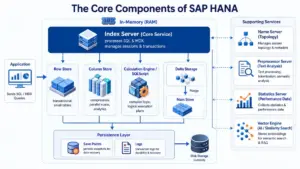
Decoding the Architecture of SAP HANA: A Deep Dive Into the Engine of Modern Enterprise Data
In the rapidly evolving landscape of enterprise resource planning and data management,...
 Helpdesk & IT Service Management (ITSM)
Binance Confirms Record-Breaking $6.3 Billion Security Breach Attributed to North Korean Threat Actors
In what is being described as the most significant financial hit in...
 Helpdesk & IT Service Management (ITSM)
Police and Fire Services Across England and Wales Facing Critical Cyber Risks Due to Legacy Systems and Human Error
Police forces and fire and rescue services throughout England and Wales are...







