

The final and largest chunk of the missing revenue—approximately $2.7 trillion—is expected to come from new product development. Bain suggests that AI’s greatest financial impact may not be in making existing processes faster, but in enabling discoveries that were previously impossible. This includes breakthroughs in drug discovery, where AI can model molecular interactions at lightning speed, and materials science, where new alloys and chemicals could revolutionize industries from energy storage to aerospace.
The overarching point, according to Bain, is that companies cannot view AI simply as a tool for "shaving a few percentage points" off their bottom lines. The economics of the current infrastructure build-out demand a wave of innovation comparable to the arrival of the mobile internet or the original move to the cloud.
Cannibalizing Tech and Systemic Constraints
While the tech industry hunts for new revenue streams, the AI transition is already having a disruptive effect on existing business models. Bain notes that software revenue growth has "moderated significantly," dropping from a 20% annual growth rate in 2022 to just 10% last year. This suggests that some enterprises are diverting funds from traditional software-as-a-service (SaaS) seats to experiment with AI.
However, this cannibalization also presents an opportunity. The report predicts that "agentic AI"—AI systems capable of performing complex, multi-step tasks autonomously—could represent a $100 billion opportunity for SaaS providers who can successfully pivot their platforms.
Beyond the financial hurdles, the $5 trillion data center rollout faces severe physical and regulatory constraints. The report warns that the industry is running into walls regarding power availability, chip supply chains, skilled labor shortages, and the complexities of obtaining building permits.
Some companies are already taking extreme measures to bypass these bottlenecks. The report cites "Colossus," a project from Elon Musk’s xAI (now associated with SpaceXAI), which was reportedly built in under a year by repurposing an old factory and leasing dozens of gas turbines to provide power. This move, done without federal clean air permits, has already drawn lawsuits and public controversy. Bain analysts suggest that while individual projects might find such workarounds, they are not replicable at the scale required for a global rollout.
Meeting the industry’s global ambitions will likely require "system-level fixes" that go beyond the standard free-market playbook. This may involve massive public-private partnerships, overhauls of national power grids, and international cooperation on chip manufacturing.
As the report concludes, a "grand challenge" on this scale demands grand solutions. For tech executives and investors, the message is clear: planning for "business as usual" is no longer a viable strategy. The AI era will either be defined by a $6 trillion explosion of human ingenuity or by a correction that reshapes the global technology landscape.
 Helpdesk & IT Service Management (ITSM)
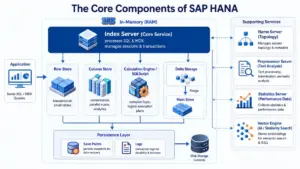
Decoding the Architecture of SAP HANA: A Deep Dive Into the Engine of Modern Enterprise Data
In the rapidly evolving landscape of enterprise resource planning and data management,...
 Helpdesk & IT Service Management (ITSM)
The Hybrid Productivity Paradox: Why Meeting Room Glitches are Eroding the Gains of the AI Era
In the three years since the global shift toward flexible working models,...
 Helpdesk & IT Service Management (ITSM)
Cybersecurity Veteran Simon Reed Joins Overe as Strategic Advisor to Strengthen MSP-Focused Security Resilience
In a move that signals a significant expansion of its strategic capabilities,...







