
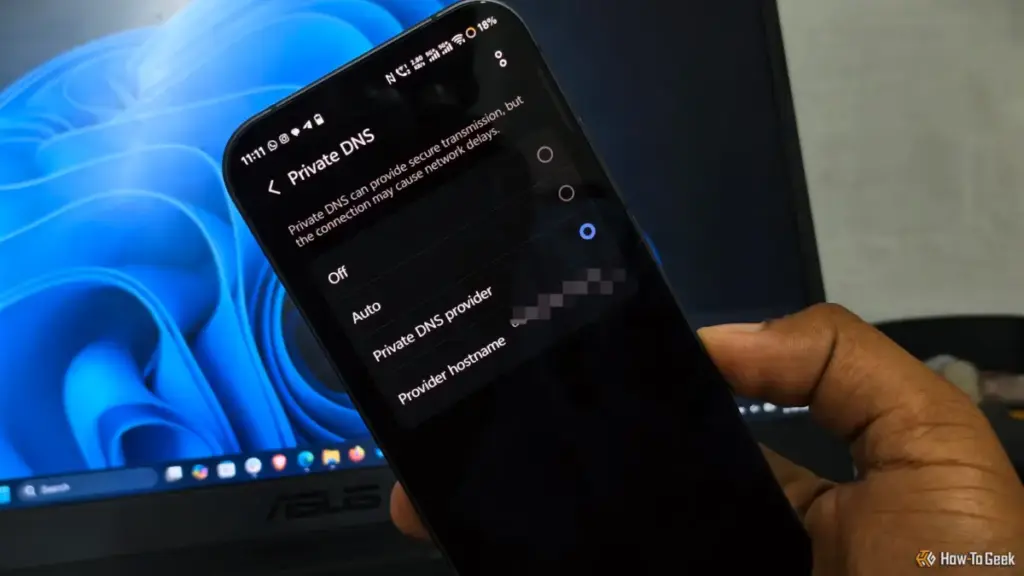
So who can see what?
The effectiveness of any privacy measure, including changing DNS, depends entirely on the "threat model"—specifically, who the user is trying to hide their activity from.
Privacy depends on who you are trying to hide from
For a user on a public Wi-Fi network, such as in a coffee shop or airport, encrypted DNS combined with HTTPS provides a high level of protection against local eavesdropping. In this scenario, the network operator can see that a device is connected to the internet and communicating with certain IP addresses, but they generally cannot see the specific websites or the content of the sessions.
However, the ISP provides a much deeper level of scrutiny. As the entity carrying the traffic, the ISP can analyze connection timing, IP destinations, and, in many cases, SNI data. Changing DNS is a minor hurdle for an ISP that is determined to profile its users’ traffic patterns.
In a corporate or educational environment, the level of visibility increases further. Administrators who control the network infrastructure can implement "DNS hijacking" or "DNS redirection," forcing all traffic on port 53 (the standard DNS port) to their own internal servers, regardless of the settings on a user’s laptop. Furthermore, many organizations use managed-device software or "TLS inspection" (where the organization installs a root certificate on the device) to decrypt and inspect HTTPS traffic for security or compliance reasons. In such an environment, changing a DNS setting is often entirely ineffective, as the network is designed to override or bypass individual user configurations.
A Virtual Private Network (VPN) offers a more robust solution for those seeking to hide their activity from their ISP. A VPN creates an encrypted tunnel for all traffic, not just DNS queries. When a VPN is active, the ISP only sees an encrypted stream of data traveling to the VPN server; it cannot see the final destinations or the DNS requests inside the tunnel. However, this shifts the burden of trust entirely to the VPN provider. Furthermore, if a VPN is misconfigured, it can suffer from "DNS leaks," where DNS queries bypass the encrypted tunnel and go to the ISP anyway, defeating the purpose of the VPN.
DNS privacy has limits
Despite these limitations, changing your DNS resolver remains a recommended practice for reasons beyond simple privacy. Many third-party resolvers offer enhanced security features, such as the ability to block known malicious domains, phishing sites, and malware command-and-control servers. This provides a layer of "proactive" security that many default ISP resolvers lack.
Ultimately, users should view changing their DNS provider as a tool for security and performance rather than a comprehensive anonymity solution. It is a way to choose a more reliable and secure "phonebook" service, but it does not make the "phone call" itself invisible to the network carrier. For those whose goal is to truly obscure their online footprint from their ISP or network administrator, more comprehensive measures—such as the use of high-quality VPNs or the Tor browser—are necessary. DNS privacy is a piece of the puzzle, but it is not the whole picture.
 Tech Tutorials & How-To Guides
Beyond the Cloud: Why a Shift to Offline Password Management Is Becoming a Necessity for the Security-Conscious
In the modern digital landscape, the password manager has transitioned from a...
 Tech Tutorials & How-To Guides
Beyond the Drill: How Ryobi’s ONE+ Ecosystem is Redefining the Modern Home and Workshop
For decades, the image of a cordless power tool was tethered strictly...
 Tech Tutorials & How-To Guides
Unlocking the Hidden Diagnostic Power of Amazon Fire TV: A Deep Dive into Developer Tools and System Transparency
The Amazon Fire TV ecosystem has evolved from a simple portal for...







