
For decades, the evolution of power tools followed a predictable trajectory: they became smaller, more ergonomic, and eventually transitioned from restrictive power cords to high-capacity lithium-ion batteries. Yet, despite these advancements in portability and raw power, the fundamental nature of the tools remained "dumb." A miter saw, a drill press, or a shop vacuum operates on a simple binary of on or off, requiring the operator to manage every peripheral aspect of the workspace manually.
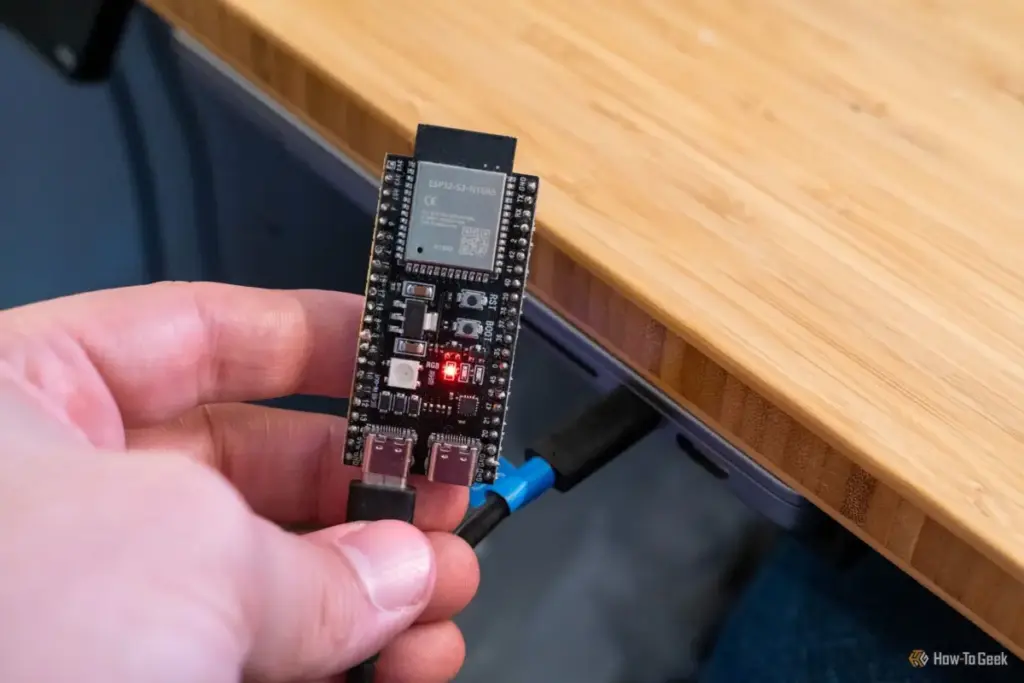
However, a new wave of innovation is emerging from the intersection of traditional craftsmanship and modern electronics. Enterprising DIY enthusiasts and "makers" are increasingly turning to the ESP32—a low-cost, low-power system-on-a-chip (SoC) with integrated Wi-Fi and dual-mode Bluetooth—to bridge the gap between brawn and brains. By embedding these tiny, inexpensive microcontrollers into their equipment, hobbyists are transforming standard garage tools into a sophisticated, interconnected ecosystem that rivals professional-grade industrial setups.
Automating the Workshop Environment
One of the most persistent challenges in any woodworking or metalworking shop is dust management. Fine particulate matter is not merely a nuisance that requires sweeping; it is a significant respiratory hazard and a fire risk. While most enthusiasts own a dust collector or a shop vacuum, the friction of manually activating the vacuum every time a cut is made often leads to "just this once" shortcuts that compromise air quality.
This common frustration led to the development of projects like FoxDotBuild’s DustCollection software. This system leverages the versatility of the ESP32 to create a wireless network of "smart" nodes within the workshop. The architecture is elegantly functional: one ESP32 board acts as a central relay, wired directly to the dust collector’s power supply. This node listens for commands over the local Wi-Fi network.
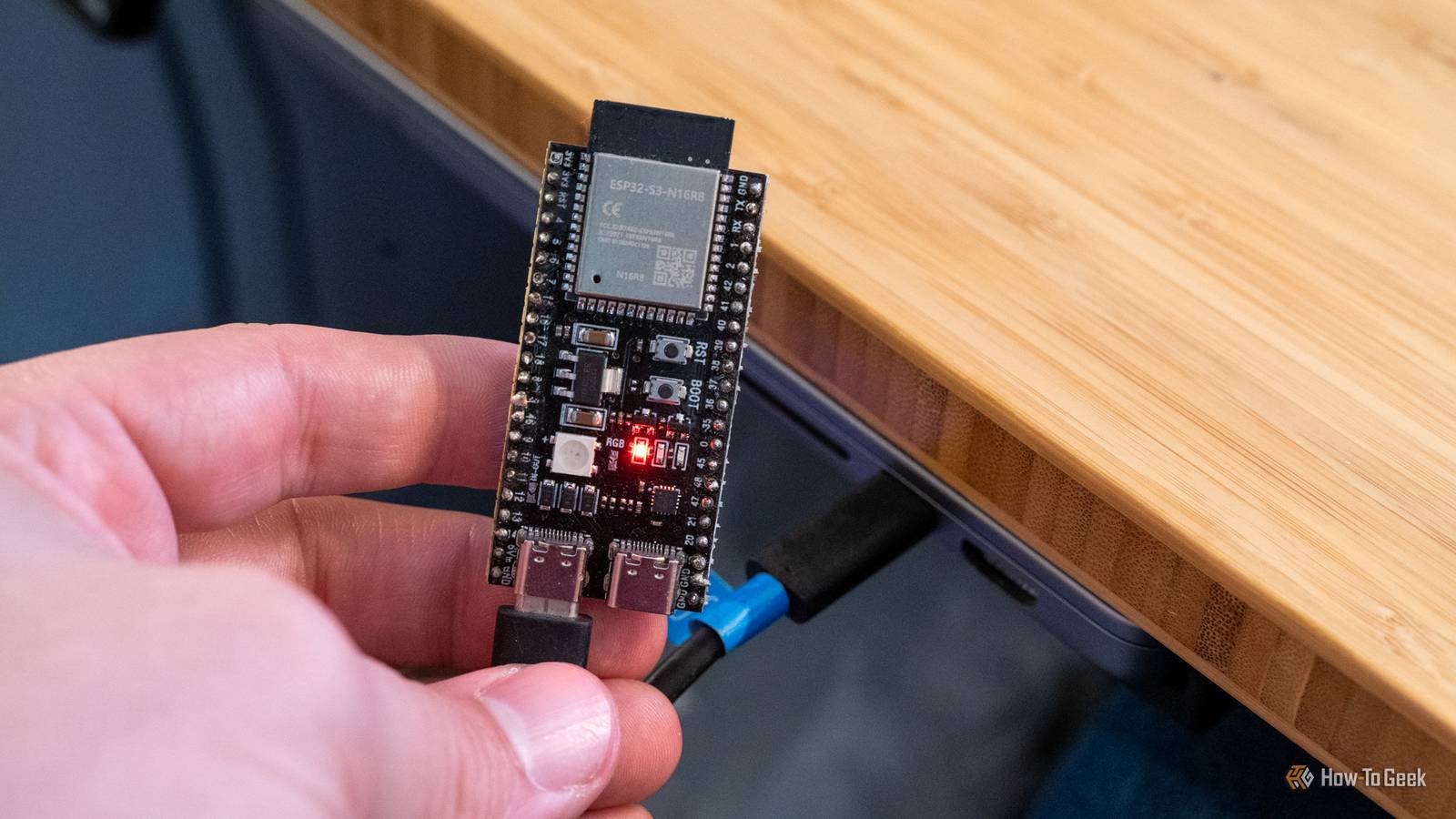
The "intelligence" comes from the peripheral nodes. Using Hall effect sensors—which can detect the electromagnetic field generated when a power tool’s motor draws current—these secondary ESP32 boards can identify exactly when a table saw or sander has been turned on. Once the tool is active, a signal is sent wirelessly to the relay, which fires up the dust collector instantaneously.
Beyond simple power management, these DIY systems are addressing mechanical bottlenecks. In complex workshops with multiple tools connected to a single vacuum via a network of pipes, "blast gates" must be opened or closed to direct suction to the active machine. The FoxDotBuild setup incorporates RC hobby servos to automate these gates. Furthermore, the software includes a sophisticated "clearance delay," keeping the vacuum running for several seconds after the tool stops to ensure that all residual dust is pulled through the conduits.
For those seeking a less complex entry point into workshop automation, projects like nunashop’s "AUTO SHOPVAC" offer a streamlined alternative. By using an ESP32 to monitor current draw and trigger a vacuum, even a basic garage setup can achieve a level of automation that was once reserved for high-end, factory-integrated systems.
Unlocking the Secrets of Power Tool Batteries
The shift toward cordless technology has been perhaps the most significant change in the tool industry over the last twenty years. For most DIYers, the convenience of battery-powered drills and saws far outweighs the raw, unlimited runtime of corded alternatives. However, this transition has introduced a new layer of opacity. Unlike a smartphone or a modern laptop, which provides detailed health reports and percentage-based remaining life, most power tool batteries communicate via a primitive row of three or four blinking LEDs.
This lack of transparency can be frustrating, especially given the high cost of replacement batteries. This is where the "OBI ESP32" project, combined with the ESP32-C3 variant, provides a breakthrough for users of the popular Makita LXT platform. By interfacing with the battery’s internal communication pins, these DIY diagnostic tools can extract a wealth of data that is usually hidden from the end-user.

Users can view cycle counts, individual cell voltages, and overall health percentages. This information is vital for troubleshooting a battery that seems to be losing its charge or for identifying a single failing cell that might be repairable. While the current focus has been largely on Makita due to its relatively accessible communication protocol, the proof of concept suggests that similar diagnostic tools for other major brands, such as Milwaukee or DeWalt, are likely on the horizon. Although brands like Ryobi have marketed "smart" batteries in the past, the DIY community is now proving that they don’t need to wait for manufacturers to grant them access to their own hardware’s data.
Precision Air Quality and Fume Extraction
While woodworking dust is a visible problem, the fumes generated by soldering, 3D printing, or chemical finishing are often invisible and arguably more insidious. Traditional fume extractors are often loud and are frequently left running longer than necessary or, conversely, forgotten entirely during a quick repair.
A project developed by the "Curious Scientist" demonstrates how the ESP32 can be used to create a "responsive" environment. By integrating an ESP32-C3 with an optical dust sensor and a Volatile Organic Compound (VOC) sensor, they created an automated fume extractor that monitors the air in real-time.
When the sensors detect a spike in particulates or chemical vapors—such as the smoke produced when solder hits a circuit board—the ESP32 automatically activates the extractor fan. If the air quality continues to degrade, the system can ramp up the fan speed. Once the sensors indicate the air has returned to a safe baseline, the system shuts itself down.
This project also highlights the "display" capabilities of the ESP32. By adding a small OLED screen, the user can see real-time data on air quality, turning a piece of safety equipment into a data-rich diagnostic tool. While these DIY sensors are not replacements for laboratory-grade, certified safety equipment, they provide a significant upgrade over the "on-off" guesswork that defines most hobbyist workspaces.
Modernizing the Air Compressor
Even the most traditional workshop tool, the air compressor, is not immune to the ESP32 treatment. Most home-grade compressors rely on mechanical pressure switches that are difficult to calibrate and offer no digital feedback.
The "vheathen" ESP32 pressure controller project serves as a fascinating example of how a "jury-rigged" solution can outperform stock hardware. By using a pressure transducer and an ESP32, the developer replaced the standard mechanical switch with a digital relay. This allows for precise control over the "cut-in" and "cut-out" pressures, which can be monitored via a digital display or even a smartphone app.
Furthermore, the project introduced safety features that are often missing from budget compressors. The ESP32 can be programmed to monitor continuous runtime; if the compressor runs for too long without reaching its target pressure, the system can shut it down automatically, assuming there is a leak or a mechanical failure. This prevents the motor from overheating or burning out—a common fate for neglected garage compressors.
The Future of the Intelligent Toolkit
The common thread among these projects is the democratization of "smart" technology. In the past, adding logic or wireless connectivity to a tool required expensive industrial controllers and proprietary software. Today, a $5 ESP32 board and a few lines of open-source code are all it takes to elevate a tool’s functionality.
While these modifications require an initial investment of time and a basic understanding of electronics, they represent a fundamental shift in how we interact with our tools. The "intelligent" part of the process has become the most affordable component, allowing the user to focus on the physical implementation—the wiring, the mounting, and the integration.

As the "maker" movement continues to grow, the boundary between a "dumb" mechanical tool and a "smart" digital device will continue to blur. Whether it is a vacuum that knows when you’re cutting, a battery that tells you its life story, or a compressor that protects itself from failure, the 21st-century workshop is being rebuilt one microcontroller at a time. The combination of "code monkeys" and "wrench monkeys" is proving to be a formidable force, ensuring that the next generation of power tools will be defined not just by how hard they work, but by how well they think.
 Tech Tutorials & How-To Guides
Google Transitions Beyond Chromebooks: A Deep Look at the New Googlebook OS and Its Enhanced Local File Management
The landscape of portable computing has undergone a seismic shift with the...
 Tech Tutorials & How-To Guides
Software-Based Diagnostics Offer New Clarity for the Persistent Confusion of USB-C Cable Specifications
The promise of USB-C was a world of universal connectivity where a...
 Tech Tutorials & How-To Guides
Paramount+ Strengthens Its Streaming Position with a Curation of Definitive Modern Film Epics
In the increasingly crowded landscape of digital streaming, the competition for subscriber...







