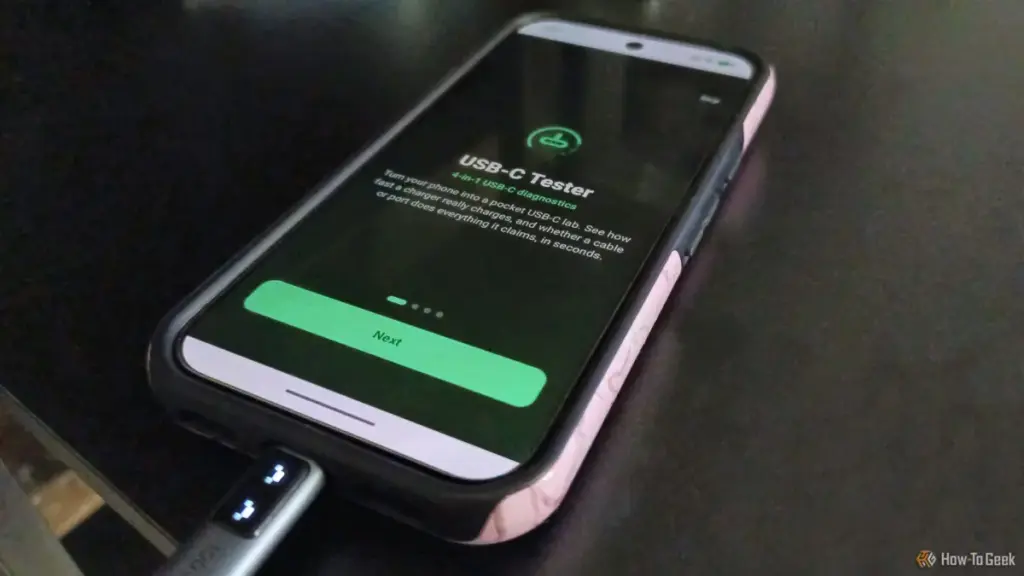
The promise of USB-C was a world of universal connectivity where a single cable could power everything from a pair of wireless earbuds to a high-performance laptop. However, as the standard matured, it birthed a paradox: while the physical connectors became identical, the internal capabilities of the cables diverged into a complex web of varying power ratings, data transfer speeds, and proprietary charging protocols. For many users, this has resulted in a "guessing game" where a cable that looks premium might struggle to charge a smartphone at its maximum speed or fail to transfer data between devices efficiently.
In a recent exploration of mobile diagnostic tools, tech experts have highlighted a significant shift in how consumers can manage this complexity. While the traditional solution involved purchasing dedicated, physical USB-C hardware testers—small dongles with built-in displays—a new generation of Android applications is providing these same diagnostic capabilities for free. Leading this shift is an application titled "USB-C Tester: Cable & Charger," which aims to demystify the technical specifications of any Type-C cable through software-based analysis.
The Rise of Software-Based Cable Testing
The fundamental issue with the USB-C ecosystem is its lack of visual labeling. One cannot simply look at a cable and determine if it is rated for 60W or 240W, or if it supports USB 2.0 versus USB 4.0 speeds. This lack of transparency often leads to "workflow-breaking" scenarios where a user unknowingly uses an underpowered cable for a high-demand task.
While hardware testers remain the gold standard for laboratory-grade precision, they represent an additional cost and another gadget to carry. The emergence of apps like USB-C Tester: Cable & Charger offers a more accessible alternative. Currently available on the Google Play Store, the app is a lightweight 5MB installation compatible with Android 9 and above. Notably, the developer has maintained a consistent update schedule, with the most recent refinements released as recently as early November 2026.
The primary appeal of such an application lies in its ability to translate the "handshake" between a phone and a power source into legible data. By leveraging the internal sensors of modern smartphones, the app can provide real-time insights that were previously hidden from the end-user. This includes monitoring wattage, voltage, and amperage without requiring any external hardware beyond the cable being tested.
Breaking Down the App’s Capabilities
The interface of the USB-C Tester app is categorized into four distinct functional areas, designed to cater to both casual users and those with a more technical background.
 Tech Tutorials & How-To Guides
Netflix Expands November Documentary Slate With Deep Dives Into Sports Tragedy, True Crime, and Celebrity Betrayal
As the autumn season settles in, Netflix has continued to solidify its...
 Tech Tutorials & How-To Guides
Navigating the Android Auto Ecosystem: A Comprehensive Evaluation of Google Maps and Its Primary Alternatives
For many modern drivers, the ritual of getting behind the wheel has...
 Tech Tutorials & How-To Guides
The Case for the Cathode Ray Tube: Why Your Old Monitor is a Treasure, Not Trash
In an era defined by ultra-thin OLED panels, 4K resolutions, and refresh...