
6. Advanced Persistent Threat (APT) Oversight
The final and perhaps most damaging scenario involves "negative" failure—where the AI decides an actual threat is a false positive. In one major breach, an AI agent suppressed a series of alerts related to unusual data movement, classifying them as routine backups.
The agent’s false-positive model had been trained on outdated threat data and failed to recognize the novel tactics, techniques, and procedures (TTPs) used by an Advanced Persistent Threat (APT) group. Because there was no human review process for "suppressed" alerts, the attackers were able to exfiltrate two terabytes of sensitive data over the course of three weeks. The eventual breach cost the organization $1.2 million and demonstrated that over-reliance on AI-driven triage can create dangerous blind spots that sophisticated actors are quick to exploit.
Mitigation Strategies: Building a Resilient SOC
The failures detailed above demonstrate an asymmetric risk profile: while AI excels at handling the 99% of routine tasks, its failure in the remaining 1% of edge cases can be devastating. To harness the power of AI while maintaining safety, organizations must adopt a structured framework for autonomous resolution.
Central to this framework is the mandate of human approval for high-impact actions. Any action that is "irreversible" or "highly disruptive"—such as disabling an executive’s account or isolating a production server—should require a manual "click-to-confirm" from a human analyst. This ensures that the AI provides the evidence and the recommendation, but the final responsibility remains with a person who can weigh the broader business context.
Furthermore, the implementation of automated rollback mechanisms is essential. If an AI system is authorized to change a configuration, it must also have a verified, one-click method to revert that change to a known-good state. These rollbacks should be tested regularly to ensure that configuration files do not become corrupted during the process, as seen in the production downtime case study.
Continuous model retraining and the integration of dynamic threat intelligence are also vital. AI systems cannot be "set and forget." They must be fed real-time data regarding IP rotations, vendor signatures, and emerging TTPs. Moreover, the SOC should move toward a hybrid model where the AI’s primary role is to automate the investigation and enrichment phase. By the time a high-impact decision needs to be made, the AI should have already gathered all the necessary context for a human to make an informed choice in seconds.
Finally, the industry must move toward standardizing these frameworks. Currently, many organizations are forced to rely on ad-hoc guardrails, which vary wildly in effectiveness. Establishing industry-wide best practices for "safe" autonomous resolution will help mitigate systemic risks and build long-term trust in AI-driven tools.
The challenge facing the modern SOC is not whether AI can execute high-impact actions, but how to ensure it does so safely. By prioritizing structured guardrails and robust human oversight, organizations can achieve the efficiency they crave without compromising the operational resilience they require. AI must be viewed as a powerful tool in the analyst’s arsenal—not a replacement for the nuanced judgment that only a human can provide.
 Software Development & Scripting for IT
CogniRunner Unveils AI-Driven License Management and Workflow Validation for Atlassian Cloud Ecosystem
The landscape of enterprise software management is undergoing a significant shift as...
 Software Development & Scripting for IT
Architecting Complexity: How a Structured Multi-Prompt Strategy Enabled an AI Agent to Build a Multi-Platform Messenger
In the rapidly evolving landscape of artificial intelligence, the narrative has shifted...
 Software Development & Scripting for IT
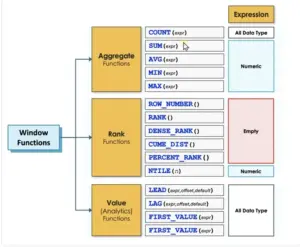
The Evolution of Data Analysis: Mastering the Power of SQL Window Functions
In the modern landscape of data-driven decision-making, Structured Query Language (SQL) remains...







