
In the rapidly evolving landscape of consumer technology, it is often difficult for enthusiasts and early adopters to recognize the boundaries of their own environment. For those who have spent the better part of a decade—or in some cases, several decades—tinkering with automated lighting, networked security cameras, and voice-activated thermostats, the smart home is a settled reality. To the seasoned "geek," the intricacies of IP addresses, hub migrations, and firmware updates are merely the cost of entry for a cutting-edge lifestyle. However, this familiarity often creates a "bubble effect," where the technologically proficient lose sight of how daunting these systems remain for the average consumer.
The recent unveiling of the Apple Home Collection, a suite of smart home accessories developed in collaboration with industry giants LG and Schneider Electric, has sparked a wave of skepticism within this tech-centric bubble. Critics have pointed to the premium pricing and the lack of entirely new product categories as evidence that the collection offers little value over existing, lower-cost alternatives. Yet, a closer analysis suggests that Apple is not targeting the enthusiast who enjoys troubleshooting a Zigbee mesh network on a Saturday afternoon. Instead, the Apple Home Collection is a strategic attempt to dismantle the final barriers to mass-market adoption: complexity and friction.
The Long Road from Soldering to Software
To understand why the Apple Home Collection is significant, one must first look at the arduous history of home automation. In the earliest days of the industry, creating a "smart" home was less of a consumer experience and more of a high-stakes engineering project. Standards like X10, which debuted in the late 1970s, allowed for basic remote control of lamps and appliances over existing household wiring, but they were notoriously unreliable and required a significant amount of technical knowledge to install and maintain. For years, the smart home remained the exclusive domain of hobbyists who were comfortable with soldering irons and basic programming.
The arrival of the smartphone and ubiquitous Wi-Fi marked the first major shift toward accessibility. Suddenly, the hardware became wireless, and the control interface moved from clunky wall panels to the glass screens in our pockets. However, this era introduced its own set of frustrations. Early adopters were forced to manage a "digital silo" for every manufacturer; a smart bulb from one company required one app, while a thermostat from another required a second, and a security camera required a third. There was no central nervous system for the home, leaving users to jump between interfaces to perform simple tasks.
Apple’s introduction of HomeKit was intended to be the definitive solution to this fragmentation. By providing a unified framework and the Home app, Apple promised a world where any device with a "Works with Apple HomeKit" badge could be controlled via a single interface and tied together through automation. It also brought Siri into the fold, allowing for voice control that felt integrated into the Apple ecosystem.
While HomeKit was a significant step forward, the reality often fell short of the utopian vision. Even under the HomeKit umbrella, many devices required initial configuration through a third-party manufacturer’s app before they would appear in Apple’s ecosystem. Users frequently found themselves acting as "unpaid network engineers," navigating complex pairing codes, troubleshooting 2.4GHz versus 5GHz Wi-Fi compatibility issues, and dealing with "No Response" errors that required hard resets of the entire system. Furthermore, the strict security requirements Apple imposed meant that many manufacturers opted to focus on the more permissive Amazon Alexa and Google Home ecosystems, leaving HomeKit with a smaller, albeit more secure, selection of compatible hardware.
The Limitations of Industry Standards
The industry eventually recognized that fragmentation was stifling growth, leading to the development of Matter and Thread. Matter, a royalty-free connectivity standard, was designed to act as a universal language for smart devices, ensuring that a single product could work seamlessly across Apple Home, Google Home, and Amazon Alexa. Thread, a low-power mesh networking protocol, aimed to improve the speed and reliability of these connections without the need for a central bridge or hub for every brand.
While Matter and Thread have undoubtedly improved the technical foundation of the smart home, they have not fully solved the "user experience" problem. Even with these standards in place, the process of adding a new device to a network can still feel like a chore. The average consumer—the "normie" who simply wants a doorbell that works—is still confronted with QR codes, pairing modes, and the occasional requirement to create yet another account with a hardware vendor. For many, the perceived complexity of the setup remains a higher hurdle than the cost of the hardware itself.
The Apple Home Collection and the "AirPods Moment"
This brings us to the Apple Home Collection. At first glance, the skepticism from the tech community is understandable. The collection features familiar items: smart doorbells, cameras, and electrical interfaces developed with LG and Schneider. On paper, these devices do not perform functions that aren’t already available from brands like Eve, Lutron, or Logitech, often at a lower price point.
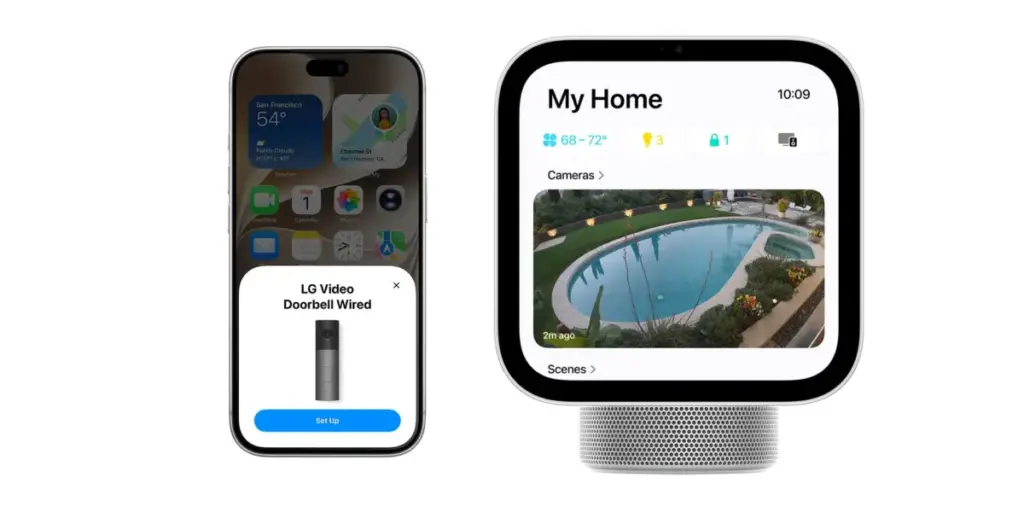
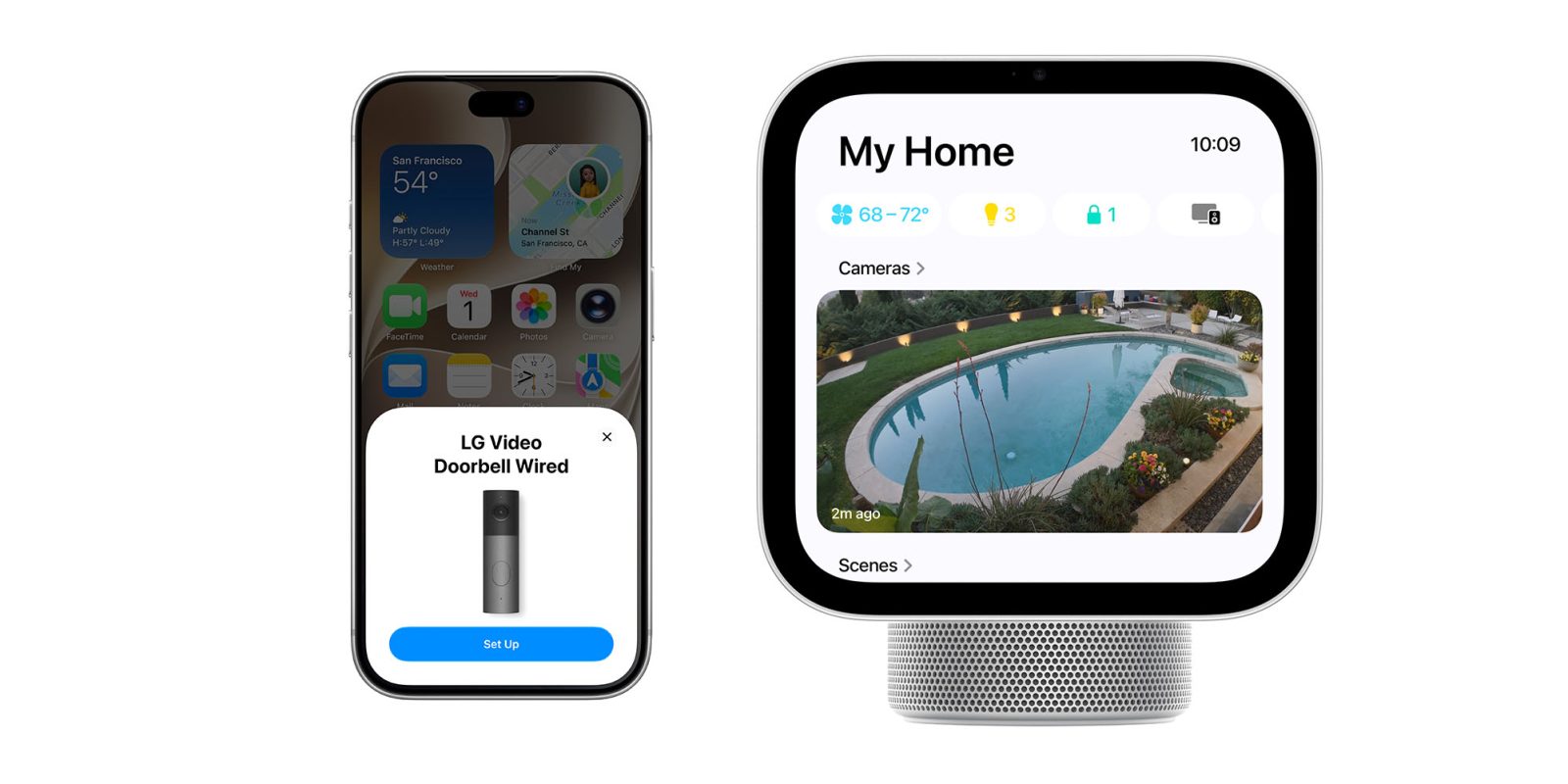
However, the value proposition of the Apple Home Collection lies not in what the devices do, but in how they begin their life in the user’s home. Apple has applied the same philosophy to this collection that it applied to the AirPods. Before AirPods, pairing Bluetooth headphones was a multi-step process involving settings menus, discovery modes, and frequent failures. Apple replaced that with a frictionless experience: open the case near an iPhone, and a setup card appears. Tap once, and you are finished.
Early hands-on reports suggest that the Apple Home Collection brings this exact level of simplicity to the smart home. Ajay Kumar, reporting for CNET, described witnessing an Apple representative pair and register a new smart home device on both a phone and the new HomeView interface almost instantaneously. The process occurred in the background of a casual conversation, requiring no dedicated "tech time" or troubleshooting.
This "AirPod-style" pairing is achieved through deep integration between the hardware and Apple’s software stack. By controlling the end-to-end experience in collaboration with partners like LG and Schneider, Apple has eliminated the need for third-party bridges, secondary apps, and complex manual configurations. For a non-technical user, the difference between a 15-minute setup involving a manual and a 5-second setup involving a proximity-based pop-up is the difference between a product they will buy and a product they will ignore.

Breaking the Mass-Market Barrier
The "bubble effect" causes many enthusiasts to underestimate the sheer weight of friction. A tech-savvy user might see a $100 price premium for an Apple-certified Schneider light switch and scoff, knowing they could install a cheaper version and spend twenty minutes configuring it. But for the vast majority of homeowners, those twenty minutes of potential frustration are a deal-breaker. They represent a risk—the risk of the device not working, the risk of "breaking" the home network, and the risk of having to call a tech-savvy relative for help.
By removing that risk, Apple is effectively expanding the total addressable market for smart home technology. If the setup is as intuitive as pairing a set of headphones, the smart home ceases to be a "project" and becomes an "appliance." This shift is essential for reaching the next tier of consumers who are interested in the benefits of a connected home—such as enhanced security, energy efficiency, and convenience—but have no interest in the underlying mechanics.
The partnership with LG and Schneider Electric is also a calculated move toward reliability and brand trust. LG brings a massive footprint in home appliances and display technology, while Schneider Electric is a global leader in energy management and automation. For a consumer who is hesitant about the longevity of "startup" smart home brands, seeing the Apple brand alongside established industrial names provides a level of reassurance that the system will be supported for years to come.
Furthermore, the integration with "HomeView"—Apple’s rumored or emerging interface for localized home control—suggests that this collection is part of a broader ecosystem play. As these devices are brought into the home, they aren’t just standalone gadgets; they are components of a cohesive environment that responds to the user’s presence and needs with minimal intervention.
Conclusion: The End of the Hobbyist Era
The Apple Home Collection may not offer the raw specifications or the price-to-performance ratio that excites the hardcore enthusiast, but it addresses the most significant bottleneck in the industry: the user experience. By prioritizing ease of use and frictionless integration, Apple is signaling the end of the "hobbyist era" of the smart home and the beginning of its era as a standard household utility.
For those who have lived in the tech bubble, it is easy to dismiss simplicity as a luxury. But for the "normie" who has been sitting on the sidelines, put off by the apparent complexity of a connected life, the Apple Home Collection may finally be the invitation they have been waiting for. If Apple can truly make the smart home as easy to use as an iPhone, the "bubble" is about to get a lot bigger.
 Smart Home & IoT Solutions
Apple Partners with LG to Expand Smart Home Ecosystem with New Line of Connected Devices
In a significant move to bolster its presence in the domestic technology...
 Smart Home & IoT Solutions
The Seamless Revolution: How the Apple Home Collection Aims to Break the Smart Home Adoption Barrier
In the fast-paced world of consumer technology, it is often difficult for...
 Smart Home & IoT Solutions
Schlage Launches Sense Pro Smart Deadbolt, Introducing Precision Ultra Wideband Technology to Apple Home Users
Building on the momentum of its initial reveal earlier this year at...







