
The industry eventually recognized that fragmentation was stifling growth, leading to the development of Matter and Thread. Matter, a royalty-free connectivity standard, was designed to act as a universal language for smart devices, ensuring that a single product could work seamlessly across Apple Home, Google Home, and Amazon Alexa. Thread, a low-power mesh networking protocol, aimed to improve the speed and reliability of these connections without the need for a central bridge or hub for every brand.
While Matter and Thread have undoubtedly improved the technical foundation of the smart home, they have not fully solved the "user experience" problem. Even with these standards in place, the process of adding a new device to a network can still feel like a chore. The average consumer—the "normie" who simply wants a doorbell that works—is still confronted with QR codes, pairing modes, and the occasional requirement to create yet another account with a hardware vendor. For many, the perceived complexity of the setup remains a higher hurdle than the cost of the hardware itself.
The Apple Home Collection and the "AirPods Moment"
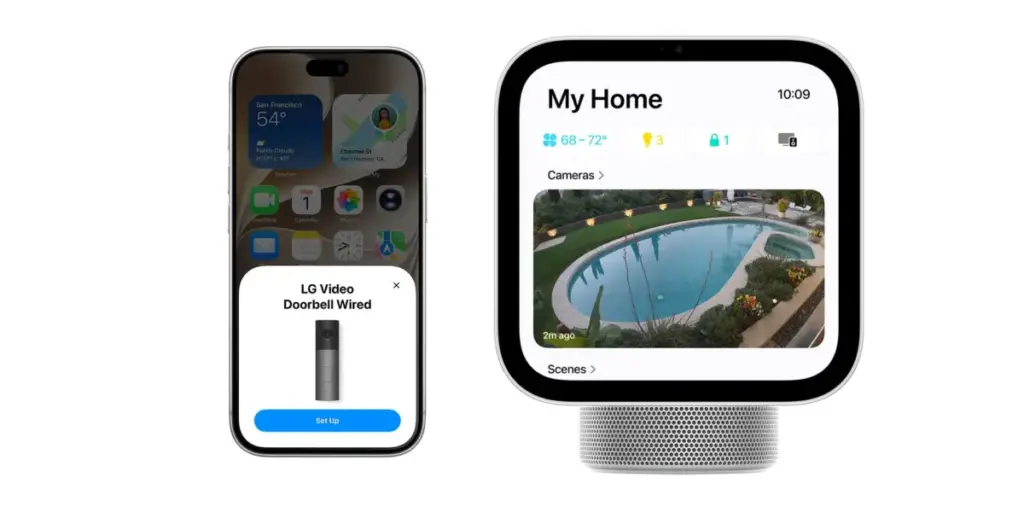
This brings us to the Apple Home Collection. At first glance, the skepticism from the tech community is understandable. The collection features familiar items: smart doorbells, cameras, and electrical interfaces developed with LG and Schneider. On paper, these devices do not perform functions that aren’t already available from brands like Eve, Lutron, or Logitech, often at a lower price point.
However, the value proposition of the Apple Home Collection lies not in what the devices do, but in how they begin their life in the user’s home. Apple has applied the same philosophy to this collection that it applied to the AirPods. Before AirPods, pairing Bluetooth headphones was a multi-step process involving settings menus, discovery modes, and frequent failures. Apple replaced that with a frictionless experience: open the case near an iPhone, and a setup card appears. Tap once, and you are finished.
Early hands-on reports suggest that the Apple Home Collection brings this exact level of simplicity to the smart home. Ajay Kumar, reporting for CNET, described witnessing an Apple representative pair and register a new smart home device on both a phone and the new HomeView interface almost instantaneously. The process occurred in the background of a casual conversation, requiring no dedicated "tech time" or troubleshooting.
This "AirPod-style" pairing is achieved through deep integration between the hardware and Apple’s software stack. By controlling the end-to-end experience in collaboration with partners like LG and Schneider, Apple has eliminated the need for third-party bridges, secondary apps, and complex manual configurations. For a non-technical user, the difference between a 15-minute setup involving a manual and a 5-second setup involving a proximity-based pop-up is the difference between a product they will buy and a product they will ignore.

Breaking the Mass-Market Barrier
 Smart Home & IoT Solutions
Report: Apple ‘HomeView’ smart home hub will ship in November, come in four colors, A18 chip
The HomeView is expected to be the centerpiece of a major hardware...
 Smart Home & IoT Solutions
Apple Prepares for Major Smart Home Expansion as Siri AI Sets the Stage for New Hardware
For the better part of the last decade, Apple’s presence in the...
 Smart Home & IoT Solutions
Apple Partners with LG for Major Smart Home Expansion Featuring New Cameras, Locks, and Thermostats
In a significant strategic shift for its domestic technology ecosystem, Apple is...







