
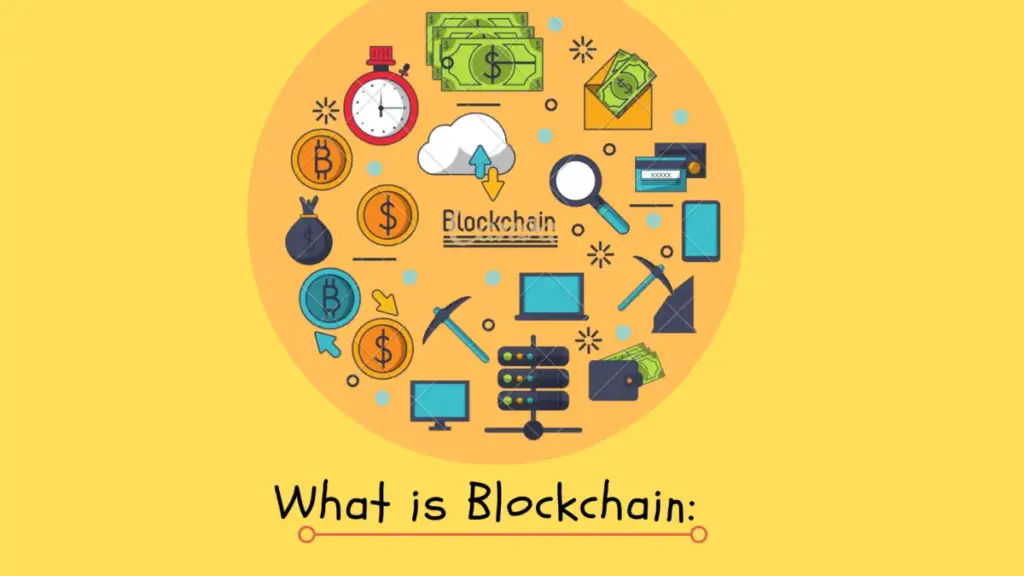
The traditional landscape of global commerce has long been anchored by centralized intermediaries. For decades, the process of conducting a digital transaction has remained virtually unchanged: a user must register an account, provide sensitive credit card information, or rely on the cumbersome infrastructure of international bank transfers. However, as the digital age matures, these legacy systems are facing a fundamental challenge from a technology that promises to remove the middleman entirely. Blockchain technology, once a niche interest for cryptographers, has emerged as a transformative force capable of reshaping how the world handles data, verifies identity, and conducts business.
The promise of blockchain lies in a world where personal information is no longer a prerequisite for digital interaction. By eliminating the need to rely exclusively on banks or government institutions to validate transactions, blockchain offers a decentralized alternative that prioritizes privacy and security. While many initially associated this technology solely with the rise of Bitcoin, its implications extend far beyond the realm of digital currency, reaching into supply chains, healthcare, and corporate governance.
The Historical Genesis of the Distributed Ledger
To understand the current state of blockchain, one must look back to its theoretical foundations, which predate the modern cryptocurrency boom by nearly two decades. The concept was first introduced in 1991 by mathematicians Stuart Haber and W. Scott Stornetta. Their original goal was not to create a new form of money, but to solve a specific problem in data integrity: ensuring that digital timestamps could not be tampered with or backdated. This early work laid the groundwork for a secure, chronological record of information.
The evolution continued in 1998 when software developer Nick Szabo proposed "Bit Gold," a precursor to modern digital payments that utilized similar cryptographic principles. While Szabo’s innovation failed to gain widespread adoption at the time, it served as a critical conceptual bridge. It was not until 2008, following the global financial crisis, that an individual or group operating under the pseudonym Satoshi Nakamoto published the Bitcoin whitepaper. Nakamoto’s breakthrough was the successful implementation of the first functional blockchain, providing a decentralized ledger that could facilitate peer-to-peer transactions without the oversight of a central authority.
Defining the Architecture of a Blockchain
At its core, a blockchain is a distributed database shared among the nodes of a computer network. Unlike a traditional database, which might store information in tables on a single server, a blockchain structures its data into digital "blocks." Each block contains a set of information, and once a block is filled, it is cryptographically linked to the preceding block, forming a continuous, chronological chain.
This architecture is often referred to as Distributed Ledger Technology (DLT). Because the data is stored across a vast network of computers rather than a central hub, the information becomes immutable. Once a transaction is recorded in a block and added to the chain, it cannot be altered, deleted, or destroyed without the consensus of the entire network. This creates a permanent record of data that is both transparent and highly resistant to fraud.
The beauty of this system is its ability to guarantee the fidelity and security of a record without the need for a third-party validator. In a traditional setting, a bank acts as the "source of truth" for a financial transaction. In a blockchain system, the "truth" is maintained collectively by the network itself, ensuring accuracy through mathematical proofs rather than institutional trust.
Real-World Applications and the Industrial Shift
While blockchain remains the engine behind cryptocurrencies like Bitcoin and Ethereum, its utility in the corporate world is perhaps its most significant development in recent years. Major global entities, including Walmart, AIG, Siemens, Pfizer, and Unilever, have already begun integrating blockchain into their operational frameworks to enhance transparency and efficiency.
One of the most prominent examples of this integration is IBM’s Food Trust, a blockchain-based solution used to track the journey of food products from the farm to the consumer. For many, the idea of tracing a head of lettuce through a digital ledger might seem excessive, but the practical implications for public health are profound. In the event of an outbreak of bacteria such as E. coli or Salmonella, or the accidental introduction of dangerous allergens like peanuts into a product line, identifying the source of the contamination is a race against time.
Traditionally, tracing a specific batch of food through a complex, global supply chain could take months, often leaving retailers with no choice but to discard massive amounts of safe product to ensure public safety. With blockchain, companies can now trace the exact location and history of a product in seconds. This rapid response capability not only prevents future outbreaks but also minimizes waste and protects the economic interests of suppliers and manufacturers.
The Power of Decentralization and Enhanced Security
The primary security feature of blockchain is decentralization. In a centralized system, all data is stored in one location, creating a single point of failure. If that central server is compromised, the entire database is at risk. Blockchain avoids this vulnerability by distributing the ledger across multiple computers, known as nodes, located in different geographic regions.
If one computer in the network experiences a technical failure or is targeted by a cyberattack, the integrity of the overall system remains intact. The other nodes in the network use the correct, synchronized information to cross-reference and identify the anomaly in the compromised node. This collective verification process ensures that the data remains authentic and irreversible.
Beyond financial transactions, this decentralized model is being explored for a variety of sensitive data storage needs. This includes legal contracts, state-issued identifications, and complex company inventories. By removing the reliance on a single central server, blockchain provides a way to secure data that is traditionally difficult to register and protect against unauthorized modification.
Addressing the Challenges and Risks
Despite its robust security features, blockchain is not entirely immune to risks. While it is theoretically possible to hack a blockchain, the task is monumentally difficult due to the constant review by the network of users. A successful attack would require a degree of computational power that is currently beyond the reach of most bad actors, as they would need to compromise a majority of the nodes simultaneously to alter the ledger.
Furthermore, the distinction between the technology and the companies that facilitate it is often blurred. Currently, Coinbase Global stands as the world’s most prominent blockchain company, providing the infrastructure and services necessary for the digital currency economy. However, it is important to note that while companies like Coinbase operate within the ecosystem, no single entity "owns" the blockchain itself. It remains a public, decentralized technology that anyone with an internet connection can access.
Distinguishing Blockchain from Traditional Databases
To fully appreciate the innovation of blockchain, it must be compared to the traditional database systems that have governed the digital world for decades. A standard database is typically a collection of data organized by a database management system, utilizing a client-server network architecture. In this model, individuals with administrative access can view, edit, or delete information at will.
In contrast, a blockchain is a growing list of records where modification is strictly prohibited by design. Each block contains a cryptographic hash of the previous block, a timestamp, and transaction data. This design eliminates the risks of data modification by external parties and ensures that control is decentralized. While a database is optimized for speed and internal control, a blockchain is optimized for security, transparency, and trustless verification.
The Future of Integration: 2024 and Beyond
As we move further into the mid-2020s, the hesitation that once characterized the adoption of blockchain is rapidly dissipating. Industry experts predict that over the next five to ten years, the technology will become a standard component of infrastructure across diverse sectors, from healthcare to high finance.
The shift is driven by a growing comfort level among CEOs, entrepreneurs, and the general public. As the benefits of decentralized ledgers—such as reduced transaction costs, enhanced security, and real-time tracking—become more apparent, the leverage of blockchain technology will likely move from an experimental phase to a core business requirement. While the transition from 2022 and 2023 marked the beginning of this wider acceptance, the years leading toward 2026 are expected to see an even more aggressive integration of blockchain into the fabric of the global economy.
 Tech News & Digital Trends
The Integration of Artificial Intelligence in Modern Marketing: 11 Essential Tools for Digital Strategy
The landscape of digital marketing is undergoing a fundamental transformation as artificial...
 Tech News & Digital Trends
The AI Revolution of 2025: How Ten Emerging Technologies are Redefining the Global Content Landscape
As the digital landscape enters 2025, the boundary between human creativity and...
 Tech News & Digital Trends
The Evolution and Impact of CJ Affiliate: Navigating the Performance Marketing Landscape
In the rapidly evolving world of digital commerce, few entities have maintained...







