
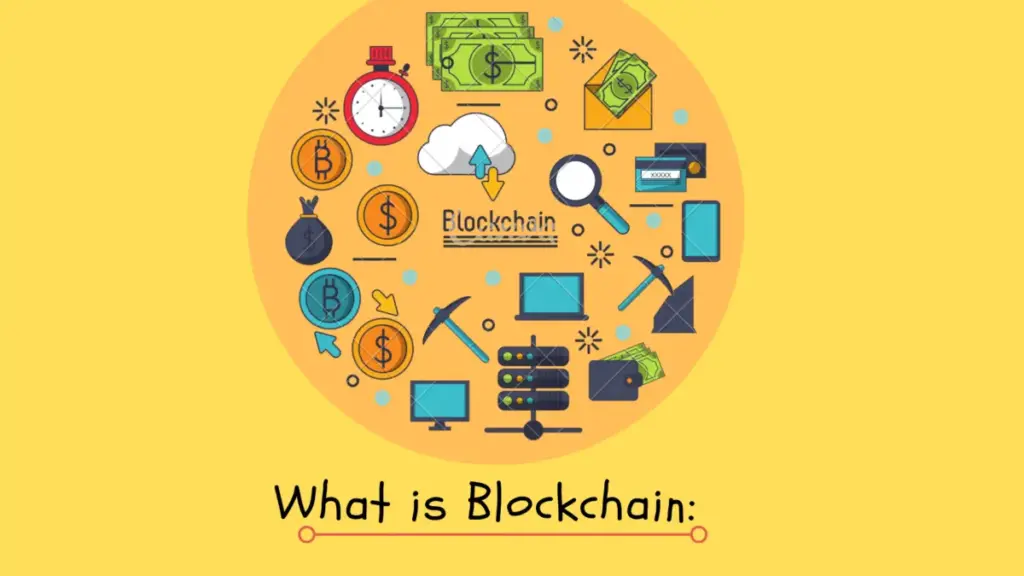
The landscape of modern commerce is undergoing a fundamental shift, moving away from the traditional pillars of centralized banking and toward a future defined by decentralized transparency. For decades, the standard for online transactions has remained largely unchanged: to participate in the digital economy, a user must register an account, surrender sensitive personal information, and rely on credit card networks or bank transfers. However, the emergence of blockchain technology is challenging these long-held norms, offering a glimpse into a world where financial and data exchanges occur without the need for traditional intermediaries or the sacrifice of personal privacy.
At its core, blockchain represents a departure from the "walled garden" approach of traditional databases. While a standard computer hard drive stores data in a localized, centralized manner, a blockchain distributes information across a vast network of digital blocks, linked together in a chronological and immutable chain. This architecture ensures that no single entity—be it a government, a bank, or a corporation—holds absolute control over the record. As cryptocurrencies continue to gain mainstream attention, the underlying technology of the blockchain is increasingly recognized as a revolutionary tool for securing data, ensuring fidelity, and automating trust.
The Historical Genesis of the Digital Ledger
The concept of a secure, distributed ledger did not emerge overnight with the birth of Bitcoin. Its roots trace back to 1991, when mathematicians Stuart Haber and W. Scott Stornetta first proposed a system that used a cryptographic chain of blocks to ensure that digital timestamps could not be tampered with. Their goal was to create a world where digital documents could be verified for authenticity without relying on a central authority.
This foundational work was expanded upon in 1998 by software developer Nick Szabo, who conceptualized "Bit Gold," a decentralized digital payment system. Although Bit Gold laid much of the theoretical groundwork for what would follow, the technology remained largely academic until 2008. It was then that an individual or group using the pseudonym Satoshi Nakamoto published the white paper for Bitcoin, effectively launching the first practical and widely adopted application of blockchain technology. Nakamoto’s innovation solved the "double-spending" problem, proving that a digital currency could exist and thrive without a central clearinghouse.
Defining the Mechanics of Blockchain
To understand the significance of this technology, one must view a blockchain as a distributed database shared among the nodes of a computer network. Unlike a traditional database managed by a single administrator, a blockchain stores information in a digital format that is synchronized across every participant in the network. This structure is what ensures the security and fidelity of a data record, allowing for a guarantee of accuracy without the intervention of a third party.
The process of recording a transaction on a blockchain involves several sophisticated layers of verification. When a new piece of data is entered, it is broadcast to a network of peer-to-peer computers, known as nodes, located across the globe. These nodes work to validate the transaction using established algorithms. Once a transaction is verified, it is combined with other transactions to create a new block of data for the ledger. This block is then given a unique cryptographic hash—a digital fingerprint—and added to the existing chain.
Because each block contains the hash of the block preceding it, the chain becomes virtually impossible to alter. To change a single record, an attacker would have to change every subsequent block across a majority of the nodes in the network simultaneously. This is why blockchain is often referred to as "Distributed Ledger Technology" (DLT), emphasizing its role as a permanent, immutable record of truth.
Beyond Cryptocurrency: Industrial and Corporate Applications
While blockchain is the engine that powers cryptocurrencies like Bitcoin and Ethereum, its utility extends far beyond the realm of digital finance. Major global corporations are already integrating blockchain into their operations to solve complex logistical and safety challenges. Industry giants such as Walmart, AIG, Siemens, Pfizer, and Unilever have begun adopting the technology to enhance transparency and efficiency.
One of the most prominent examples of this is IBM’s Food Trust, a blockchain-based initiative used by food suppliers and manufacturers to track the journey of products from the farm to the grocery store shelf. In the traditional food supply chain, tracing the source of a contamination outbreak—such as E. coli or Salmonella—can be a grueling process that takes months or even years. During such delays, consumer safety is at risk, and massive amounts of untainted food are often discarded due to a lack of precise data.
Blockchain changes this dynamic entirely. By recording every step of a product’s journey on an immutable ledger, companies can identify the source of a hazard in minutes. Whether it is an accidentally introduced allergen like peanuts or a bacterial outbreak, the blockchain allows for surgical precision in recalls, protecting public health and reducing economic waste. This level of traceability is increasingly viewed not as an excessive measure, but as an essential standard for modern consumer safety.
The Power of Decentralization and Data Security
The primary strength of blockchain lies in its decentralization. In a centralized system, a single security breach can compromise an entire database, leading to massive data leaks and systemic failure. Blockchain mitigates this risk by distributing data across multiple locations. If one node experiences a technical failure or a malicious attack, the remaining nodes in the network continue to function, using the collective record to cross-reference and correct any inconsistencies.
This decentralized nature guarantees not only the accuracy of the data but also its irreversibility. Once a contract, a state identification, or a company’s product inventory is registered on the blockchain, it cannot be retroactively edited or deleted by an unauthorized party. This makes the technology an ideal candidate for storing sensitive legal documents and managing complex supply chains where trust is paramount.
Furthermore, the public nature of many blockchains does not compromise their safety. Even though the ledger may be accessible to anyone with an internet connection, the cryptographic protocols ensuring the data’s integrity remain robust. This paradox—a system that is both transparent and secure—is what makes blockchain a transformative force in digital rights and identity management.
Evaluating the Landscape: Advantages and Challenges
As with any disruptive technology, blockchain presents a unique set of advantages and hurdles. On the positive side, the technology offers unparalleled security and transparency. By removing the middleman, it has the potential to significantly reduce transaction costs and settlement times. In the world of international finance, where transfers can take days to clear, blockchain allows for near-instantaneous movement of value across borders.
However, the technology is not without its complexities. The very features that make blockchain secure also make it difficult to implement on a mass scale. The computational power required to maintain a decentralized network is substantial, and for many users, the technical barrier to entry remains high. Additionally, while the blockchain is theoretically "unhackable" due to the constant review by a network of users, it is not entirely immune to sophisticated, coordinated attacks, though such events are exceedingly rare and difficult to execute.
There is also a common misconception regarding the relationship between blockchain and cryptocurrency. It is vital to distinguish that while Bitcoin is a form of digital currency, blockchain is the infrastructure that makes it possible. A database is a collection of data organized by a management system where specific users have the authority to edit information. In contrast, a blockchain is a growing list of records where modification is prohibited by design, ensuring decentralized control.
The Road Ahead: 2024 and Beyond
The current state of blockchain technology is often compared to the early days of the internet. While there is still a degree of hesitation among some sectors to fully adopt these systems, the trajectory suggests that integration is inevitable. Over the next five to ten years, blockchain is expected to permeate nearly every major industry, from healthcare and insurance to real estate and voting systems.
As we move deeper into the mid-2020s, the initial skepticism that characterized the early Bitcoin era is being replaced by a pragmatic interest from CEOs and entrepreneurs. These leaders are beginning to understand how a decentralized ledger can be leveraged to gain a competitive advantage, streamline operations, and build deeper trust with consumers.
The transition from traditional, centralized databases to a blockchain-integrated world will likely be a gradual evolution rather than an overnight revolution. However, as the technology becomes more user-friendly and its benefits more evident, the reliance on banks and governments as the sole arbiters of trust will continue to diminish. The blockchain is not just a tool for digital currency; it is a new architecture for the digital age, promising a future of enhanced security, efficiency, and transparency for the global economy.
 Tech News & Digital Trends
Beyond the Blue Links: How AI Optimization is Redefining the Future of Organic Traffic
A quiet revolution is unfolding in the world of digital discovery, one...
 Tech News & Digital Trends
The AI Revolution of 2025: How Ten Emerging Technologies are Redefining the Global Content Landscape
As the digital landscape enters 2025, the boundary between human creativity and...
 Tech News & Digital Trends
The Rise of AI Optimization: How Digital Discovery is Shifting from Search Engines to Generative Models
A significant transformation is currently unfolding in the landscape of organic digital...







