
In an era defined by ultra-thin OLED panels, 4K resolutions, and refresh rates that push the boundaries of human perception, the humble Cathode Ray Tube (CRT) monitor is often viewed as a cumbersome relic of a bygone age. To the average observer, these heavy, beige boxes are little more than "e-waste" waiting for a trip to the local recycling center. However, for technology experts and enthusiasts like Sydney Butler—a veteran PC technician with over two decades of experience—the narrative that CRTs are obsolete is not only premature but fundamentally incorrect.
As the secondary market for vintage electronics continues to swell, a growing movement of "CRT purists" is making the case that for certain applications, the technology of the 1990s still outperforms the most expensive displays of the 2020s. If you happen to find an old monitor in your attic or inherit one from a relative, the advice from those in the know is clear: do not send it to the scrap heap. Whether you choose to integrate it into a modern workflow or sell it to a collector, the functional and aesthetic value of a working CRT remains remarkably high.
The Technical Superiority of "Outdated" Glass
To understand why a CRT monitor is worth saving, one must first understand the fundamental differences in how it handles an image compared to a modern Liquid Crystal Display (LCD). Modern flat panels operate on a "sample and hold" principle, where pixels remain lit until the next frame is rendered. This often results in motion blur, a phenomenon that manufacturers attempt to mitigate with high refresh rates and complex strobing technologies.
CRTs, by contrast, draw images using an electron beam that scans across the phosphor-coated inner surface of the glass tube. Because the phosphors glow and then fade rapidly, the image is constantly being refreshed in a way that naturally eliminates motion blur. This creates a level of motion clarity that even the most advanced 360Hz gaming monitors struggle to replicate. Furthermore, CRTs do not have a "native resolution." While a 1080p LCD looks blurry and "interpolated" when running a lower resolution like 640×480, a CRT handles various resolutions natively, maintaining a sharp and intended look for whatever signal it receives.
The Gold Standard for Retro Gaming
For many, the primary draw of the CRT is the preservation of the "retro" gaming experience. Sydney Butler, who has specialized in hardware and user education for over a decade, notes that many iconic titles from the 1980s and 1990s look objectively worse on modern hardware.

"I love retro PC gaming, mainly because these are just the same games I’ve been playing since the ’90s," Butler explains. "The problem is that so many amazing games look absolutely awful on a modern flat-panel display."
Classic 2D titles such as Diablo, Diablo II, Commander Keen, and the original Fallout were designed with the specific limitations and characteristics of CRT monitors in mind. On a modern, sharp LCD, these games often appear as a "smeary mess" or a collection of harsh, jagged pixels. The shadow mask or aperture grille of a CRT acts as a natural filter, blending the pixels in a way that adds depth and texture that the original artists intended.
Side-scrolling games, in particular, benefit from the lack of ghosting. Titles like Jazz Jackrabbit—a favorite of Butler’s—can feel almost unplayable on a standard modern TV due to the trailing effects that occur during fast movement. On a CRT running at 640×480 or 800×600, these games regain their original fluidity and visual integrity, offering an experience that software filters and digital upscalers can only hope to mimic.
A New Life for Standard Definition Media
Beyond gaming, the CRT monitor offers a unique advantage for consuming older media. The transition from the 4:3 aspect ratio of the 20th century to the 16:9 widescreen standard of today has left a massive library of content looking awkward on modern screens.
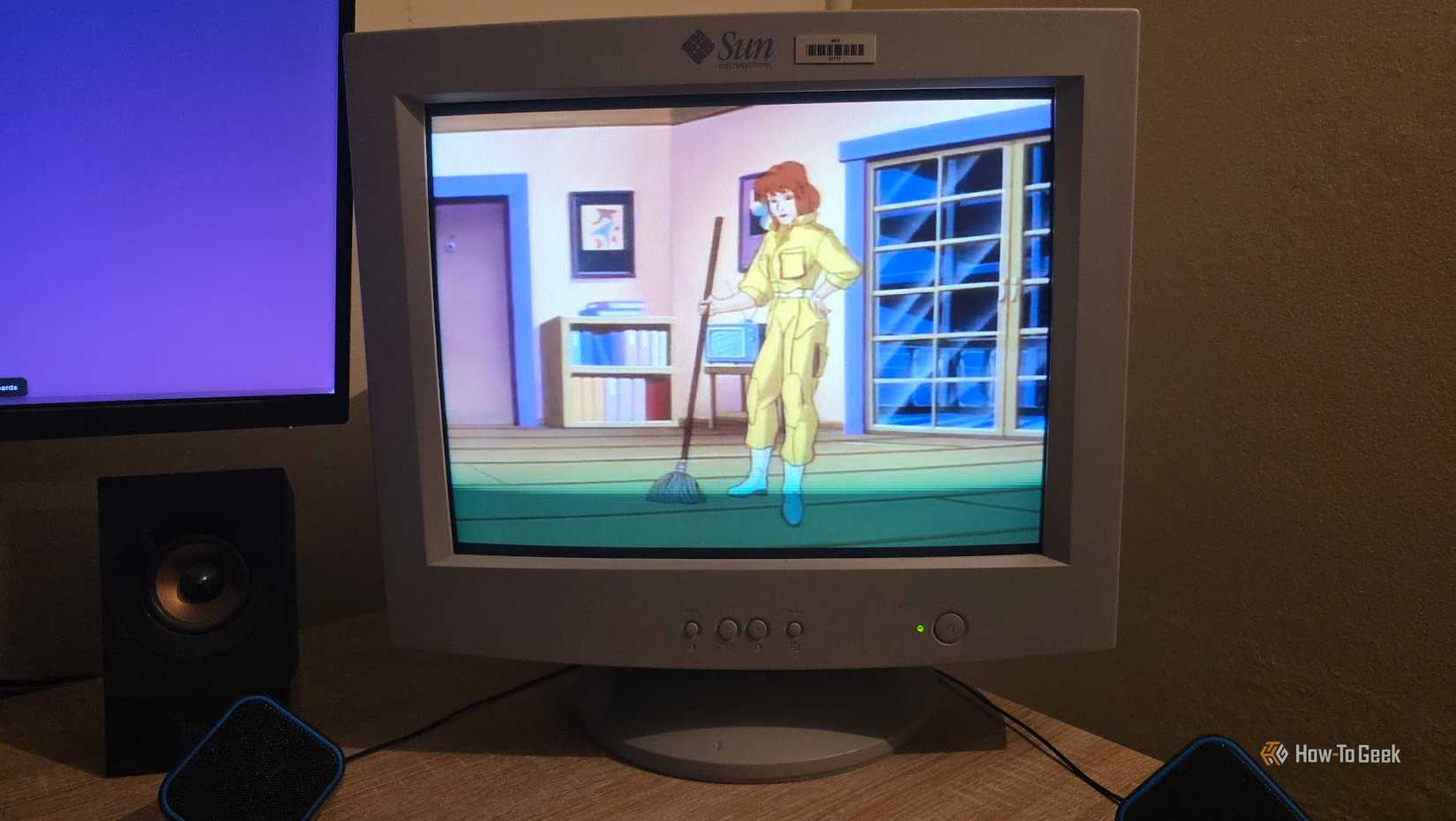
Butler highlights a specialized productivity technique known as the "Animedoro" method—a variation of the Pomodoro technique where work intervals are followed by a 20-minute break, just long enough to watch an episode of a classic show. For fans of 90s animation or vintage live-action sitcoms, a CRT is the ideal companion.
Standard definition (SD) content often looks "blown up" and noisy when stretched across a large, high-resolution 4K display. The inherent "softness" of a CRT monitor masks the imperfections of low-resolution video, making old cartoons and TV shows look "better than I remember," according to Butler. This extends to music history as well; platforms like Spotify and YouTube host vast archives of music videos filmed in the 4:3 format. On a CRT, these videos feel grounded in their original era, providing a nostalgic and high-quality background element to a modern workspace.
The Sega Dreamcast and the VGA Advantage
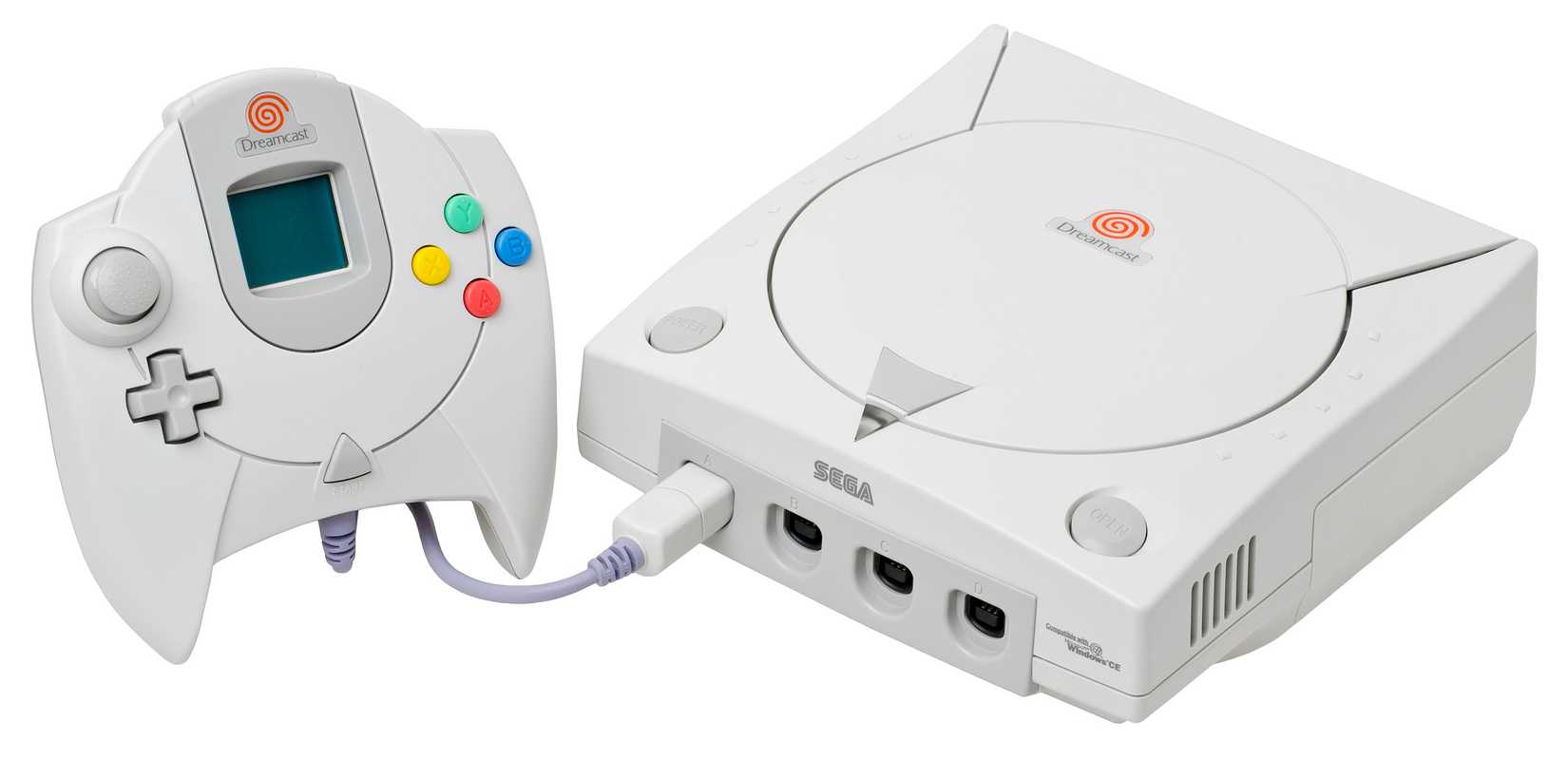
While many home consoles of the 90s require expensive converters to work with a PC monitor, the Sega Dreamcast stands out as a unique exception. Most consoles from that era, such as the Sony PlayStation or the Nintendo 64, output a 240p or 480i signal—formats that standard PC CRT monitors generally do not support without specialized upscaling hardware.
The Dreamcast, however, was ahead of its time, capable of outputting a native 480p signal. By using a VGA adapter, users can connect a Dreamcast directly to a CRT monitor. This setup is widely regarded by the gaming community as the definitive way to experience the console’s library. The result is a rock-solid, flicker-free image that showcases the Dreamcast’s vibrant colors and early 3D geometry with a level of clarity that was rarely seen on the consumer televisions of the late 90s. For anyone holding onto original Sega hardware, the CRT monitor is not just an option; it is an essential piece of the puzzle.
Creative Repurposing: The Virtual Aquarium
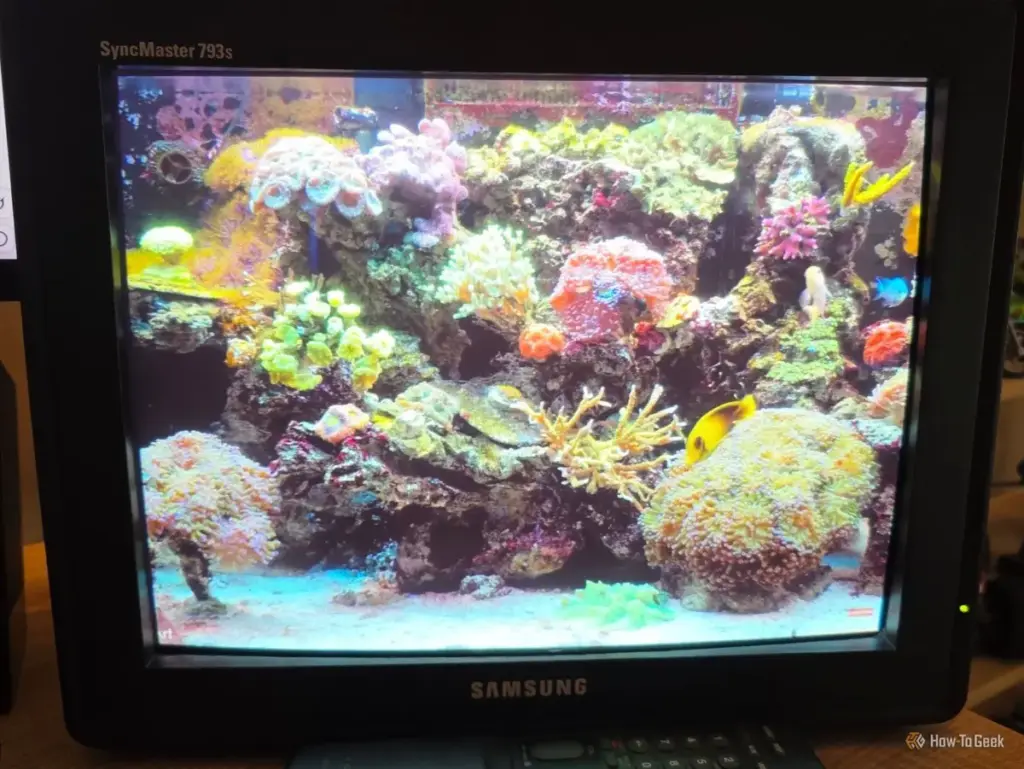
For those who aren’t interested in gaming or vintage television, the CRT monitor can still serve as a striking piece of functional decor. A popular DIY trend involves gutting dead CRTs to turn them into real fish tanks, but Butler suggests a less destructive alternative for functional units: the virtual aquarium.
While virtual aquariums are a staple of modern smart TVs and streaming sticks, the physical properties of a CRT monitor elevate the concept. The thick, curved glass of the tube provides a sense of physical depth that a flat panel lacks. When paired with 60fps footage, the absence of motion blur makes the digital fish appear remarkably lifelike.
Butler notes that using a simple browser extension like "Zoom to Fill" allows users to adapt 16:9 YouTube aquarium videos to the 4:3 screen of a CRT. "Honestly, it looks awesome," he says, noting that he dedicated a used Samsung CRT to this specific task. Contrary to popular belief regarding power consumption, a single CRT monitor often uses less electricity than the pumps, heaters, and lighting systems required for a medium-sized real-life aquarium, making it a low-maintenance, high-impact aesthetic choice.
An Endangered Species Worth Preserving
The most pressing reason to keep a CRT monitor, however, may be its increasing rarity. Unlike modern electronics, which are produced in the millions every year, the global supply of functional CRTs is finite and dwindling. Every monitor that is dropped at a recycling center or tossed into a dumpster reduces the number of screens available for future historians, artists, and gamers.
While they are certainly heavier than their modern counterparts, typical CRT monitors are not as impractical as the massive "console" televisions of the past. High-end models, such as those produced by Sun Microsystems or Sony, offer resolutions like 1152×900, which remain perfectly usable for dedicated tasks, such as monitoring a Discord feed, a music playlist, or a system performance monitor.
"Sadly, every CRT monitor that dies or gets recycled reduces the total number of these screens still out in the wild," Butler warns. Before deciding to get rid of an old monitor, owners should consider its value. If you don’t want it on your desk, there is almost certainly a collector or an enthusiast willing to pay for it.
In a world of disposable technology, the CRT stands as a testament to a different era of engineering—one where the "glow" of the screen offered a warmth and a clarity that we are only now beginning to truly appreciate again. Before you recycle that "heavy piece of junk," take a moment to plug it in. You might find that the past still has a lot of light left to give.
 Tech Tutorials & How-To Guides
The Hidden Costs of the Modern Living Room: Why Your Smart TV Knows More Than You Think
In the contemporary landscape of consumer electronics, it has become an open...
 Tech Tutorials & How-To Guides
Paramount+ Thriller Spotlight: From Gritty Action Franchises to Luc Besson’s Reimagined Dracula
As the calendar turns deeper into October, the shift in atmosphere is...
 Tech Tutorials & How-To Guides
Unfiltered Cinema: Why R-Rated Hits Are Finding a Second Life on Major Streaming Platforms
In the modern landscape of digital entertainment, the motion picture rating system...







