
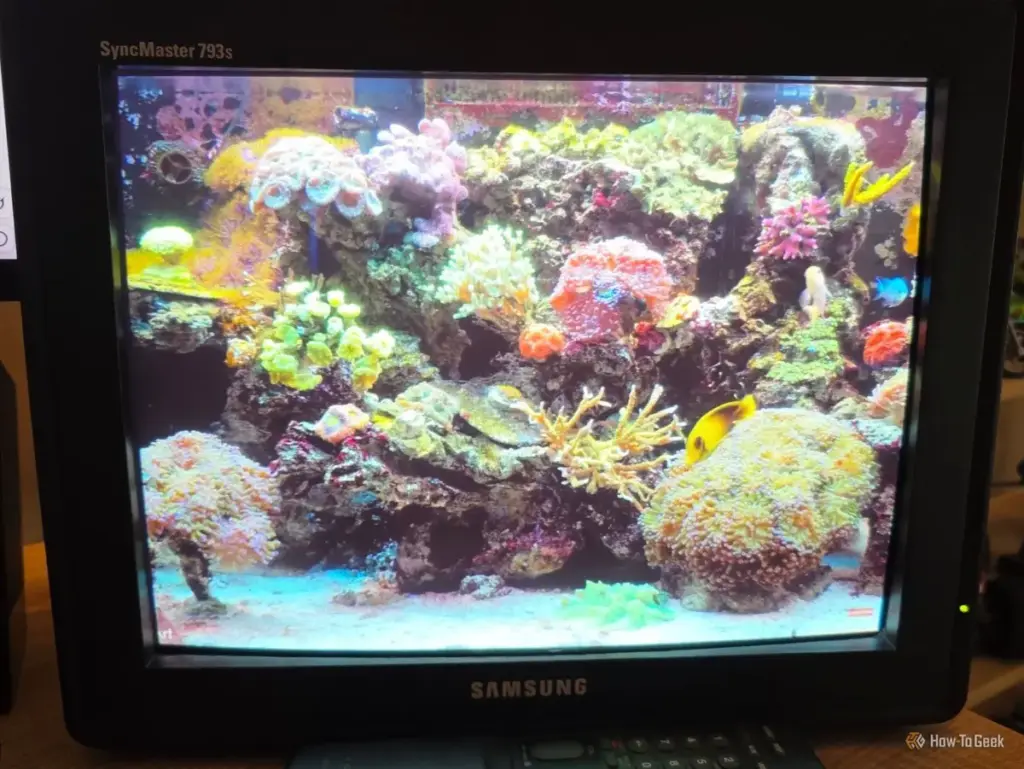
While virtual aquariums are a staple of modern smart TVs and streaming sticks, the physical properties of a CRT monitor elevate the concept. The thick, curved glass of the tube provides a sense of physical depth that a flat panel lacks. When paired with 60fps footage, the absence of motion blur makes the digital fish appear remarkably lifelike.
Butler notes that using a simple browser extension like "Zoom to Fill" allows users to adapt 16:9 YouTube aquarium videos to the 4:3 screen of a CRT. "Honestly, it looks awesome," he says, noting that he dedicated a used Samsung CRT to this specific task. Contrary to popular belief regarding power consumption, a single CRT monitor often uses less electricity than the pumps, heaters, and lighting systems required for a medium-sized real-life aquarium, making it a low-maintenance, high-impact aesthetic choice.
An Endangered Species Worth Preserving
The most pressing reason to keep a CRT monitor, however, may be its increasing rarity. Unlike modern electronics, which are produced in the millions every year, the global supply of functional CRTs is finite and dwindling. Every monitor that is dropped at a recycling center or tossed into a dumpster reduces the number of screens available for future historians, artists, and gamers.
While they are certainly heavier than their modern counterparts, typical CRT monitors are not as impractical as the massive "console" televisions of the past. High-end models, such as those produced by Sun Microsystems or Sony, offer resolutions like 1152×900, which remain perfectly usable for dedicated tasks, such as monitoring a Discord feed, a music playlist, or a system performance monitor.
"Sadly, every CRT monitor that dies or gets recycled reduces the total number of these screens still out in the wild," Butler warns. Before deciding to get rid of an old monitor, owners should consider its value. If you don’t want it on your desk, there is almost certainly a collector or an enthusiast willing to pay for it.
In a world of disposable technology, the CRT stands as a testament to a different era of engineering—one where the "glow" of the screen offered a warmth and a clarity that we are only now beginning to truly appreciate again. Before you recycle that "heavy piece of junk," take a moment to plug it in. You might find that the past still has a lot of light left to give.
 Tech Tutorials & How-To Guides
Unfiltered Cinema: Why R-Rated Hits Are Finding a Second Life on Major Streaming Platforms
In the modern landscape of digital entertainment, the motion picture rating system...
 Tech Tutorials & How-To Guides
A New Titan in Entertainment: Navigating the Skydance Merger and the Future of Streaming
The landscape of global media has undergone a seismic shift as the...
 Tech Tutorials & How-To Guides
The Fragile Alliance: Why Windows Continues to Disrupt Dual-Boot Linux Environments
For many technology enthusiasts and professionals, the ideal computing environment involves a...







