For those operating in Linux environments, the implementation of RAID 10 offers even more flexibility through software tools like mdadm. Unlike traditional hardware controllers that are often locked into specific nested structures, the Linux mdadm --level=10 command creates a "complex" RAID 10 that is not strictly nested. This software-defined approach allows for odd numbers of devices and offers various data layouts, such as "near," "far," or "offset." These layouts can be tuned to prioritize either read or write performance, providing a level of customization that hardware-based RAID 10 cannot match.
Similarly, LVM (Logical Volume Manager) RAID 10 provides robust management features, but it requires careful preparation. As noted in Oracle’s Linux documentation, repairing a failed LVM RAID 10 leg typically requires a spare physical volume to be already present within the volume group. If an administrator fails to include a spare in the initial design, the system may have nowhere to rebuild the data when a drive eventually fails, effectively negating the benefits of the redundant architecture.
Hardware controllers also introduce their own proprietary rules. For example, Broadcom’s MegaRAID family supports spanning RAID 10 across a massive range of 4 to 240 drives. However, these controllers often enforce specific thresholds, such as requiring multi-span configurations once the drive count exceeds 36. These are firmware-specific behaviors rather than universal laws of RAID 10, underscoring the necessity of consulting hardware-specific documentation during the planning phase.
In the final analysis, RAID 10 is a premium storage tier. It is most effective when deployed for flash-based databases and virtual machines where performance and fast recovery are non-negotiable. For organizations managing mixed storage estates, a common strategy is to utilize RAID 10 for high-performance tiers while delegating RAID 6 or erasure-coded object storage to handle bulk capacity and backups. By understanding the specific mechanics of mirroring and striping, and by accounting for the physical risks of correlated failure, storage architects can ensure that the high cost of RAID 10 delivers the reliability and speed their most critical data requires.
 Enterprise Tech & Infrastructure
Optimizing the Modern Data Center: Essential Strategies for Implementing Software-Defined Storage
The modern enterprise landscape is defined by an insatiable appetite for data,...
 Enterprise Tech & Infrastructure
From Theory to Engineering: Quantum Computing Reaches a Commercial Tipping Point as Industry Giants Prepare for a Hybrid Future
The long-anticipated transition of quantum computing from a theoretical pursuit of physics...
 Enterprise Tech & Infrastructure
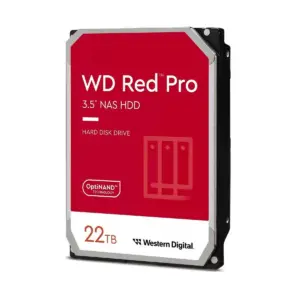
The Pillars of Data Infrastructure: A Comprehensive Review of 2023’s Top Enterprise Hard Drives
In the modern corporate landscape, data storage is no longer a secondary...